Surgeon: ‘How many more children like Kayden must die?’

By Sarah Bloch-Budzier 30 March 2017

 

Kayden’s grandmother: “I wanted to strangle somebody”

Senior surgeons say they tried to warn managers of dangerous delays to emergency surgery ahead of a child’s death at a top children’s hospital.

Kayden Bancroft was 20 months old when he died at Royal Manchester Children’s Hospital (RMCH), following repeated delays to urgent surgery.

Whistleblowers allege the trust’s focus was on “ballooning” waiting lists rather than emergency care.

The hospital admitted that failings occasionally occurred.

Central Manchester University Hospitals Trust said: “Royal Manchester Children’s Hospital faces huge demands for its services and occasionally failings regrettably do occur.”

Kayden’s grandmother, Julie Rowlands, has spoken of her shock at the way he was treated.

She said: “His care was appalling. He was basically put in a room, and left.

“And all we got, nearly every day, was, ‘He’s not having the operation today, he’s not having the operation today.’ They were coming up with excuses, ‘There’s no bed, or a car crash victim’s come in.’

“That’s all we got, all the time we were there, was excuses.”

One surgeon, Basem Khalil, told the BBC: “We just worry how many more children must die before management is held to account and before the right changes are made.”

Kayden was brought into Stepping Hill Hospital on 11 April last year, a Monday, after falling and banging his mouth on his bottle.

Staff discovered that he had a hole in his diaphragm, causing his bowel to enter his chest.

Staff requested a transfer to RMCH for an operation to repair Kayden’s diaphragm, but no intensive care bed was available.

The following day, he was transferred, but to an ordinary ward.

Kayden’s surgery was repeatedly delayed over the following week, as he deteriorated.

On Thursday, 14 April, the BBC was told, a locum consultant requested that a planned elective surgery list be cancelled to allow him to carry out the operation, but management instructed an operational manager “not to get involved”.

The trust told the BBC that it had no record of this request.

Brain injury

Late on Friday night, Kayden went into cardiac arrest.

Nurses struggled to get help, because an emergency phone line was down, and it took nearly 30 minutes to resuscitate the child.

He suffered severe brain injury and died two days later.

The trust’s own investigation found “significant problems with the organisation and delivery of [Kayden’s] care, which was not timely and resulted in his death”.
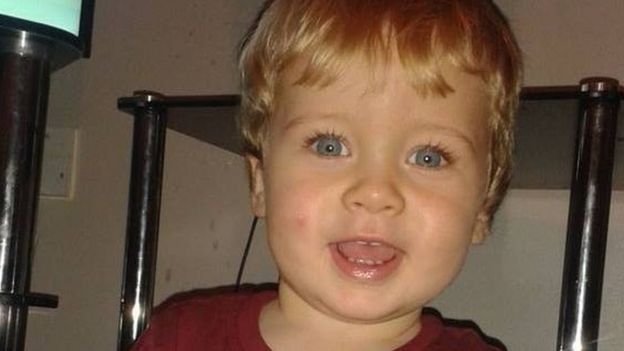
Kayden
Kayden Bancroft was 20 months old when he died at Royal Manchester Children’s Hospital

Senior surgeons at the hospital told the BBC that they had repeatedly tried to warn trust management about problems, including a shortage of emergency operating theatres and intensive care beds at the hospital.

But the trust told the BBC: “We believe that there are sufficient theatres in our children’s hospital to cope with the demand for emergency cases; however, on occasions some children do have to wait for urgent surgery while emergency surgery takes place.”

Mr Khalil said: “On Thursday, one of the surgeons had offered to cancel one of his elective lists, so that he could do Kayden as an emergency, but did not receive the support that he needed.

“That should not have happened.

“There should have been support to say if we have children on the emergency list, they need to be done, and they should take priority over elective lists.”

Mr Khalil added that the size of the hospital’s waiting lists had become dangerous.

Long waits

The BBC has seen internal figures to show that on 18 January this year, the number of children waiting for a procedure had reached 6,185, with 1,102 children having waited for over a year.

Mr Khalil said: “The waiting list in the children’s hospital has basically ballooned over the last few years.

“We now have hundreds of children who have waited over a year to have their surgery done.

“They were giving elective cases priority, but it almost became like a culture, that it is difficult to cancel elective cases to do emergency cases.”
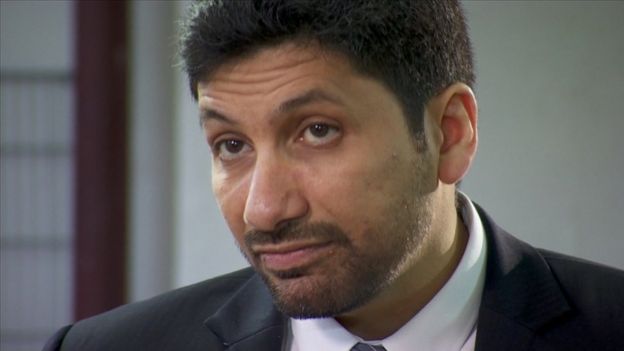
Basem Khalil
Mr Khalil warned of “ballooning” waiting lists

A second surgeon, James Morecroft, who retired from RMCH this year, told the BBC: “There was a desire in the hospital to do the elective workload, perhaps at the expense of some of the emergency stuff.”

The trust said: “The trust would like to make it clear that at no time has it directed clinical staff to prioritise elective over non-elective care.

“As is the case at most similar hospitals, elective cases are regularly cancelled to  accommodate emergency patients.”

However the trust’s own investigation into Kayden’s death recommended the hospital carry out an urgent review into “prioritising non-electives above elective cases”.

It added: “Following the investigation, a number of immediate and longer term actions were agreed.”

Lawyer Stephen Clarkson, from Slater and Gordon, who represented the family, said: “The real tragedy here is that Kayden’s death was entirely preventable.

“If he had been operated on earlier, then he would have survived.

“It is deeply concerning that this happened at one of the country’s leading hospitals for children, and that is why it is so important that the trust looks closely at what went wrong and what can be done to make sure this doesn’t happen to anyone else’s child.”

PATIENT SAFETY? Poem from NHS whistleblower (Anon)


I can still remember

The Human Being that was me

I loved life, and was happy

Just to be


Lucky was I, to have work that was a passion

Not something I thought of as a passing fashion

I had a past, was in the present and had a future to cheer

Then I found myself in a culture of fear

Staff so afraid to speak out here


As a HR Director I knew what to do!

Despite the reality, they would then persecute you

I took a deep breath telling myself I was strong

And how prioritising human life would not be perceived wrong


The experience was then and was sadly for so many

Is they will ensure you are left without a penny

They will torment, torture and bully you as well

They will not even stop when you are in a living hell


Where do you then go to get help on the way?

It’s an employment problem, they will all say!

The choice is then to take money you are told

For that your silence you will have to hold


The question is then, what is the price?

What is the amount to justify the human sacrifice?

There was not an amount was for the answer for me

Going back to the human being I wanted to be.


Therefore the attacks still continue, even to this day!

I cannot forsee a day they will go away

I try and I try for my girls to sustain

But the reality is, it is unbearable pain


The people that could help or intervene

Do nothing so you are left, feeling your life has no mean

With that in mind there is never a high

And you end up not caring whether you live or die


I want to stand strong and I claim all is alright

But I am unable to stand on my own and question the fight


Physical pain is not the worst for a human to survive

They know that humiliation, and dignity to deprive

Casting you out from the flock is truly a shock

And is akin and the same too burying a person alive!

Whistleblowers ‘to be protected’ if they apply for NHS job

  • 20 March 2017  BBC News Health

    Hospital room

Health Secretary Jeremy Hunt said staff who speak up should be listened to

NHS whistleblowers could be protected against discrimination if they apply to work for the health service again.

Government plans would give applicants a right to complain to an employment tribunal if they believed they had suffered discrimination.

Jeremy Hunt said he wanted to create “a culture of openness” where staff feel they can speak up about patient safety.

Barrister Sir Robert Francis recommended the measure after a public inquiry into Stafford Hospital deaths.

Protecting NHS whistleblowers was a key recommendation from the inquiry into the scandal, which resulted in the trust that ran Stafford Hospital being fined £500,000 for “basic” blunders linked to the deaths of four patients.

‘Listened to, not vilified’

Sir Robert, the inquiry chairman, warned that staff often faced bullying and isolation if they tried to speak out and that staff struggled to find new jobs in the NHS.

Under the UK-wide plans, applicants for an NHS job would have the right to complain to an employment tribunal if they had been discriminated against because they had previously raised concerns about the safety of patients.

Applicants would also have the right to bring a claim in court in order to prevent discriminatory conduct.

And the draft guidelines, which are out for consultation, say that discrimination of an applicant by an NHS worker should be treated like discrimination by the NHS body itself.

Health Secretary Mr Hunt said: “Today we move another step closer to creating a culture of openness in the NHS, where people who have the courage to speak up about patient safety concerns are listened to, not vilified.”

He said the changes would ensure “staff feel they are protected with the law on their side”.

‘Deeper cultural problem’

There has been a growing focus on patient safety since Sir Robert’s inquiry in 2013.

One of the main findings of that report was that people within the NHS had known about the poor levels of care at the hospital, but did not raise the alarm.

Since then, a number of initiatives have been launched to improve safety.

In 2015, the government introduced plans to appoint guardians to support staff who wanted to speak up about concerns over patient safety.

Peter Walsh, chief executive of Action against Medical Accidents, said the plans were modest, but a “welcome move in the right direction”.

“It is clearly unfair that staff who have been forced to become ‘whistleblowers’ should be discriminated against when they seek alternative jobs.

“However, this is a symptom of a much deeper cultural problem in the NHS which will not be solved with tinkering with rules here and there.

“So far we have not seen a joined-up approach to supporting and protecting staff from unfair treatment when they try to do the right thing and end up having to be whistleblowers.”

Mr Walsh said many NHS trusts had still not appointed guardians, as recommended by the Stafford Hospital inquiry.

The current consultation is open for eight weeks and will close on 12 May.

Whistleblowers out in cold: Struggling to find work, isolated and shunned, the terrible price medics sacked for exposing NHS failures are STILL paying

  • No doctors sacked for exposing care scandals have been given jobs back
  • Jeremy Hunt accused of failing to act on landmark whistleblowing report
  • Hospital staff have said punishments for speaking out are ‘Kafkaesque’
  • Tory MP pointed to ‘evidence that whistleblowers are not being protected’

No doctors sacked for exposing care scandals have been given their jobs back at the same level, it emerged yesterday.

Senior medical figures accused Health Secretary Jeremy Hunt of failing to act on a landmark report into NHS whistleblowing.

In a dramatic intervention, 14 medics and campaigners wrote to a national newspaper saying there had been ‘no meaningful change’ a year on.

‘To our knowledge, not a single sacked whistleblower has been found comparable reemployment,’ they claimed.

Referring to the hounding of doctors and nurses by hospital managers, they added: ‘Not a single trust director has been reprimanded under the fit and proper persons regulation.’

Senior medical figures accused Health Secretary Jeremy Hunt of failing to act on a landmark report into NHS whistleblowing

Senior medical figures accused Health Secretary Jeremy Hunt of failing to act on a landmark report into NHS whistleblowing

Hospital staff say the punishments for speaking out are Kafkaesque – and make them feel as if they are living behind the Iron Curtain.

Andrew Percy, a Tory member of the Commons health committee, called for a parliamentary inquiry. ‘There is a lot of evidence that whistleblowers are not being protected, that many staff in the NHS are being intimidated or are fearful of coming forward,’ he said.

‘This is totally unacceptable and is evidence of why our committee needs to look at this again. The Department of Health needs to be cognisant of the concerns on this.’

Sir Robert Francis compiled last year’s report warning of a culture of ‘fear, bullying and ostracisation’ within the NHS that punished doctors and nurses who dared speak out.

DR MINH ALEXANDER

WORKED: Consultant psychiatrist with Cambridge and Peterborough NHS Foundation Trust, a mental health service provider, from 2007 to 2013.

BLEW WHISTLE ON: How instances of patient harm, including suicides and deaths in custody, homicides, rape and arson were sometimes not reported through the appropriate channels.

CONSEQUENCE: Took redundancy by ‘mutual agreement’. Told British Medical Association she thought it was going to be the end of her career.

EFFECT ON NHS CAREER: Has not applied for more NHS work over fears she has effectively been blacklisted.

SHE SAYS: ‘The suppression of staff… will not go away until decision-makers truly accept it is better to run a service in which staff and patients have a voice. Otherwise, the unhealthy culture, financial and human cost will continue… My decision to report concerns… did not make me popular.’

EDWIN JESUADOSON 

WORKED: Alder Hey Children’s Hospital.

BLEW WHISTLE ON: ‘Unnecessary’ fatalities among children who had had surgery. 

What he felt was a bullying culture in theatres with staff afraid to raise concerns, and lessons from errors not being learned.

CONSEQUENCE: Faced opposition from senior colleagues and, he believes, the trust itself. 

Left the hospital. Marriage broke down due to the stress.

EFFECT ON NHS CAREER: Has applied for NHS jobs and not been shortlisted. 

Fears he has been blacklisted as a troublemaking whistleblower. 

Now working in academic research in Melbourne, Australia.

HE SAYS: ‘It took a great deal for me to become a whistleblower. 

It was not a step I took lightly. The whole experience has been utterly administrating.’

It told how whistleblowers were too often derided as ‘snitches, troublemakers and backstabbers’.

Sir Robert, a barrister who chaired two major inquiries into the Mid Staffordshire hospital scandal, said many were unable to find work because of an ‘effective blacklist’.

The Government promised to enforce all his 20 recommendations, which were aimed at changing NHS culture to protect whistleblowers from reprisals. One measure was to ensure all trusts appointed a guardian to deal with concerns from health workers. But in the letter to The Times yesterday the guardians were described as toothless – often simply establishment candidates appointed by trust bosses.

And the signatories pointed out that the national guardian, Dame Eileen Sills, has a restricted remit with no real powers in law. Appointed in January, she is also part-time, covering just two days a week.

The letter was organised by Professor Sir Brian Jarman, the former BMA president who did pioneering work on hospital mortality rates.

It was signed by seven NHS whistleblowers, including Dr Stephen Bolsin, who highlighted death rates at Bristol Royal Infirmary and Dr Kim Holt, who lifted the lid on safety concerns at Great Ormond Street.

The signatories demanded the establishment of an independent body with ‘powers to investigate and remedy poor whistleblowing governance by public bodies’.

DR RAJ MATTU

WORKED: Heart surgeon at Walsgrave Hospital in Coventry.

BLEW WHISTLE ON: In 2001, exposed the fact two patients had died in dangerously overcrowded bays where staff had difficulty reaching life-saving equipment.

CONSEQUENCE: A year later, suspended on full pay for seven years after being accused of bullying. Dismissed in 2010.

EFFECT ON NHS CAREER: Claims he was unable to return to old job and experienced increasing hostility from trust managers. Health deteriorated. Sacked while in his hospital bed. Won £1.22million damages after employment tribunal.

HE SAYS: ‘The way I have been treated is nothing short of an outrage and a scandal … trust managers tried to destroy me. It was a form of torture.’

GARY WALKER 

WORKED: Chief executive at the United Lincolnshire Hospitals NHS Trust.

BLEW WHISTLE ON: Concerns targets were a higher priority than patient safety.

CONSEQUENCE: Sacked and forced to sign £500,000 gagging contract. Broke silence with Daily Mail to hold individuals to account over Mid-Staffs scandal.

EFFECT ON NHS CAREER: Applied for around 150 jobs in NHS in England. Shortlisted for only two in five years. Now working for a health regulator in Northern Ireland.

HE SAYS: ‘Nothing has changed. We have more whistleblowers than ever on the unemployment lines and not one of them has been re-instated in their job. I would never advise anyone to whistleblow, unless they can do it anonymously.’

They called for a new appeal mechanism against ineffective local investigations by employers, full reform of whistleblower protection legislation and reform of NHS disciplinary processes.

Health minister Ben Gummer insisted good progress was being made on making the NHS safe for whistleblowers, and that all hospitals had been told to take action to support those who spoke out.

But yesterday one of the signatories, Professor Narinder Kapur, who was sacked after he raised safety concerns at Addenbrooke’s Hospital in Cambridge, told the Mail he had struggled to find work afterward and felt he was blacklisted.

The neuropsychologist is now working three days a week as a locum in Leeds, hundreds of miles from his family home in Harrow, north-west London. He said: ‘It’s the only job I could get.

‘The only way that NHS trusts will take back whistleblowers is if their willingness to do so is part of their appraisal by the health regulator.

‘Whistleblowers lose their jobs and their incomes, their physical and mental wellbeing suffers and their family life is ruined.

DR KEVIN BEATT

WORKED: Cardiologist at Croydon University Hospital.

BLEW WHISTLE ON: Told an inquest in 2013 he was forced to carry out part of a heart operation without nursing assistance, which contributed to the patient’s death. 

Concerns over inadequate equipment, bullying and harassment of junior employees, removal of key staff, a lack of competent nurses and the failure to properly investigate serious incidents.

CONSEQUENCE: Suspended shortly after the inquest and then dismissed.

EFFECT ON NHS CAREER: Won unfair dismissal case but finds it impossible to get an NHS job.

HE SAYS: ‘I’ve applied… but never got shortlisted. 

‘It’s akin to being in an Eastern Bloc country in the Cold War years.’

DR STEPHEN BOSLIN 

WORKED: Anaesthetist at Bristol Royal Infirmary.

BLEW WHISTLE ON: Reported concerns about infant deaths at the hospital in 1990. Bosses were dismissive and Dr Bolsin began to count the number of children dying, which showed the death rate was twice the national average. The next year, heart operations at the hospital were stopped. The cardiac unit was dubbed the ‘killing fields’.

CONSEQUENCE: He initially continued working in the NHS but felt ostracised and was passed over for private work.

EFFECT ON NHS CAREER: Dr Bolsin and his wife moved to Melbourne, Australia, where he has practised ever since.

HE SAYS: ‘In the end I just couldn’t go on putting those children to sleep, with their parents present in the anaesthetic room, knowing that it was almost certain to be the last time they would see their sons or daughters alive.’

‘It’s like getting four life sentences for standing up and doing the right thing.’Another whistleblower, Gary Walker, who was sacked as an NHS trust chief executive after he raised concerns that hitting targets was a higher priority than patient safety, told the Mail he had applied for around 150 NHS jobs and was shortlisted only for two.

He said: ‘The NHS has such a culture of command and control that it can’t cope with anyone speaking out. It’s a terribly bullying culture and that has not changed. If anything it has got worse.

‘We have more whistleblowers than ever on the unemployment lines and not one of them has been reinstated in their job. I would never advise anyone to whistleblow, unless they can do it anonymously.’

A retired police inspector brought in to investigate allegations of misconduct against a whistleblower at one NHS trust told how he was himself sacked after raising concerns that the accusations were unfounded.

The former officer said: ‘I was expected to be the assassin. I had had a distinguished career and had retired from the police with unblemished character. ‘The trust’s own policy said that such investigations had to be completed fairly but I would say the allegations were unfounded.’

DR OTTO CHAN

WORKED: Consultant radiologist at Barts and the London.

BLEW WHISTLE ON: X-ray files and scans belonging to thousands of patients were dumped unchecked in boxes.

CONSEQUENCE: Dismissed in 2006 after trust management carried out a ‘clipboard exercise’ to quiz his colleagues for any other instance of possible misconduct. Branded a ‘troublemaker’.

EFFECT ON NHS CAREER: Was offered work at another hospital – until his old trust got in touch with its executives. Now back in the NHS, working part-time at the Royal Free and Whittington hospitals in London.

HE SAYS: ‘It’s almost impossible to get future employment in the NHS if you’re dismissed. Chief executives of different trusts stick together.’

PROFESSOR NARINDER KAPUR 

WORKED: Neuropsychologist at Addenbrooke’s Hospital in Cambridge.

BLEW WHISTLE ON: The use of under-qualified staff in clinics, which he warned was putting patients at risk.

CONSEQUENCE: Sacked in 2010. A tribunal ruled he was unfairly dismissed but he was not reinstated.

EFFECT ON NHS CAREER: Professor Kapur said he was effectively blacklisted as a ‘trouble-maker’. He is now working three days a week as a locum in Leeds, hundreds of miles from his family in North London.

HE SAYS: ‘Whistleblowers lose their jobs and their incomes, their physical and mental wellbeing suffers and their family life is ruined. 

It’s like getting four life sentences for standing up and doing the right thing.’

He said that when he reported concerns about the investigation into the whistleblower, he was initially ignored then ‘I became the whistleblower, I became the problem’. Following his dismissal he received an out of court settlement after launching his own unfair dismissal proceedings.

Only last week, Dr Raj Mattu was granted £1.2million in damages after a tribunal found he had been wrongly dismissed for exposing the deaths of two patients in dangerously overcrowded bays at his hospital.

He was hounded for over a decade in a ‘witch-hunt’ costing the taxpayer more than £10million. He has since been unable to get a job in the NHS.

He told the Mail: ‘This letter should be a very serious warning to the chiefs of the healthcare system in England, that despite many soundbites and promises of protecting patients and then whistleblowers, there has been no palpable change since the Francis report.

‘I would strongly caution anybody who is thinking of whistleblowing from doing so.

‘I would want to protect them and their families from enduring the nightmare that I have had to live with for 15 years, and their lives and careers being ruined.’

And Dr Minh Alexander, forced out after she exposed suicides at a mental health trust in Cambridgeshire, said: ‘The suppression of staff who speak up is a very old problem and will not go away until decision makers truly accept that it is better to run a service in which staff and patients have a voice.’

DR KIM HOLT

WORKED: Consultant paediatrician at St Ann’s Clinic in Tottenham, North London.

BLEW WHISTLE ON: Was one of four doctors who warned that understaffing and poor record-keeping posed a serious risk to patient safety in 2006.

CONSEQUENCE: The warning was ignored and Dr Holt faced bullying then suffered depression and went on leave.

EFFECT ON NHS CAREER: Dr Holt says she was offered £120,000 to sign a confidentiality contract but refused. She was eventually allowed back to work after her clinic was transferred to a different NHS trust. She received a formal apology from her former trust.

SHE SAYS: ‘The whole culture towards whistleblowers is pretty toxic. It’s a miracle that I’m back in my job.’

LADY MAHA YASSALE (NO PICTURE) 

WORKED: Chief pharmacist for Berkshire Primary Care Trust.

BLEW WHISTLE ON: Patient safety concerns about prescriptions, made in protected evidence which cannot be disclosed.

CONSEQUENCE: Suspended and dismissed after numerous allegations were made unrelated to Lady Yassaie’s work. Launched employment tribunal proceedings but received an out-of-court settlement before the case was heard.

EFFECT ON NHS CAREER: Lady Yassaie lost another NHS job in 2014 after, she believes, management found out about her earlier case.

SHE SAYS: ‘There is nothing to protect whistleblowers at all. 

None of my concerns have ever been looked into properly.’

Justin Madders, Labour’s health spokesman, said: ‘Jeremy Hunt cannot dismiss these concerns any longer and needs to start taking whistleblowers’ rights seriously. Unfortunately, reports of bullying and harassment in the NHS are still too commonplace.’

A spokesman for the Department of Health said some cases against managers under the Francis rules were ongoing with none declared unfit yet.

She said no figures were kept on the jobs of whistleblowers.


How can I ever work again after the trauma of whistleblowing?

The Guardian Money Dear Jeremy  17 March 2017

I felt I had no choice but to expose fraud at work, but was bullied and ignored. Now I have lost all hope in work

‘I am scared to be employed again, and have been working from home and living off of my savings.’
‘I am scared to be employed again, and have been working from home and living off of my savings.’ Photograph: Jonathan Knowles/Getty Images

Twice a week we publish problems that will feature in a forthcoming Dear Jeremy advice column in the Saturday Guardian so that readers can offer their own advice and suggestions. We then print the best of your comments alongside Jeremy’s own insights.

Six years ago I was a whistleblower at my workplace. I worked there for three years, but from my first day I noticed daily cover-ups, misuse of position and daily cash fraud.

This was my dream job, at a firm I had looked up to. I was shocked to see what was happening and, for a long time, blamed myself for being too sensitive and thought I was just being paranoid.

At one point the fraud became so serious, and the cover-up so intricate, that I was left with no choice but to report it internally.

I was 100% sure they would find out, correct the situation and give out warnings, and we would move on. But my first report was not taken seriously: they checked out the paperwork I mentioned but overlooked the obvious fraud. They simply dismissed any claims, and the case was closed.

Nothing changed and I decided I would quit as soon as I could. When I made that decision I also decided to become a whistleblower. I thought I had nothing more to lose.

I was very wrong. During the whole whistleblowing experience, I was bullied, snubbed by management as a disgruntled employee and accused of being a “disrespectful colleague”.

I have lost all my hope in humanity. I know it sounds severe, but I really feel this way. I am scared to be employed again, and have been working from home and living off my savings.

How will I ever gain any confidence in the world or in any company? The people I looked up to, those whom I had aspired to be like, have let me down beyond belief. I am a traumatised human who had no other choice but become a whistleblower.

Do you need advice on a work issue? For Jeremy’s and readers’ help, send a brief email to dear.jeremy@theguardian.com. Please note that he is unable to answer questions of a legal nature or to reply personally.

Greedy NHS chief earning £200,000 a year defrauded her own Trust by paying husband’s graphic design firm £11,000 for work he never completed

  • Paula Vasco-Knight, 53, is let off from fraud charge with a suspended sentence
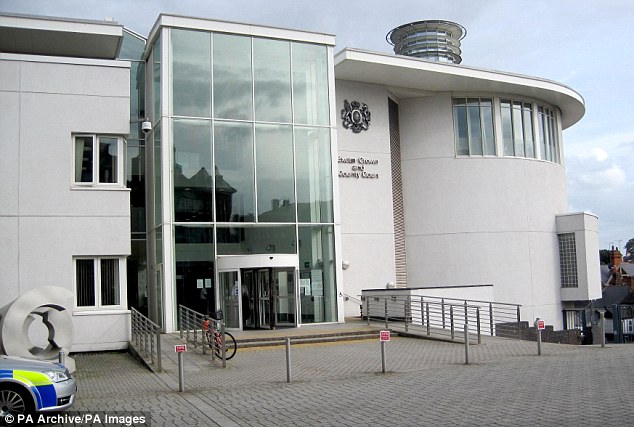
  • She dramatically collapsed today during sentencing at Exeter Crown Court 
  • Vasco-Knight was an NHS executive earning £170,000 a year
  • But she ‘abused’ her position by signing off thousands to her husband’s company
  • A judge described her fall from grace as ‘monumental’  
Paula Vasco-Knight, 53, was given a suspended jail sentence at Exeter Crown Court after admitting one charge of fraud 

Paula Vasco-Knight, 53, was given a suspended jail sentence at Exeter Crown Court after admitting one charge of fraud

An NHS chief executive earning £200,000 a year defrauded her own Trust by paying her husband’s graphic design firm £11,000 for work he never completed.

Paula Vasco-Knight, 53, was spared prison today but dramatically collapsed outside court after a judge slammed her ‘monumental fall from grace’.

She gave public money from her £200,000 budget to a company her husband Stephen ran from a garden shed.

The former chief executive was given a 16-month suspended jail sentence and ordered to carry out 250 hours of unpaid work.

Her husband received 10 months’ imprisonment, also suspended for two years, and 150 hours of unpaid work.

Vasco-Knight was described during the trial as ‘dishonest in the extreme’ when she siphoned off the payments without telling colleagues that graphic designer ‘Steve’ was in fact her husband Stephen.

He was paid £9,000 to design one newsletter and £11,072 to knock up a 200-page document on leadership called ‘Transform’ – described as a ‘complete sham’ because it never existed.

Prosecuting, Gareth Evans told the court the couple initially denied any wrongdoing and claimed the 200-page publication was highly valuable.

The court heard that when interviewed by police, both defendants handed over a hardcopy of the document.

Mr Evans said: ‘Paula Vasco-Knight said to officers, “Please take care of it”, implying an importance and value on the document.’

‘It’s clear it’s a complete fraud,’ he added.

The judge said he seldom saw offenders 'so utterly devastated by the enormity of what you so stupidly did' 

The judge said he seldom saw offenders ‘so utterly devastated by the enormity of what you so stupidly did’

The document was found to contain empty pages and text lifted from other sources.

The couple, from Runcorn in Cheshire, kept up the pretense of being not guilty until they dramatically changed their plea on day two of the trial.

Vasco-Knight shook and sobbed uncontrollably as she changed her plea at last minute to one of the two charges of fraud. Her husband also admitted fraud.

Vasco-Knight admitted abusing her position as CEO at the hospital by authorising the £11,072 payment to her husband.

Before she collapsed in court, a judge said that Vasco-Knight’s condition remained ‘frail.’

Speaking at Exeter Crown Court today as he delivered their sentence, the judge said: ‘This is a monumental fall from grace and I seldom see offenders so utterly devastated by the enormity of what you so stupidly did.

‘Paula Vasco-Knight as as chief executive officer at the South Devon NHS Trust, one can hardly imagine a more serious abuse of trust and responsibility on your part.

‘You were on a six-figure salary. In arranging for your husband to secure this contract between you, you obtained just over £11,000 of the public’s money.

‘Money from an NHS budget which we all know is under the severest pressure for resources.’

Exeter Crown Court heard that Vasco-Knight, who also held a position at the national lead for equalities, rose through the ranks, becoming the NHS’s first ever black chief executive.

Paula Vasco-Knight (left) pictured leaving the court with her husband and brother (centre, right) during the two-week trial held in Exeter Guilty: Vasco-Knight's husband Stephen also pleaded guilty to one count of fraud and was spared jail but ordered to do 150 hours of community service 

Paula Vasco-Knight (left) pictured leaving the court with her husband and brother (centre, right) during the two-week trial held in Exeter

She earned £170,000 a year as the chief executive of Torbay Hospital and an additional £27,000 for a one-day-a-week position as an equality advisor.

But it emerged Vasco-Knight had failed to declare an interest in her husband’s company, Thinking Caps, which he solely ran from their garden shed.

His company was assigned to make the booklet which was described by the prosecution as ‘nothing more than a notepad’.

She admitted abusing her position as CEO at the trust by authorising the £11,072 payment to her husband for the document.

Her husband also pleaded guilty to fraud by submitting a false invoice to the trust for the Transform document in November 2013.

Defending Stephen Vasco-Knight, Brendan Carville said: ’12 years ago Mr Vasco-Knight was a happily married man. His wife had cancer and she suddenly died. He became the sole carer for his three-year-old child.

‘They married and were a successful team.’

He also described his client as a ‘very, very good’ graphic designer.

He added that both Mr and Mrs Vasco-knight didn’t ‘deserve’ to go to prison..

Defending Paula Vasco-Knight, Llyod Morgan, said: ‘Mrs Vasco-Knight started in very humble beginnings. She qualified as a nurse and worked many, many years as a nurse.

Exeter Crown Court where Vasco-Knight  Vasco-Knight sobbed as she admitted to carrying out the fraud on the second day of the trial 

Exeter Crown Court where Vasco-Knight Vasco-Knight sobbed as she admitted to carrying out the fraud on the second day of the trial

He said: ‘She continued to work as a nurse, such was her dedication to the welfare of the patients in the trust.’

‘She reached dizzying heights more than she ever expected but has had a fall of an even greater magnitude.’

He added: ‘She bitterly regrets it and she will regret it for the rest of her life.’

Vasco-Knight was the chief executive of South Devon NHS Foundation Trust until her resignation in 2014.

She also worked for one day a week as the NHS’s head of equality and diversity, where she had control of a £200,000 annual budget.

Her fall from grace began in 2015 when whistleblowers accused her of selecting her own daughter’s boyfriend as an equality and diversity manager at her own Trust.

The claims led to a chief executive quitting her job over ‘nepotism and favouritism’. She denied the claims and said she was victim of ‘personal slander.’

NHS senior manager Habib Naqvi, 39, was found not guilty of two charges of encouraging or assisting Mrs Vasco-Knight after the prosecution offered no evidence against him.

Whistleblower dentist wins legal claim against Shropshire NHS trust after ‘witch hunt’

Shropshire Star  February 26, 2017

A consultant dentist who said he had become the victim of a witch hunt at a Shropshire hospital has won legal claims against his former employers.

Mr Paul Dowsing, who specialised in treating mainly young patients, was consultant orthodontist at Telford’s Princess Royal Hospital.

He claimed detriment and constructive unfair dismissal against Shrewsbury and Telford Hospitals NHS Trust at a previous Birmingham Employment Tribunal after complaining that he was put under pressure to resign after making whistle blowing allegations against the hospital.

He alleged the hospital “covered up” failures to meet patient treatment targets within 18 weeks – at one stage involving 176 patients – and kept a “hidden” surgery waiting list of patients.

Mr Dowsing complained that the “waiting patients” could have been lost for ever considering that some dental could take up to three years.

Mr Dowsing, of Burton-on-Trent, also alleged the hospital “stopped the clock” for patients when they had been seen for assessment, rather than when their treatment had commenced. There was also an allegation that a hospital staff member incorrectly ordered £10,000 worth of stock.

The trust opposed Mr Dowsing’s legal claims and accused him of bringing patients from his Manor Practice at Burton to the hospital for out-of-hours treatment as private patients. The hospital complained this was a breach of contract and twice suspended him for a total of nearly 21 months.

An investigation was carried out. Mr Dowsing complained he became the victim of a witch hunt.

The tribunal hearing had been listed for 12 days and Judge Ron Broughton said he would make a decision at a later date.

Mr Broughton has now announced that Mr Dowsing was subjected to detriment and unfairly constructively dismissed as a result of making whistle blowing disclosures.

But he also said that Mr Dowsing’s own conduct had been “potentially both culpable and contributory”.

Mr Broughton said in his report: “He appears to have been held in high regard by many and to have had an almost impossible workload due to demand, the time-critical nature of some of the treatments, understaffing and financial constraints.”

A tribunal spokesman said an undisclosed award had since been made.

Read more at http://www.shropshirestar.com/news/2017/02/26/whistleblower-dentist-wins-legal-claim-against-shropshire-nhs-trust-after-witch-hunt/#RsqPwtuLK2TC3puO.99