NHS staff lay bare a bullying culture

The Guardian       

26 October 2016

A shocking four-fifths of respondents to a Guardian survey reveal they have been bullied, and a third have lost jobs as result
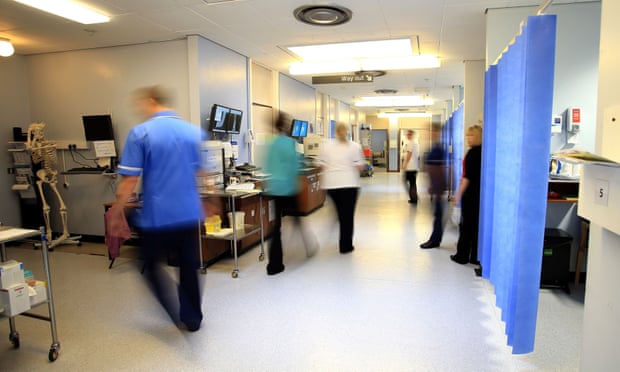
One in 10 bullying victims was subject to violent behaviour and aggression. One in 10 bullying victims was subject to violent behaviour and aggression. Photograph: Peter Byrne/PA

Bullying is a pernicious problem in the NHS. That’s the stark finding from exclusive research by the Guardian. The online survey of more than 1,500 doctors, nurses and other health workers in hospitals, primary care and community settings, found that 81% had experienced bullying and for almost half of them (44%), it is still ongoing. Close to nine out of 10 bullying victims who responded have been left with their cases unresolved.

Although the survey on bullying was self-selecting, the findings underline the results of the official annual NHS staff survey. The 2015 survey of nearly 300,000 healthcare professionals across England found that a quarter of staff in NHS trusts had experienced bullying, harassment or abuse in the previous 12 months.

Some 87% of respondents to the Guardian survey, carried out between August and September, think bullying is a big problem within the NHS, while almost three-quarters said they felt the health service did not take bullying seriously. “The culture is driven by exerting undue pressure on others to get things done. If you don’t, you are targeted and eventually you end up with stress and depression,” one NHS manager said.

“The organisation becomes defensive and takes the corporate line to protect themselves from a legal challenge and puts it down to your perception. You are then managed out of your job through contrived actions designed to make you leave. All this leaves you broken and with no strength to fight. You go if you can find another job. Otherwise you suffer in silence.”

The devastating impact of bullying is all too apparent. A third of victims said they had been pushed out of their jobs, with many developing serious mental health problems as a result, while almost three-quarters reported increased stress and panic attacks. As a result, some 41% said they needed counselling or treatment after being bullied. The survey also shows the adverse impact of bullying on the NHS, with those respondents who have been bullied taking on average 108 days off work and almost a third (31%) saying they were signed-off sick. A further third said they had contemplated leaving their job.

Sue Covill, director of development and employment at NHS Employers, (the employers’ organisation for the NHS in England) admits the results are worrying. “Bullying is completely unacceptable and the ongoing work to tackle it is vital for all NHS organisations, leaders and staff,” she says. “To improve the working lives of our staff and deliver the best possible care to patients, we need to create supportive, positive, open and collegiate cultures in our organisations across the health system.”

According to the 1,355 anonymous survey respondents who said they had experienced or witnessed NHS bullying, the most common forms of abuse are undermining behaviour and persistent criticism. Just over a third said they were persecuted through fear or threats, saying their career was deliberately sabotaged. One in 10 bullying victims was subjected to violent behaviour and aggression.

Asked if a particular incident triggered the bullying, 55% said raising a concern prompted the abuse. Fear of reprisals means that only 54% reported the bullying. For the 43% who chose not to report it, two-thirds felt scared that to do so would make things worse. Of those who did report their bullying, 44% said it persisted afterwards, sometimes for as long as a year.

“My experience left me feeling as though I had been manipulated, that I was a liar and had made it all up,” said one NHS administrator. “I had a meeting with my bully and came away from it feeling worse than before. I’m now left feeling desperately unhappy in a job I now despise.”

Only 17% of those who reported bullying said they received pastoral support from their organisation – and less than a quarter of these were satisfied with the result.

YouGov survey commissioned last year by the TUC showed that nearly a third of people had been bullied at work.

Concerns have been raised by health professionals and academics that the hierarchial structure of the NHS facilitates a culture where bullying can flourish.

“Medicine is a hard taskmaster but made worse by those around you who see you as a threat that rocks the hierarchy where everyone should know their place,” an anonymous hospital consultant says in response to the results of the Guardian survey. He warns: “It may well impact on patient care if those who perpetuate the abuse look for an opportunity to trip you up and blow any minor omission out of all proportion.”

Dr Anthea Mowat, chair of the British Medical Association’s representative body, says the survey results should act as an urgent wake-up call to employers. “If more staff are to speak out, they must be able to raise concerns without fear of being harassed or victimised, and there need to be clear and supportive systems of reporting in place,” she says. “We need to put an end to the climate of fear that has built up in the NHS over a number of years, with those in senior positions in the NHS leading by example to make this a reality.”

The survey, by the Guardian’s Healthcare Professionals Network, was sent out to network members via an email newsletter. It was also promoted via Twitter and Facebook. Network readers were also invited to take part through the website.

Nurse who left the NHS: the loss of my role was like a bereavement

I was an experienced nurse working in a fantastic team of staff. Following a reshuffle, our ward manager was replaced by someone who was known for being a bully. She frequently made comments and used language inappropriate for the role. Her victimisation of me began immediately. On one occasion, due to staff sickness I was expected to do the jobs of four other people and was reprimanded when I objected. I was expected to attend meetings on my days off. I was constantly ridiculed and told that medical staff had criticised me even though, when questioned, they quite clearly had not. On one occasion I was physically pushed out of the way. This went on for over a year and, along with the treatment of me that followed, had a devastating effect on my psychological health. I was having panic attacks and suicidal thoughts.

I took out a grievance and was immediately moved to an area where I had no previous experience or expertise. Unable to continue working I was signed off sick with work-related stress. My bullying complaint was not investigated properly and not upheld. I believed that I had been targeted as I had previously raised concerns about patient care. I appealed against the decision and with the support of a union representative and witnesses, I won. But the bully remained in post and I was offered a job in another area, at a lower grade. I was advised by my union that I was being constructively dismissed and not to return to work. I negotiated an exit strategy with payment of a tax-free lump sum under one of the now-outlawed compromise agreements. I am now in receipt of an NHS permanent injury benefit which guarantees me a tax-free income, in excess of what I was previously earning, for the rest of my natural life. I now work for a private company in a non-clinical setting. The loss of my clinical role has been like a bereavement and not a day goes by when I do not think about the injustice of my case.

NHS manager: the bullies have wrecked my career

There is an endemic culture of bullying at the hospital trust I work at. Colleagues have been suspended for raising concerns over unsafe patient care and allegations of abuse towards patients. One colleague had to leave her job after whistleblowing and is undergoing counselling for post-traumatic stress disorder. In my case, the bullying was incessant – my line manager would call me in the evening at home telling me to take time off work and encouraging me see my GP as, in her opinion, I was unwell – I wasn’t. She insisted that I had to contact her every morning to tell her where I was, even at work. Other senior people soon started to target me and I would be admonished for the smallest of errors and for things I hadn’t done. Because of the seniority of these people, other members of staff began to pull away, and I soon became isolated. By this time, I had gone to see my GP who had diagnosed me with severe depression. I have had suicidal thoughts – occasionally I still do. I’ve been demoted and moved into a job where I have no experience and I’ve been offered no training; I’m being set up to fail. I’m resigned to the fact that I will have to leave the trust at some point, as I can’t carry on. The bullies have wrecked my career in the NHS, and my confidence in my ability has evaporated. The whole experience has had a profound effect on me – cheerful confidence has been replaced by paranoia and distrust; I will never be the same person again. To this day I do not know what I did wrong – if anything.

Why I became a radiology whistleblower

HealthManagement, Volume 17 – Issue 4, 2017

28 September 2017
 Sharmila Chowdhury

Whistleblowers who raise concerns continue to be at risk of losing their jobs. Sharmila Chowdhury speaks the truth behind the life of a whistleblower and the severe consquences she continues to face after being dismissed by the NHS.

I had worked in the UK National Health Service (NHS ) since 1980 and qualified as a radiographer in 1983. I joined Ealing Hospital (London North West Healthcare NHS Trust) in February 2003 as Deputy Imaging Manager and was promoted to Imaging Manager in May 2008. I was in charge of 60 members of staff in the department, not including consultant radiologists. As the budget holder for the department I was responsible for signing off additional work and attendances of all staff, including the consultant radiologists. I raised concerns that very substantial sums of money were being paid to two consultants, who were also working over several years at a private hospital. The manager at the private hospital confirmed that they had attended that hospital since April 2006 for times whilst also being paid by the Trust. The concern escalated up the management chain—all agreed this was a problem. Additionally, consultants were claiming  for overtime not worked. The practice was not stopped and I was dismissed after false counter allegations were made. I was escorted out of the building in front of my staff.


While I won at the interim relief hearing and disciplinary appeal, the Trust refused to let me return as they advised my post was now ‘redundant’ due to technology. Although the Trust apologised, I have been unable to find work. One job offer was withdrawn when they discovered I was a whistleblower. I have had interviews cancelled and posts withdrawn. In one instance, the Care Quality Commission intervened, but without success. I am now being treated for cancer, that consultants believe may be linked to the stress of my treatment, and I have faced the ongoing threat of losing my home without income.


No action has been taken against those responsible for cheating the NHS out of large sums of money nor against those who colluded to victimise me. I have an excellent paper trail to support my claims. I contacted many organisations and politicians about my case. No one bothered to either investigate publicly my raised concerns, despite extensive evidence, nor my treatment as a whistleblower. The Department of Health (DH ), the Prime Minister’s Office and NHS London advised they couldn’t get involved. However, from a subsequent freedom of information request, it transpired that DH were communicating fully with the Trust about my case and settlement. They viewed my payoff as ‘good value for money.’


On 30 May 2014, I wrote an open letter to Jeremy Hunt, t he Secretary of State for Health, asking for help. He met me and a few other whistleblowers along with Simon Stevens, Chief Executive of NHS England. Hunt commissioned a review into NHS whistleblowing led by Sir Robert Francis, QC. The published report, Freedom to Speak Up (Francis 2015) has raised awareness. However, this has produced ineffective change for whistleblowers. I wrote an open letter to Hunt, printed in the Health Service Journal in 2016 (Chowdhury 2016), which was the highest-read article in the HS J for 2016. Hunt responded, but the response was unhelpful.


Campaigning for whistleblowers


I have continued to campaign for help not just for myself but for other whistleblowers, as my website (sharmilachowdury.com) demonstrates. Despite being featured in the media extensively no permanent solution has been found. I am currently working/ helping with NHS Improvement to look into helping NHS whistleblowers back to work, supported by the Department of Health, which unfortunately still has a long way to go to remedy the current situation faced by whistleblowers.


There has been no independent inquiry into either my raised concerns or my treatment as a whistleblower. None of the managers at the Trust have been held to account for my treatment, nor have the concerns raised by me been investigated, despite £5.7bn a year being lost to fraud in the NHS as reported in my BB C interview (https://www.youtube.com/watch?v=CgxOvsqo3E4). The reported consultants continue to be employed by the trust. Fraud in the NHS still continues to be ignored. My case is proof that perpetrators of fraud continue to be supported by senior officers turning a blind eye.


I am currently working in the private sector, without any long-term security. I consider myself lucky in comparison to other whistleblowers. However, as my NHS pension has been ruined and I have been unable to pay off my mortgage I will have to continue to work until I die. There will be no retirement for me.


References:

Chowdhury S (2016) An open letter to Jeremy Hunt from a whistleblower. Health Service Journal, 4 January. [Accessed: 22 August 2017] Available from hsj.co.uk/patient-safety/an-open-letter-to-jeremy-hunt-from-a-whistleblower/7001361.article


Francis R (2015) Freedom to speak up: an independent review into creating an open and honest reporting culturein the NHS. London: Freedom to Speak Up. [Accessed: 22 August 2017] Available from freedomtospeakup.org. uk/the-report

https://healthmanagement.org/c/healthmanagement/issuearticle/why-i-became-a-radiology-whistleblower#.Wc0ieNN8rZ0.twitter

The social services boss fired after ‘blowing the whistle on grooming’: Chief seeks £1.4m settlement after being sacked when she raised concerns with her seniors

Mail on Line 25 September 2017  

Tom Payne and Simon Trump for the Daily Mail

  • Maggie Siviter, 56, told a tribunal that boys and girls were plied with drugs
  • The former safeguarding head says she was sacked after raising her concerns
  • She claimed North Somerset Council and police failed to act on evidence
  • It included allegations that child sexual exploitation had happened in buildings linked to three local businessmen who were friends with a local Tory councillor
Maggie Siviter, 56, pictured, former head of safeguarding for North Somerset council, told a tribunal that boys and girls were plied with drugs at seedy premises in Weston-super-Mare

Maggie Siviter, 56, pictured, former head of safeguarding for North Somerset council, told a tribunal that boys and girls were plied with drugs at seedy premises in Weston-super-Mare

A social services chief has claimed that she was sacked after ‘blowing the whistle’ on an alleged child sex grooming gang.

Maggie Siviter, 56, former head of safeguarding for North Somerset council, told a tribunal that boys and girls were plied with drugs at seedy premises in Weston-super-Mare.

Mrs Siviter said she was sacked from her £120,000-a-year job in November 2015 after raising her concerns with her seniors in protected disclosures under whistleblowing laws.

She is claiming breach of contract, arguing that, as a whistleblower, she had legal protection from dismissal. The hearing, which is expected to last at least two weeks, was told she will be seeking a £1.4million settlement if she wins her case.

She claimed the council and police failed to act on evidence of child sexual exploitation in buildings linked to three local businessmen who were friends with a Tory councillor.

They included a massage parlour, nightclub, bottle shop and restaurant owned or run by Alkas Hussain, Kiem Binh Mu and his brother Cam.

The three are said to have had personal and professional links with Peter Bryant, 75, a long-serving Tory councillor who lost an appeal to have his name excluded from the tribunal.

Fears about child sexual exploitation were first raised during an investigation into two houses selling counterfeit tobacco, the hearing was told.

Julian Feltwell, a trading standards officer involved in the investigation, said undercover footage of the properties, run by Cam, showed girls being lured inside. Allegations of abuse later emerged when two of the girls reported those involved.

Mr Feltwell, who was suspended soon after Mrs Siviter was dismissed, said the then safeguarding head and her team were able to link the suspected gang to other premises owned by the three men.

These included Butterflies massage parlour, Dragon’s Kiss nightclub, a restaurant and a bottle shop. Connections were then drawn to Mr Bryant’s links to the men.

Mr Feltwell told the tribunal in Pontypridd, South Wales, that Mr Bryant had asked safeguarding staff about the three men’s involvement in social services investigations, adding: ‘He used establishments which were used by these individuals and was on first-name terms. Where does patronage become protection?’

The three are said to have had personal and professional links with Peter Bryant, 75, (pictured) a long-serving Tory councillor who lost an appeal to have his name excluded from the tribunal

Mr Feltwell also detailed Mr Bryant’s close links to Cam Binh Mu, who was jailed for 16 weeks in February last year for producing counterfeit tobacco.

In 2010, Cam was imprisoned for a year for brandishing a shotgun at a council bailiff. In his trial, Mr Bryant produced a glowing reference for him.

Mr Feltwell said: ‘At no point did I say Councillor Bryant was involved in child sexual exploitation, but I had conversations with individuals about his being at the centre of concerns about exploitation and safeguarding.’

In a written statement for the tribunal, Tony Oliver, independent chairman of the North Somerset Safeguarding Children Board, described Mrs Siviter’s meetings about exploitation as ‘shambolic’ and based on ‘rumours and speculation’.

Avon and Somerset Police said there is no investigation into the three men but confirmed the force is aware of the allegations.

Officers were involved in meetings with Mrs Siviter about the child exploitation claims before her dismissal.

A spokesman said the force would not comment while the tribunal is being conducted.

GPs could be investigated by new patient safety whistleblowing watchdog

Pulse   14 September 2017 By 

whistle - online

A new patient safety watchdog has been given powers to investigate serious incidents or risks to patients in GP practices and NHS trusts under a draft bill laid before Parliament today.

The Health Service Safety Investigations Bill establishes statutory powers of the Health Service Safety Investigations Body, principally investigating ‘safe spaces’

This will mean information from NHS whistleblowers, patients, or their families shared with an accredited body or as part of an investigation will not routinely be made public.

In most cases a High Court order would be needed to make information given to the Health Service Safety Investigations Body public

Health secretary Jeremy Hunt said this was a ‘landmark’ for safety in the NHS and said he hopes that this will encourage staff to raise concerns without fear of recrimination.

Modelled on the ‘no blame’ system in air safety investigations the HSSIB will be independent of the NHS and have powers to investigate NHS bodies and contracted providers.

The Department of Health confirmed to Pulse that GP practices would be within the scope of its investigations, but it was not focused on any one part of the health service.

After each investigation is completed, the HSSIB will publish detailed reports which will:

  • make recommendations for system-wide learning across the NHS;
  • help develop national standards on investigations;
  • provide advice, guidance and training to improve investigative practice across the health service.

Mr Hunt said: ‘When significant errors occur, it is vital that health organisations react quickly and decisively to share lessons and make improvements.

‘To achieve this we need to create an environment where patients, public and healthcare professionals all feel able to speak out about their concerns, without fear or favour.’


GPC will put contract offer out to referendum next month

Heart surgeon who became an Uber driver after being fired from £95,000 a year job for ‘bullying’ agrees six-figure settlement after unfair dismissal claim

  • Consultant cardiac surgeon Peter O’Keefe ws accused of bullying colleagues 
  • He was fired from his £95,000-a-year job at the University Hospital of Wales
  • A settlement was reached on the day an Employment Tribunal was due to start
  • Dr O’Keefe claimed he was being punished for being an NHS whistleblower 

A heart surgeon has won a six-figure payout from the health board that sacked him after claiming he was unfairly dismissed for being an NHS whistleblower.

Consultant cardiac surgeon Peter O’Keefe, 52, who went on to become an Uber driver was accused of bullying colleagues at one of Britain’s top teaching hospitals.

He was sacked from his £95,000-a-year job at the University Hospital of Wales after being found guilty of misconduct in the workplace, and now earns around £12,000 in his new career with the taxi app.

But Dr O’Keefe took Cardiff & Vale University Health Board to court for unfair dismissal, and claims they wasted £1m of taxpayers’ money by unfairly sacking him.

Peter O'Keefe, 52, was accused of bullying colleagues at one of Britain's top teaching hospitals and was fired

Peter O’Keefe, 52, was accused of bullying colleagues at one of Britain’s top teaching hospitals and was fired

Dr O'Keefe earned £12,000 in his first year as an Uber driver, a significant drop from his old £95,000 salary

Dr O’Keefe earned £12,000 in his first year as an Uber driver, a significant drop from his old £95,000 salary


An out-of-court settlement was reached on the day an Employment Tribunal was about to start.

Dr O’Keefe said: ‘It’s a bitter-sweet outcome for me.

‘It’s an enormous relief not to have the pressure any more, but this has gone on so long and I can’t go back to medicine. I’ve tried to get work but I’m the wrong side of 50.

‘I came to the conclusion that the best thing was to give myself a job, so I’ve become an Uber driver, and I’m loving it.’

The health board had recommended Dr O’Keefe for a National Clinical Excellence Award in 2011 – just months before suspending him from the University Hospital of Wales for alleged bullying.

Dr O'Keefe had been recommended for a National Clinical Excellence Award in 2011 - just months before he was suspended

Dr O’Keefe had been recommended for a National Clinical Excellence Award in 2011 – just months before he was suspended

It was claimed up to 40 colleagues came forward to complain about his behaviour at the 1,000 bed hospital in Cardiff.

Dr O’Keefe felt he was being victimised for raising the alarm about a patient left in a ‘vegetative state’ after becoming disconnected from a ventilator for more than 10 minutes.

An investigation of the patient’s treatment identified more than 20 safety failings.

Other doctors on the surgical wards thought Dr O’Keefe’s career was ended prematurely because of his management style.

At the time of his suspension a friend of the consultant’s said: ‘The allegations against him had nothing to do with his clinical competence as a surgeon.

‘He is a forceful and assertive character. It can be very stressful in an operating theatre, and some people have taken exception to his manner.

‘Ten years ago perhaps people wouldn’t have made anything of it.

‘A lot of people did make complaints against him, but there was a degree of rounding-up that went on, and some were more keen on complaining than others.’

After three years suspended on full pay the father-of-four was sacked in 2015.

The General Medical Council investigated and took no action but Dr O’Keefe’s suspension went on for so long he was unable to retain his licence to practice medicine.

He said: ‘I can no longer work as a doctor which is the only work I have known since I was 22. ‘My mental health has suffered also.

‘When I was working I was a resilient, dynamic, mentally agile individual undertaking a demanding job, but was doing what I had always wanted to do.

Despite his substantially lower income, Dr O'Keefe is enjoying his new career as an Uber driver

Despite his substantially lower income, Dr O’Keefe is enjoying his new career as an Uber driver

Dr O'Keefe reached an out-of-court settlement on the day an employment tribunal was about to start

Dr O’Keefe reached an out-of-court settlement on the day an employment tribunal was about to start


‘I was diagnosed with anxiety straight after being suspended, I haven’t slept properly ever since.’

The out-of-court settlement has a confidentiality clause preventing either party discussing its terms.

It is believed to be a six-figure sum but not enough for the doctor to give up work – he still has two children in full-time education.

Dr O’Keefe said: ‘I had to do something and the opportunity of driving an Uber came up – it meant I could be my own boss.

‘I got my licence on August 1 and I’m enjoying it, I’ve met some interesting people and had some interesting conversations.’

The date is significant – it was 20 years to the day that he started work as a houseman in London and 16 years to the day that he became a cardiothoracic surgeon at the University Hospital of Wales.


NHS buries 19,000 ‘suspect’ deaths: Expert demands urgent probe into ‘avoidable’ fatalities amid shock claims dozens of hospitals across Britain are ‘potentially unsafe’

  • Sir Brian Jarman – man who helped expose Mid-Staffs scandal – made discovery
  • Lib Dem health spokesman Norman Lamb demanded Jeremy Hunt investigate
  • Sir Brian calculated 32,810 ‘unexpected’ deaths in English hospitals in five years
  • But using the preferred NHS method, 13,627 were classed as such – 19,183 fewer

The NHS has covered up thousands of ‘suspect’ deaths in hospitals across England, sparking calls for an urgent inquiry, The Mail on Sunday can reveal.

According to the expert who helped to expose the Mid-Staffordshire hospitals scandal – where hundreds died due to poor care – health chiefs have systematically excluded up to 19,000 ‘unexpected’ deaths from official statistics over the past five years.

Professor Sir Brian Jarman says his shocking findings mean there are dozens of ‘potentially unsafe’ hospitals that should be investigated over high death rates, but which are being overlooked.

Last night, Liberal Democrat Health spokesman Norman Lamb demanded that Health Secretary Jeremy Hunt look into the claims as a matter of urgency.

Mr Lamb, who was a Health Minister in David Cameron’s Coalition Government, said: ‘These revelation are deeply disturbing. I am writing to Jeremy Hunt and to NHS England chief executive Simon Stevens asking for Prof Jarman’s analysis to be assessed as a matter of urgency and for a full response to be provided.

Scroll down for video 

The NHS method classifies just ten trusts in England (shown in blue) as having death rates above the expected range in 2016. But under Prof Jarman's analysis, another 24 (in red) should also be classified as having high mortality rates
 The NHS method classifies just ten trusts in England (shown in blue) as having death rates above the expected range in 2016. But under Prof Jarman’s analysis, another 24 (in red) should also be classified as having high mortality rates

Why these hospitals should be investigated over ‘avoidable’ fatalities

  His family’s lawyer described the death of Kayden Urmston-Bancroft (pictured) as ‘entirely preventable’

Avoidable death #1

Little Kayden Urmston-Bancroft died of a heart attack last year after doctors at a hospital where death rates are now under scrutiny failed to operate on him for three days. His family’s lawyer described Kayden’s death as ‘entirely preventable’.

The 20-month-old had a life-threatening hernia and was due to have an operation to rectify the problem after being admitted to Royal Manchester Children’s Hospital, above, in April 2016. His grandmother, Julie Rowlands, claimed Kayden was ‘put in a room and left’. He subsequently went into cardiac arrest and died two days later.

‘All we got, nearly every day, was, “He’s not having the operation today,” ’ she said. Surgeons claimed managers had prioritised hitting waiting-time targets for pre-planned operations over emergency care.

The Trust has been ranked as having normal death rates for the past five calendar years. But under Prof Jarman’s analysis, it should have been classed as having high death rates in 2012 and 2016.

'Brilliant mum': Deborah O'Hara with her daughter Caitlin, now 22

‘Brilliant mum’: Deborah O’Hara with her daughter Caitlin, now 22

Avoidable death #2

When mother-of-three Deborah O’Hara died in June 2015, three days after a cancer operation at University Hospital Coventry – one those highlighted by Professor Jarman – her husband Andy believed his wife had been the victim of tragic bad luck.

But the 45-year-old’s untimely death had been caused by a surgical error, which hospital bosses neglected to reveal to Mr O’Hara or the coroner. He found out three months later when told by journalists.

Mrs O’Hara’s death came when the NHS Trust which runs the hospital was classed as having an ‘expected’ mortality rate. However, under Prof Jarman’s analysis, it should have been ranked as having a higher than expected death rate.

During the six-hour operation, consultant urologist Dr Andrew Blacker mistakenly clamped a large artery, causing a lack of blood supply to Mrs O’Hara’s bowel.

At her inquest last December, Mr O’Hara said he and his family had lost ‘a lovely wife’ and a ‘brilliant mum’. The Trust apologised to the family.

‘The concern is that, if Prof Jarman is right, possible causes of unexpected deaths will go unnoticed, leaving NHS patients unacceptably at risk.’

Prof Jarman reached his alarming conclusions after studying official hospital death rate figures using an internationally accepted method – a method used as standard in health systems across Europe and the United States.

He calculated that there were 32,810 ‘unexpected’ deaths in English hospitals over the past five years. But using the NHS’s preferred method, only 13,627 were classed as such – a difference of 19,183 deaths.

In addition, the method Prof Jarman used, which is recommended by the UK’s Association of Public Health Observatories, classified 34 hospital trusts across England – responsible for 87 acute and community hospitals – as having significantly high death rates last year. By contrast, the NHS method counted just ten trusts, covering 18 hospitals, as having death rates above ‘expected’ levels.

When Prof Jarman raised concerns about the Mid Staffordshire NHS Trust in 2007, he was ignored by the Department of Health – but it became one of the most shocking NHS scandals in history.

Now he says NHS officials are ‘fudging the figures’, resulting in potentially fatal problems on hospital wards being ignored. He added: ‘If you use internationally accepted criteria, then 34 hospital trusts have high death rates.

‘But because the NHS is using what might be called a “fudge factor”, they are only identifying ten.

‘As a result, we don’t know if anybody is taking any notice of these other 24 potentially unsafe hospital trusts. This is worrying because there might be serious clinical problems, and issues with patient safety, that are not being addressed.’

Prof Jarman said the NHS had used the internationally recognised system, called Byar’s confidence intervals, in the past.

Until January 2012 it was used in tandem with another method – called overdispersion – which aims to give hospital trusts more leeway before being classed as having high death rates. But the Byar’s method was then dropped, with bosses at NHS Digital, the Health Service’s statistics body, saying it was confusing to have two systems running at once.

They chose the overdispersion method – which results in far fewer hospital trusts being classed as having significantly high death rates. Under that system, a trust is regarded as having a high death rate only if its measure, called the Summary Hospital-level Mortality Indicator, or SHMI, is about 12 per cent or more above the national average.

In contrast, the Byar’s method, which Prof Jarman applied, is much stricter, classing anything with a SHMI of more than six or seven per cent above the national average as significantly high.

Disturbing parallels with the Mid-Staffs scandal

Investigator: Sir Brian Jarman 

Investigator: Sir Brian Jarman 


Ten years ago Professor Sir Brian Jarman, sent a series of ‘mortality alerts’ to health bosses about what was then a little-known part of the NHS in the middle of England. Its name? Mid Staffordshire NHS Trust.

He and his colleagues at the Dr Foster Intelligence Unit were concerned that death rates at Mid-Staffs, as it became known, were considerably higher than average. How much higher? About 27 per cent.

‘When we published that, the Department of Health insisted that people take no notice of our data,’ Prof Jarman recalled last night. ‘We asked them, “Why not?”, but we never got a proper explanation.’

But he and his team were on to something big.

Soon afterwards, personal reports of the shocking ‘care’ that patients at Stafford Hospital had received started emerging. Added to the death rate data, the reports led to an investigation by the Healthcare Commission, the watchdog at the time.

Its report, and subsequent official inquiries, revealed a culture pervading all levels of the Health Service, where criticism of the NHS was ignored or suppressed – with lethal consequences.

NHS bosses argued the approach they chose was the more suitable of the two, as it ‘better reflected’ the difficulties in comparing death rates among hospitals which serve very different areas.

Some serve populations that are poorer and sicker than others, meaning that – if the quality of hospital care is the same – they are likely to have higher death dates.

Hospital mortality rates are adjusted to take into account these underlying demographic differences, to create a level playing field. However, NHS Digital argues that these differences produce so much statistical noise, that many more hospital trusts need to be given the benefit of the doubt.

Prof Jarman said: ‘I object to the system NHS Digital is using, because they are applying a method which really just reduces the number of high death rate hospital trusts.’ He claimed even advocates of the NHS approach admitted it was not based on ‘hard science’.

And he said that if a trust was reclassified as having a ‘normal’ death rate, then hundreds of deaths previously classed as ‘unexpected’ would suddenly be recast as normal too.

Worryingly, Prof Jarman’s painstaking research shows a clutch of hospital trusts with consistently high death rates are flying just below NHS Digital’s radar.

Among them is United Lincolnshire NHS Trust, officially categorised as having a high death rate in 2015 only during the five-year period from 2012 to 2016. But under the Byar’s system it would have been marked as a high death rate trust in four of those five years. United Lincolnshire, which runs four hospitals in Lincoln, Grantham, Boston and Louth, was put in special measures for an unprecedented second time in April, after the Care Quality Commission (CQC) found ‘a deterioration across a number of services’.

Warrington and Halton Hospitals NHS Foundation Trust, officially rated ‘normal’ in four of the five years, would instead have been classed as ‘high’ in all five years under the Byar’s method.

The latest CQC reports for this trust, published in July 2015, gave it a ‘requires improvement’ notice – the second lowest ranking after ‘inadequate’.

Last night Shadow Health Minister Justin Madders urged hospitals to be open with their patients about the quality of services.

He said: ‘Jeremy Hunt has claimed transparency as his watchword. He ought to do much more to reassure the public that safety and quality at every local hospital is as good as it can possibly be.’

But Professor David Spiegelhalter, president of the Royal Statistical Society, defended NHS Digital’s approach. Prof Spiegelhalter, who was a member of the team that selected overdispersion, said it rightly gave ‘some additional leeway to hospitals, to allow for the inevitable problems of fairly comparing mortality rates’.

He added: ‘The formulaused to calculate mortality rates is meant to take into account all the real-life differences between populations served by different hospitals, such as age and degree of illness. But it can never do that perfectly.’

Ignoring these comparison problems, as Prof Jarman’s system did, was therefore unjustified, he said.

Dr Richard Andrews, associate medical director of United Lincolnshire Trust, said: ‘We don’t accept Prof Jarman’s interpretation of our mortality figures.’

Professor Simon Constable, medical director of Warrington and Halton Hospitals, said its mortality rates had been falling over the past two years and were now within the ‘expected’ range.

Ministers can’t sweep these statistics under the carpet, writes NHS campaigner Fiona Bell

Imagine for a moment that a fifth of NHS hospitals in England were officially classed as having abnormally high death rates. It would be scandalous.

People would wonder if their local hospital was up to scratch. And they might question how well the NHS was coping after years of financial restraint.

You can see how the powers- that-be might not be too keen on publishing statistics like that. You can see how they might choose to use a method that minimised the number of hospital trusts classed as having high mortality rates.

And that is exactly what Prof Jarman’s excellent analysis has exposed.

He has discovered that, using an internationally accepted statistical method, 34 hospital trusts across England last year had mortality rates above the ‘expected’ range.

By contrast, using its own method, NHS Digital classed ten trusts as having high death rates.

This ‘official’ method meant a hospital trust could have a mortality rate that was 11 per cent above the national average, and still be classed as ‘normal’.

Is this right? Or does it risk sweeping under the carpet very real problems at a significant number of our hospitals?

I know what I think.

Since my grandfather died in 2009, having suffered no fewer than 17 falls at Wansbeck and Blyth hospitals in Northumberland, I have campaigned to improve NHS care. Before he died, he made me promise: ‘Don’t let what happened to me happen to anyone else.’

Sadly, so many times over the past decade I have heard the hollow promise that ‘lessons will be learned’ from some entirely preventable tragedy; or the empty pledge of greater ‘openness and transparency’ after a cover-up.

In fact, Jeremy Hunt has tried to make transparency the byword of his long spell as Health Secretary. He’s sold himself as the man who will not let another Mid-Staffs happen on his watch.

But Mr Hunt and his mandarins risk burying their heads in the sand if they blindly accept statistics that appear to show that all is well in our hospitals.

And if they can’t see the truth of what’s going on – or don’t want to – then that’s a dangerous thing.

Read more: http://www.dailymail.co.uk/news/article-4847184/Expert-demands-urgent-probe-avoidable-fatalities.html#ixzz4ramih9TD
Follow us: @MailOnline on Twitter | DailyMail on Facebook