Author Archives: sharmilachowdhury
NHS boss pocketed £155,000 by retiring for just 24 hours: She quit, cashed in pension, then got her job back!
By PAUL BENTLEY and LUCY OSBORNE FOR THE DAILY MAIL 7 February 2015
- Sue James used loophole to bank bonus as Trust declared massive losses
- She was rehired day later to continue earning salary of almost £200k a year
- Once offered £250k to gag surgeon who spoke out about poor patient care
- Executive now faces being investigated and could be fired under new laws

An NHS chief who tried to gag a whistleblower has claimed an extra £155,000 by ‘retiring’ for just 24 hours.
Sue James, 58, used a loophole to bank the tax-free bonus as her Trust declared millions of pounds in losses.
She was then rehired a day later to continue earning her salary of almost £200,000 a year.
The executive – who once offered £250,000 of public money to silence a surgeon who spoke out about poor patient care – was last night branded ‘morally reprehensible’.
She faces being investigated by watchdogs and could be fired under new laws, if found to have been involved in ‘serious misconduct or mismanagement’. Incredibly, she has refused to apologise or hand back the money, maintaining she is ‘fully entitled’ to the payout.
The case is revealed today by the Mail as Sir Robert Francis QC prepares to publish a long-awaited report into whistleblowing in the NHS.
It is expected to highlight the extraordinary ways in which whistleblowers have been persecuted into keeping quiet while bosses have been hugely rewarded. Tory MP Charlotte Leslie, who sits on the health select committee, last night said: ‘The disgusting audacity of this is beyond words.
‘People who do the right thing in the NHS get fired and lose their livelihoods and careers and people who do the wrong thing jump on the lucrative managerial merry-go-round, parasiting money off the NHS that should be going to front-line staff and patients.’
Andrew Percy, a Conservative MP who also sits on the health select committee, added: ‘It is morally repugnant. At a time of intense pressure on the NHS senior managers should not be profiteering by retiring and then returning to do the same job. Most people would find it disgusting.’
James, who lives with her husband Peter, 60, in a £500,000 cottage in rural Shropshire, has been chief executive of Derby Hospitals Foundation Trust since 2011. The pay package came even though her failing Trust lost £15.7million, declaring a financial deficit for the first time.
On top of her salary of more than £190,000, she claims about £3,000 a year in expenses and was awarded between £152,500 and £155,000 in pension-related benefits. She claimed the huge tax-free sum by retiring on March 30, 2014. She was re-hired 24 hours later, meaning she could receive her pension while still earning her gargantuan salary.
The supposed retirement and re-instatement was never announced, but buried in the small print in the hospital’s accounts. The chief executive job that she refilled a day later was never advertised.


James may also have broken the rules of her pension. Under certain circumstances she should only have been allowed to come back to work after retirement if she worked for a maximum of 16 hours a week for the first month.
Derby Hospitals never reported that its chief executive was working part-time for a month. Neither James or the Trust would say why her retirement was never announced, why they never advertised for a new chief executive or why James was then reinstated without telling the public.
They would not say whether she worked part-time for a month last year. James did not respond to a request to apologise or to give the money back and would not comment on calls for her to resign.
It is morally repugnant. At a time of intense pressure on the NHS senior managers should not be profiteering by retiring and then returning to do the same job
Tory MP Andrew Percy
In 2013, former actress Sue James described her role as chief executive at Derby Hospitals Trust as ‘like living a soap opera’. She added that if you are ‘an adrenalin junkie’ a hospital is a wonderful place to work because ‘you are touching the whole range of human emotions every day’.
She was previously chief executive at Walsall Hospital for seven years from 2003, where she was accused of overseeing the ‘persecution’ of whistleblower Dr David Drew, head of the hospital’s paediatric department.
After telling James about his concerns about safety, Dr Drew was eventually dismissed for failing to obey orders and accused of using religious references at work. James offered him £247,000 in public funds and a good reference to go quietly. She joked it would be a ‘nice birthday present’. After refusing, he was sacked.
Months later, James became chief executive of Derby Hospitals Foundation Trust. Dr Drew has now taken legal action to have James removed from her job. Last night, he compared his former boss to a ‘second-hand car dealer’.
He said: ‘Sue James is on such a big salary already. Why does she need more?’
Derby Hospitals Foundation Trust said: ‘Mrs James has shown herself to be an excellent chief executive. In accordance with HMRC regulations our chief executive, in the same way as many other individuals, has chosen to draw on her pension entitlement early and continue to work.’
NHS set to be criticised over treatment of whistleblowers as new safeguards are unveiled

Professor Joseph Meirion Thomas, pictured, was put on two weeks’ gardening leave by the Royal Marsden Hospital in London after he wrote critical articles about the NHS
The NHS is set to be heavily criticised over the victimisation of staff who dared to blow the whistle on poor practice.
Leading barrister Sir Robert Francis – who carried out two reports into the Mid Staffordshire hospital scandal – will unveil a series of recommendations on Wednesday, designed to protect staff who speak out.
His report has been delayed by two months after his inquiry team was deluged by comments from thousands of worried staff.
The review team has received 17,500 online responses and 600 by post – although some may have been in touch more than once.
Last month, MPs said that despite some improvements, many staff have been put off by the experience of others.
A report by the Commons health select committee said: ‘The treatment of whistleblowers is a stain on the reputation of the NHS and has led to unwarranted, inexcusable pain for the courageous individuals affected.’
Sir Robert’s review into whistleblowing was ordered by Health Secretary Jeremy Hunt last summer over fears that those who want to raise concerns are staying silent over fears of being bullied or forced out of their job.
Although such treatment is particularly associated with the target-driven culture under Labour, there are still cases where those who speak out are being treated shockingly.
In January a senior cancer doctor was suspended by his trust for writing critical articles about the Health Service. Professor Joseph Meirion Thomas was put on two weeks’ gardening leave by the Royal Marsden Hospital in London.
Last year, the Mail highlighted the case of cardiologist Dr Raj Matu, whose NHS trust spent £10million trying to silence him after he warned of patients dying on overcrowded wards. He was suspended from Coventry’s Walgrave Hospital in 2000 and later sacked, but finally vindicated in April when a judge ruled he had been unfairly treated.
In 2010, Gary Walker was dismissed as chief executive of United Lincolnshire Hospitals NHS Trust after raising fears that a Labour drive to meet targets compromised safety. He claims a £500,000 taxpayer-funded gagging order was used to stop him speaking out.
Two years ago, after the trust he ran and several others were warned about high mortality rates, he broke his silence.
Hunt: sweeping reforms to end ‘NHS cover up culture’
The Telegraph By Laura Donnelly and Patrick Sawer 08 Feb 2015
Jeremy Hunt has vowed to change the NHS culture, with a national review to prevent needless deaths and new safeguards for staff who blow the whistle on poor care

Health Secretary Jeremy Hunt announces NHS reforms to put safety first Photo: Heathcliff O’Malley for The Telegraph
In an interview with The Telegraph, Jeremy Hunt unveiled plans to drive down mortality rates, by annually reviewing a sample of 2,000 deaths at hospitals across the country.
He also pledged action to support whistleblowers who speak out about poor care, and said the policies would be his defining moment as Health Secretary, and his most important legacy.
On Wednesday, Sir Robert Francis, who led the public inquiry into the Mid Staffs scandal, will publish a report which lays bare the devastating treatment of NHS doctors and nurses who tried to warn of unsafe care.
Mr Hunt will respond with a package of reforms to improve safety in hospitals, starting with the national review of 2,000 deaths, to establish just how many lives might have been saved with the right care.
He said latest data from a smaller study suggests around 12,000 deaths a year in NHS hospitals are being caused by medical errors and failures to monitor patients properly.
The annual review will be used to monitor NHS performance, and hospitals will be assigned estimates of how many deaths might have been avoided, given their safety record.
Mr Hunt said the reforms were designed to change the culture of the health service, and learn from the airline and nuclear industries, which have radically improved their safety record.
He said: “This policy is the most profound change to happen while I am Health Secretary. It is about changing behaviour and the way everyone works in the NHS.”
Mr Hunt said the NHS needed to learn from other industries, with rigorous protocols to ensure that safety risks were identified and not tolerated.
“In the 1970s there were about 2,000 deaths a year from airline crashes, and the industry realised that they would go out of business if people became too scared to fly,” he said.
“Now the global figure is around 500, even though there is nine times as much air travel.”
He said the key to the change had been encouraging pilots to speak out about any possible threat to safety.
The Health Secretary said the NHS needed to urgently introduce the same protocols, saying: “This is the biggest scandal in global healthcare. Why hasn’t the health service adopted the kinds of standards we now take for granted in the airline and nuclear industry?”
He said the issue was a problem across the world, with Britain and the United States the only countries introducing specific programmes designed to reduce avoidable deaths.
The first data will be produced next year, and every hospital chairman will be required to write to the Health Secretary annually explaining their plans to eradicate avoidable deaths.
The reforms follow a long campaign by The Sunday Telegraph, Heal Our Hospitals, which in 2009 called for a public inquiry into Mid Staffs and a review of NHS targets – both of which were introduced by the Coalition – and has continued to call for more comprehensive information about hospital death rates.
On Saturday a highly critical review of NHS investigations into avoidable deaths found that one in three probes are inadequate.
The Parliamentary and Health Service Ombudsman warned that bereaved families who had lost loved ones as a result of poor care were being let down again by “appalling” failures to investigate the deaths.
In one case, a one-day-old baby, identified only as Baby F, was left with permanent brain damage because two doctors and a nurse made “serious mistakes” during blood transfusions.
On Wednesday, Sir Robert Francis will publish a damning report examining the treatment of doctors and nurses who tried to blow the whistle on poor care.
The independent review was commissioned by Mr Hunt amid concerns that poor care at Mid Staffs and other failing hospitals, went undetected for years because warnings from staff about poor care were suppressed.
It has taken two months longer than was scheduled, after Sir Robert was deluged by concerns from NHS whistleblowers telling how they had lost their livelihood after speaking out, with more than 18,000 responses in total.
Eighteen months ago, in the wake of the inquiry into Mid Staffs, 11 hospitals were placed on a new “special measures” regime amid concerns that poor care was fuelling their death rates.
They were among 14 which were probed when mortality rates showed 13,000 more deaths than would have been expected over seven years.
Today independent analysis discloses the programme has made significant progress, with up to 450 lives saved in just one year.
Mr Hunt said a two-pronged strategy would force hospital boards to have a “laser-like focus” on eradicating avoidable deaths while a new policy on whistleblowing would give more support to NHS staff who speak out about poor care.
“On high death rates, failing hospitals and whistleblowing, we are calling time on the cover-up culture, and ushering in a new era of transparency,” he said.
The trusts were given extra leadership support, and in some cases “buddied” with more successful organisations.
Reports published today show that the measures were introduced, the 11 trusts have hired an extra 1,800 nurses and cleared out more than 120 senior managers from their boards.
Mr Hunt said: “All of those hospitals had high death rates for many years under the last Labour Government, but warnings were ignored and patient safety issues left to fester.”
“Today’s report shows that facing up to these failures has literally saved lives. Our tough turnaround regime means that hundreds of thousands of people across the country now have better, safer local hospitals.”
Between them the hospitals had 1,344 more deaths than would have been expected during 2012/13, when compared with average hospitals treating similar patients.
New independent analysis shows a significant fall in the death rates since.
In 2013/14, there were 897 more deaths than would have been expected if death rates were in line with the average – a reduction of 447 from the previous year.
Prof Sir Brian Jarman of Imperial College London, the statistician, who provided the analysis said it was impossible to prove whether each case reflected a saved life – as the statistics do not scrutinise individual cases, but said the trend was “very encouraging”.
Overall, mortality rates at the trusts fell by almost 10 per cent in 2013/14, compared to a national fall of 3.3 per cent nationally, healthcare analysts Dr Foster found.
Death rates fell at eight of the trusts, remained similar at two of them, but worsened at Tameside Hospital NHS Foundation Trust.
Among the 11, the best mortality rates were at Basildon and Thurrock University Hospitals trust and United Lincolnshire Hospitals trust, which now have death rates lower than the national average.
The worst were at Medway NHS Foundation trust – where death rates are 20 per cent higher than average, with 185 more deaths in the year than would have been expected.
Latest figures show almost a doubling in clinical negligence claims in the last four years, with 11,945 cases reported in 2013/14, and more than £15bn now put aside to deal with claims.
NHS safety reports have identified cases in which a woman was left infertile, after her fallopian tube was removed instead of her appendix, and another in which the wrong toes were amputated.
* The number of patients waiting longer than six weeks for cancer tests has risen by two thirds in the last year, with a five-fold increase in long waits since 2010. More than 11,000 patients waited longer than six weeks for bowel, stomach, ovarian, brain and other key cancer tests in December – a 66 per cent rise in one year. The figures highlighted by Labour also show a trebling in the numbers waiting at least six weeks for bowel cancer tests in the last year, with 2,673 such waits in December. Andy Burnham, shadow Health Secretary, said: “The last Labour government made huge progress on improving cancer care but that progress has stalled in recent years.”
Francis NHS whistleblower report: a new begining?
The Guardian David Drew NHS whistleblower Thursday 29 January 2015
New review is a frank admission that all is not well in the NHS and that substandard care is still commonplace
Health secretary Jeremy Hunt urged to launch inquiry as tribunal rejects Croyon Health Services NHS Trusts’s appeal over unfair sacking of whistleblower Kevin Beatt
Croydon Guardian by Chris Baynes 27 January 2015
A tribunal ruled Kevin Beatt had been unfairly sacked for being a whisteblower
Health secretary Jeremy Hunt has been urged to launch an independent inquiry into Croydon University Hospital over its treatment of a whisteblower doctor.
The call came as it emerged board members at Croydon Health Services NHS Trust, which runs the hospital, were under investigation by the Care Quality Commission (CQC) over the 2012 sacking of consultant cardiologist Kevin Beatt.
Croydon Employment Tribunal ruled in November that the trust had sacked Dr Beatt amid a calculated attempt to destroy his reputation after he raised concerns about patient safety, workplace bullying and inadequate equipment.
Despite the damning ruling, which criticised the trust’s former and current chief executives and found “no evidence” for allegations of gross misconduct levelled at Dr Beatt, the hospital hired a £5,000-a-day QC to appeal the judgment.
But the Employment Appeal Tribunal today outright rejected the appeal, which it said had no grounds or chance for success.
However, Croydon Health Services this afternoon insisted legal proceedings were not yet complete and said it would continue to pursue the appeal. It declined to give further detail, but the trust has the option to appeal the latest ruling.
The appeal’s rejection is likely to add weight to calls for the health secretary to intervene in the case, which has cost the trust more than £130,000 in legal fees.
In a forthright letter to Mr Hunt, sent before the appeal was rejected, a respected paediatrician who last year helped to secure a public inquiry into the mistreatment of NHS whisteblowers condemned “the waste of such huge sums to save the necks of errant NHS managers”.
David Drew, himself a whistleblower sacked by Walsall Healthcare NHS Trust in 2010 after raising concerns about the effects of cost-cutting, wrote: “Dr Beatt’s case is categorically not an employment dispute. His bona fide whistleblower status has been certified by an employment tribunal.
“It would seem right therefore for you to intervene immediately and halt Croydon Health Services appeal before another penny is spent. We then need a fully independent inquiry into how the trust board conspired to ruin the career of an excellent doctor.”

Criticised: Croydon Health Services chief executive John Goulston
The letter, published in full below, also questions why Croydon Health Services chief executive John Goulston and predecessor Nick Hulme, who now heads Ipswich Hospital NHS Trust, remain in their positions.
He adds: “Dr Beatt acted in the best interests of his patients and in line with his ethical professional obligations laid down by the General Medical Council. The tribunal’s judgement makes this clear.
“John Goulston and his board are spending taxpayers money to defend their own decision to sack a senior consultant whistleblower. This cannot be right.”
The Croydon Guardian understands that four current and former Croydon directors will be among the first senior NHS managers to be assessed by the CQC under a new”fit and proper person” test introduced in November.
Under the regulations, introduced in October, directors can be deemed “unfit” to sit on boards if found to have been involved in “serious misconduct or mismanagement”.
The CQC would not confirm details of its investigations, but the Health Service Journal reported last week the regulator had received more than 20 referralssince November.
Fit and proper person tests were a key recommendation of Sir Robert Francis’s report on the Mid Staffordshire inquiry, which exposed serious care failings at Stafford Hospital.
Sir Francis was also chaired the review into NHS whistleblowers and is expected to publish his report in the coming weeks.
Dr Beatt was sacked by Croydon University Hospital
Dr Drew’s case was one of several examined in the review. He was sacked for “gross misconduct and insubordination” in 2010, leaving his 37-year career in tatters, after emailing a Christian prayer to colleagues.
He had previously raised serious concerns about the running of Walsall Manor Hospital following the death of a baby patient.
His case contains similarities to that of Dr Beatt, who was branded “vexatious and calculated” for criticising managers at Croydon University Hospital over the death of patient who died during a routine operation.
A Croydon Health Services spokesman said this afternoon: “Legal proceedings are not yet complete and we are pursuing the appeal.”
He added: “We are not aware of any referral made to the CQC.”
The Department for Health has not yet responded to Dr Drew’s letter or an enquiry about it from the Croydon Guardian.
Dr Drew’s letter to Jeremy Hunt
Dear Mr Hunt
Re: Dr KJ Beatt v Croydon Health Services NHS Trust.
The Employment Tribunal has ruled in favour of Dr Beatt in a comprehensive 200 page judgement. He was unfairly dismissed for making protected disclosures. The tribunal even judged the Trust’s referral of Dr Beatt to the GMC as a detriment i.e. a result of his making protected disclosure to the coroner. The judgement is not complimentary in its comments on witnesses put up by the Trust including Chief Executive John Goulston and his predecessor Nick Hulme.
Sir Robert Francis QC made it clear to the Health Select Committee in February 2014 that NHS leaders and politicians are now perfectly aware of what is happening to NHS whistle-blowers. He expressed his own opinion that Chief Executives caught supressing whistle-blowers should be dismissed. I am not certain why these two Chief Executives are still in post.
The Trust is now appealing the tribunal’s decision and has engaged a hugely expensive legal team to represent it. This can serve no purpose other than to further drain the already over-stretched local health economy. Dr Beatt acted in the best interests of his patients and in line with his ethical professional obligations laid down by the General Medical Council. The tribunal’s judgement makes this clear. John Goulston and his board are spending taxpayers money to defend their own decision to sack a senior consultant whistleblower. This cannot be right.
In a Daily Mail article of 8 March 2014 it was reported that you had intervened at Royal Wolverhampton Hospitals NHS Trust after allegations that Chief Executive David Loughton had threatened a staff member for raising concerns about data fiddling. It was reported that the NHS Trust Development Authority would conduct a “speedy independent investigation”.
David Loughton, incidentally, is the Chief Executive who acted against consultant whistleblower Raj Mattu. Mattu, a senior cardiologist like Beatt, won his case at the employment tribunal last year. This has already cost Coventry and Warwick NHS Trust more than EIO million with another E6 million at risk at Mattu’s remedy hearing.
At a time when the government is already restricting spending on the NHS the public will be dismayed by the waste of such huge sums to save the necks of errant senior NHS managers. I am afraid the board at Croydon Health Services is heading down this very route.
For many years NHS whistle-blowers have been told by politicians that they will not intervene in what are seen as employment disputes. As you well understand it is now established that some NHS managers, with the help Of expensive lawyers and at tax-payer expense, engineer employment law cases against whistle-blowers.
But Dr Beatt’s case is categorically not an employment dispute. His bona fide whistle-blower status has been certified by an employment tribunal. It would seem right therefore for you to intervene immediately and halt Croydon Health Services appeal before another penny is spent. We then need a fully independent inquiry into how the Trust board conspired to ruin the career of an excellent doctor.
I look forward to your response.
Yours sincerely,
David Drew
Labour leader Ed Miliband throws support behind brave NHS whistleblower Sharmila Chowdhury
The Sunday Mirror Jan 24, 2015 23:36 By Martyn Halle
The radiographer exposed alleged corruption costing hundreds of thousands after spotting consultants claiming pay while working privately

Labour leader Ed Miliband has thrown his support behind brave NHS whistleblowerSharmila Chowdhury.
The radiographer exposed alleged corruption costing hundreds of thousands after claiming she spotting consultants claiming pay while working privately.
But rather than being thanked, she was accused of fraud and sacked at Ealing Hospital, North West London, in 2007.
Even though a tribunal agreed she should be protected, bosses refused to take her back.

Sharmila, 54, said: “I applied for dozens of NHS jobs but it was clear there was a black mark against my name.”
She met the Labour leader at Westminster after being nominated for a Local Hero award.
A spokesman said: “Ed spoke to Sharmila and thanked her for everything she had done.”
Last year she returned to work in the NHS after a meeting with Health Secretary Jeremy Hunt.
https://www.mirror.co.uk/news/uk-news/labour-leader-ed-miliband-throws-5038340
Health Select Committee – Complaints and Raising Concerns
Ed Miliband honours Ealing ‘champions’ at House of Commons
Get West London Jan 20, 2015 10:5 By Danya Bazaraa
The Labour leader met people from around the country who have made an impact

Ed Miliband met two of Ealing’s heroes as they received recognition for contribution to their communities at the House of Commons.
The Local Heroes Reception took place last Wednesday (January 14) and the Labour leader was present to honour community champions from across the country.
Audrey Jones, 85, of Hanger Hill, was commended for her work as a probation officer and playgroup worker.
Ms Jones grew up in Notting Hill and delivered her first Labour leaflets with her parents in west London at the 1945 General Election.
She said: “It was good to meet up with other ‘local heroes’ but I’m not sure I would describe myself in that way. I have always tried to ‘do something’ about situations which I think need action.”
Sharmila Chowdhury of Ealing Broadway is a whistleblower who was recognised forher courageous decision to expose alleged malpractice at Ealing hospital. She said: “It was a great evening. I had such a wonderful time.”
Mr Miliband said: “These people are not only role models to their local communities, but to the whole nation.”
Labour’s Parliamentary candidate for Ealing Central and Acton, Dr Rupa Huq, added: “This was a great opportunity to recognise the work that both Audrey and Sharmila have done in Ealing across the sectors of child care, justice and health. It is the sort of occasion that I’m sure all attendees and certainly I will remember for years to come”.
NHS whistleblowers slam Croydon University Hospital over treatment of sacked doctor
Croydon Advertiser | Posted: January 21, 2015
 Jane McNeill QC has been instructed by Croydon University Hospital to help appeal Dr Kevin Beatt’s (centre) tribunal verdict. Chief executive John Goulston, right, has declined to be interviewed on the subject
Whistleblower Dr David Drew has raised his concerns with Health Secretary Jeremy Hunt
- NHS whistleblowers have voiced their disgust over Croydon University Hospital’s decision to hire a top QC to fight a tribunal’s verdict that it sacked a doctor for raising safety concerns.
Dr David Drew, a whistleblower dismissed by Walsall Manor Hospital in 2010, said Croydon Health Services’s board was treating the hospital as its “personal fiefdom rather than a public service” and has written to Health Secretary Jeremy Hunt calling on him to intervene.
His concern followed a report in last week’s Advertiser in which we revealed the trust had already spent more than £130,000 on legal fees relating to Dr Kevin Beatt’s claim of unfair dismissal.
A judge decided the consultant cardiologist had been sacked for whistleblowing following the death of a patient during a routine operation in 2011, but the hospital is trying to appeal, hiring Jane McNeill QC to work alongside a barrister already on the case.
Old Square Chambers told the Advertiser Ms McNeill’s services cost between £50,000 and £60,000 for case preparation up until the first day of the hearing and between £4,000 to £5,000 per day thereafter.
Dr Drew accused the hospital of using public money to try and discredit Dr Beatt.
“The narrative of senior NHS managers mounting expensive, protracted and vicious campaigns against front line staff who raise concerns about patient care is well-established,” he said.
“The problem is that no one in a position to do so chooses to hold them to account. It is time for the Health Secretary Jeremy Hunt to act on this. Kevin Beatt is the archetypal whistleblower doctor and he is being stamped on by Stalinist management.”
Dr Drew was sacked for “gross misconduct” after emailing a Christian prayer to his colleagues, with his bosses claiming he had created a “toxic work environment” with inappropriate communications.
He believed he had been unfairly dismissed and was the victim of religious discrimination but lost his employment tribunal and then saw an appeal rejected.
The father-of-four, who has published a book on whistleblowing and the NHS, believes the email was a smokescreen used to sack him because he had expressed concern that cost-cutting was putting patients at risk.
Dr Beatt was dismissed after claiming one of his patients, Gerald Storey, died because a nurse had been suspended without his knowledge and, as such, was unable to help with the procedure. A coroner later agreed that the suspension had been a factor in Mr Storey’s death.
A tribunal rejected Croydon Health Services assertion that he had an “ulterior motive” for whistleblowing.
Its decision to instruct a highly expensive QC has been questioned by council leader Tony Newman and Croydon Central MP Gavin Barwell.
The trust has declined to comment during the legal process.
Minh Alexander, a former consultant psychiatrist and whistleblower, said the case was “extremely concerning”.
“The trust’s determination to plough on with an appeal at public expense is scandalous.”
The Department of Health said it had received Dr Drew’s letter.
“It’s currently with policy officials who are looking into the case and will respond in due course,” a spokesman said.
The “inexcusable” treatment of whistleblowers by the NHS deters medical professionals from coming forward, A Commons select committee said today.
Patient watchdog ‘concerned’
A GROUP representing patients has expressed its “concern” over allegations of bullying within Croydon University Hospital.
Dr Beatt’s employment tribunal heard that Dr Asif Qasim intimidated, undermined and even physically restrained staff while working as a consultant in the cardiology department.
The cardiologist also put pressure on witnesses to change statements given during the internal investigation into Gerald Storey’s death, in order to focus on Dr Beatt’s conduct.
Croydon Health Services says it has investigated the allegations against Dr Qasim and he has no case to answer.
A spokesperson for Healthwatch Croydon, a patient watchdog, said: “We are concerned by the extremely serious allegations made at the hearing on bullying taking place amongst staff at Croydon University Hospital, and the issues highlighted about patient safety.
“However, we note that the management of Croydon University Hospital refute these claims and intend to appeal. Healthwatch Croydon will continue to monitor the views and experiences of the local residents of Croydon and elevate any concerns to the commissioners and providers of these services.”
NHS Whistleblower invited to ‘Local Heroes’ event
 By Sharmila Chowdhury 18 January 2015
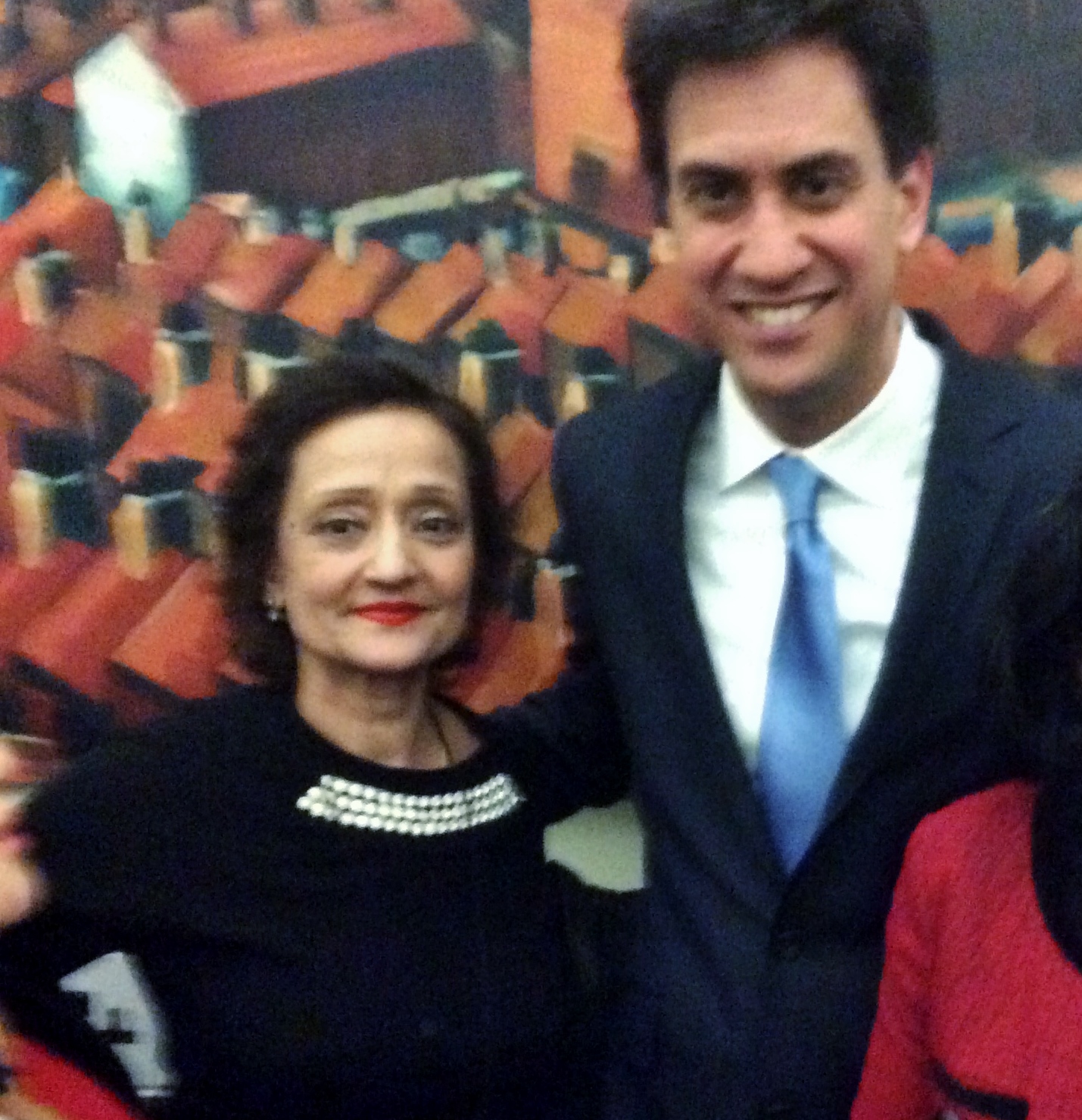
On Wednesday 14th January 2015, I was invited as a guest by my local Labour Party Parliamentary Candidate, Rupa Huq, as being recognized as a local hero. This was alongside another hero from Ealing, Audrey Jones. The reception was hosted by Ed Miliband at Westminster.
I was allowed a guest. I naturally took Fiona Bell. Well, who else? Maybe Minh Alexander or Martyn Halle? As we waited for Rupa, at Westminster tube, we saw none other than the very distinguished, Sir Robert Francis QC, who many will know is undertaking review on NHS whistleblowing. The report was scheduled for December. However, we are still waiting.
Sir Francis was surprised to see us and asked if we were waiting for him. To which we replied ‘No’ and Fiona added, ‘but we’re waiting for the report’. Sir Francis replied, ‘Aren’t we all!’ So, is the report done but the hold up is at Hunt’s end? Possibly. Thinking about it, maybe Hunt is the very person who Sir Francis may have gone to visit – after all Sir Francis’ office is not based at Westminster. However, we can only speculate.
Back to the local heroes event. We queued and got checked in. The gathering was very relaxed and welcoming. Various MPs had invited heroes from their constituency. To my knowledge this is the first time a whistleblower has been recognized formally as a ‘hero’ instead of being labelled as a ‘troublemaker’, snitch’ or something worse. In most instances ignored by governing bodies.
This is a step forward for NHS whistleblowing. It’s not a party political matter as far as I am concerned. It’s time for all MPs to recognise their local NHS whistleblowers as ‘heroes’, so it’s something that is acknowledged and valued and not something that is a punishable offence, as is currently the case.
Whilst whistleblowers are persecuted, it sends a warning example to other staff. As a result patients lives are placed at risk as staff who would otherwise report wrongdoings/concerns remain silent, so compromising patient/staff safety.
 In my case I reported fraud. Despite evidence, governing bodies have ignored both my concerns and my treatment as a whisleblower. £5bn a year is lost to NHS fraud. Yet, it seems there is no interest to investigate.
I also received the lovely message below:
|

 It’s time for change. I hope this is a start of many NHS whistleblowers ‘heroes’ who should be recognised for the personal sacrifices they have made in order to protect patients and the public.
Time for recognition. Time also for understanding of how whistleblowing goes wrong, and what the system should do differently in the future. All of Westminster needs to genuinely engage with the whistleblowing agenda, and prioritise better governance for the good of the public. Above all, what we need is practical action, and that is what I campaign for.
|
Too many newsletters? You can unsubscribe.
|
Care worker QUITS because only had 15 minutes to spend with frail pensioners
The Mirror Jan 17, 2015 23:53 By Pamela Owen
Whistleblower Gillian Demet says she was left with no choice but to resign from Sevacare who provide more than 4,000 care workers nationwide
John Gladwin/KNS
A home-care worker today reveals she quit her job because she was only allowed to spend 15 MINUTES a time with frail pensioners.
Whistleblower Gillian Demet says she was left with no choice but to resign from Sevacare who provide more than 4,000 care workers nationwide.
Miss Demet, 62, said the cruel rule was putting patients’ lives at risk. “Where is the love, compassion and care that should be shown to each and every elderly person?,” she demanded.
“You couldn’t spend time with clients. There was no time to talk, to chat or to build friendships.
“The only way I could have carried on was by not showing the level of care I wanted. I was not prepared to do that.”
Incredibly, when the Sunday Mirror approached Ravi Bains, the CEO of Sevacare, he AGREED the 15-minute visits were unfair on clients and staff.
And he accused the Government of damaging the vital home care industry with unreasonable budget cuts.
Mr Bains admitted: “The allocation of resources to home care is inadequate, it is a concern we share with our staff.
“Our carers are dedicated and committed, we want to do more for our staff and clients. We are fully sympathetic but our hands are tied and it’s due to government funding.”
Getty
Miss Demet’s comments cast fresh light on how the crisis in home-care for elderly people is adding to the huge strain on hospitals, causing many OAPs to seek help in A&E units.
The number of elderly people being given state-funded care in their homes has dropped by a quarter in just five years, according to official figures.
A total of 1.3 million people receive state-funded home help, a care home place or hot meals – down from 1.7 million in 2007-08.
Charities said thousands of elderly and other vulnerable adults were being denied dignity and peace of mind because of council spending cuts.
Cash-strapped authorities nationwide are limiting provision with tougher rules on who is entitled to receive help.
Miss Demet survived cancer seven years ago and decided she wanted to work in healthcare to put something back, so she responded to a Sevacare advert.
Her previous jobs included being a personal trainer, painter and decorator and a hotel receptionist. She said: “None of that in any way prepared me for work as a carer. I had no experience whatsoever, but I got the job easily.”
After filling in a lengthy application she went on a three-day training course before shadowing another carer for 20 hours.
“I felt I was thrown in at the deep end,” she said. “The training just showed us the basics, but it was difficult when you have to start making visits on your own.
“These poor elderly people spend a lot of their days alone, but we couldn’t even spare a few minutes just to talk to them. You were on your way out of the door the moment you’d finished. They deserve more than that.”
Once in the job Miss Demet soon realised the sheer scale of her responsibilities. One typical shift saw her start work at 4.15pm, cramming in 14 visits by the end of her day at 9.45pm.
Another 14-hour day saw her start at 7am and finish after 9.30pm.
The number of home calls she was sent on meant she was only able to spend 15 minutes with most patients.
She said: “There were days when I had four appointments in an hour, 15 minutes for each, and that includes racing between them. It only gives you the time to do the bare minimum.”
Visits were often quite physically demanding.
Miss Demet explained: “Mornings were a killer. You would have to hoist them out of bed, undress them, hoist them into the shower, wash them, hoist them out, dry them, dress them, move them to the lounge, make them breakfast and give them their pills from blister packs.
“Once you’d done that you’d have to dash off to get to your next appointment.
“There’s no time to chat, to get to know them. A lot of these people were old and slow, it felt wrong treating them like that. There was no way you could complete the job properly in a few minutes.”
Miss Demet, of Salford, Greater Manchester, added: “I cared about the people I was visiting, but I just didn’t have the time to devote to them.”
She said staff felt pressured by head office, with them constantly on the phone when they were running late.
She said: “On the 14-hour days there was meant to be a two-hour break, but you could never make use of it. The only way to keep on time would be to cut corners. I wasn’t willing to do that.”
After just three weeks she quit the £6.70 per hour, minimum-wage position. She says the current system is unfair on staff and the elderly.
Miss Demet added: “It all boils down to money. The staff need to give more time to clients, but time costs money doesn’t it? I just became totally disillusioned. Talking to other people they felt the same, but people need jobs.”
She said the Government must increase funding for home care. She said: “The alternative is that all these people would have to go into residential care. That would cost taxpayers billions.”
And she believes staff deserve better conditions. She said: “Why aren’t carers paid a decent wage and given the time to spend with clients to do the job properly? It’s important work with vulnerable people.
“But after a few weeks I just thought I hope I never find myself in the situation where I have to rely on that sort of home care.”
Her concerns were shared by Mr Bains, who founded Sevacare from his garage in 1998.
Getty
He applauded Shadow Health Secretary Andy Burnham’s plan to put health and social care together.
Mr Bains said: “We need to give more weight to home care, due to the reduction in resources more and more people are going into A&E, this is something our movement predicted years ago.”
He said: “You can’t really provide care in 15 minutes. There isn’t the time for that cup of tea.
“Mr and Mrs Smith or Singh may have been waiting all day for that visit. It’s the social side we can’t deliver any more. Our hands are tied by commissioning practices. Give us more resources, fund home care adequately, and we will keep people out of hospital. Cuts were made to home care years ago and now we are paying the price for it.”
Izzi Seccombe, Chairman of the Local Government Association’s Community Wellbeing Board, said: “Adult social care funding is in crisis and it is vital for our elderly population that government urgently addresses this. Short visits should never be the sole basis of care, but sadly the rise in 15 minute visits is symptomatic of a system that continues to be chronically underfunded.”
Whistleblowing paramedic who criticised two hospitals for being ‘unsafe’ after patients were routinely treated in corridor is banned from work
- Stuart Gardner, West Midlands Ambulance Service, gave interview to BBC
- A paramedic for 26 years, said he’d ‘never seen hospital situations like it’
- Described how 18 patients were treated in corridors on one day
- Since speaking out, has been told he is no longer welcome at the hospitals
A whisleblowing paramedic who spoke out about the chaos his local A&E departments has been banned from both hospitals.
Stuart Gardner, of West Midlands Ambulance Service, was reprimanded after saying under-pressure emergency units were ‘not safe’.
He has since been told he is not welcome at hospitals in Worcester and Redditch.
The comments were made by the paramedic of 26 years during an interview with the BBC.
During it, he described how even before the winter pressures, patients were routinely treated in corridors at the Worcester Royal Hospital.

Banned: Stuart Gardner, of West Midlands Ambulance Service, was reprimanded after saying under-pressure emergency units were ‘not safe’
In fact, the practice was so commonplace that ‘there were labels along the corridor of the emergency department so staff could find the patients’.
‘Last Friday, there were 18 trolleys with sick patients,’ he said.
‘There were ECGs being done, stitches, cannulas (a medical tube inserted into the body with a needle) – staff were doing everything in the corridor.
‘I’ve never seen anything like it – and I do not believe it’s safe. it’s not good for the patients and their care is being jeapordised.’
Since then, however, Mr Gardner claims he was told he was ‘not welcome’ at either the Worcester hospital or the Redditch Alexandra Hospital.
The trust told the BBC it is under extreme pressure – and patients are being treated on trolleys to prevent them from being treated in ambulances.
It added the ban had been imposed as Mr Gardner’s comments had upset staff.
In a statement, Stewart Messer, Chief Operating Officer at Worcestershire Acute Hospitals NHS Trust, said: ‘We would like to make clear that our conversations with Mr Gardner and his representatives about his presence at our hospital are related to personal upset he has caused among some of our A&E staff in relation to the interpretation of some of his comments.
‘There were ECGs being done, stitches, cannulas (a medical tube inserted into the body with a needle) – staff were doing everything in the corridor
‘Whistleblowing is positively encouraged and promoted within our organisation and we take any concerns about our quality of care very seriously from anyone who wishes to raise them.
‘Our A&E staff are proud to have a very positive working relationship with the paramedics who visit our sites… it is critical to preserve relationships with the ambulance service – especially at this crucial time – in order to ensure the safety of patients in our care.
He added: ‘In response to this isolated incident, we have suggested it would be appropriate for Mr Gardner to address the upset he has caused among A&E staff who are working tirelessly under what has been – and continues to be – extreme pressure.
‘We hope that Mr Gardner and his Unison colleagues will work with us on this to reach an amicable outcome.’
But a spokesman for West Midlands Ambulance Trust told MailOnline that Mr Gardner was working and being deployed as normal.

Frantic: During the TV interview, he described how even before the winter pressures, patients were routinely treated in corridors at the Worcester Royal Hospital (pictured)
‘This is an issue between the union and the hospital,’ he said.
A spokesman for the hospital trust admitted he was ‘not fully aware’ of what had been decided.
Ravi Subramanian, UNISON’s West Midlands Regional Secretary, said rather than dealing with the problems facing A&E departments the Trust had chosen to personally attack one of their members.
‘Our rep Mr Gardner is clearly acting in the public interest in whistle blowing about serious concerns about A&E. The response from the Trust’s Chief Operating Officer, Mr Messer is nothing short of an utter disgrace,’ he said.
‘By banning Mr Gardner from the Trust premises Mr Messer is putting patients’ lives at risk.
‘What happens if Mr Gardner is on a 999 call in the area and the best place to take patient is to Worcestershire Royal Hospital.
‘Is the chief operating officer saying that Mr Gardner will be turned away, and will have to take the patient to a hospital further away, thus endangering patient safety?
‘The public knows that front-line NHS workers are working flat out to deal excess workload in A&E.’
Exclusive: Croydon University Hospital hires ‘£5,000 per day’ QC to fight tribunal’s damning whistleblower’s verdict
Croydon Advertiser | Posted: January 14, 2015

Jane McNeill QC has been instructed by Croydon University Hospital to help appeal Dr Kevin Beatt’s (centre) tribunal verdict. Chief executive John Goulston, right, declined to be interviewed this week
CROYDON University Hospital has hired a QC who charges between £4,000 and £5,000 a day to help appeal a tribunal’s verdict that it sacked a senior doctor for whistleblowing.Figures obtained by the Advertiser show Croydon Health Services, the trust which runs the hospital, has already spent more than £130,000 on legal fees relating to Dr Kevin Beatt’s unfair dismissal claim.
He won his case in October after a judge decided he had been sacked for raising concerns following the death of a patient during a routine operation in 2011, rejecting the hospital’s claim he had been guilty of gross misconduct.
The hospital continues to reject the tribunal’s damning judgement and has instructed a top QC to work on an appeal alongside the barrister already working on the case, the Advertiser can reveal.
Leading silk Jane McNeill QC, of Old Square Chambers, commands between £50,000 to £60,000 to prepare a case up until the first day of a hearing and between £4,000 to £5,000 per day thereafter. Ian Scott, a junior also from Old Square, represented the trust at the tribunal.
Tony Newman, leader of Croydon Council, has called on the hospital to “take a long hard look” at whether the spending is appropriate.
Gavin Barwell, MP for Croydon Central, said: “I will need to speak to the hospital, but at first sight I think my constituents will question whether, given the undeniable pressure the NHS is under, the hospital should be spending these sums of money on an employment tribunal, particularly when there has been a clear verdict.”
Hospital becomes first in London to declare major internal incident due to A&E demand.
Croydon Health Services said chief executive John Goulston was unavailable for interview when approached by the Advertiser this week.
Instead it provided a written statement in which it stood by its reasons for sacking Dr Beatt and did not respond to any questions about Ms McNeill or its legal expenditure.
According to figures provided to the Advertiser via a Freedom of Information request, the trust had spent £132,048 on the case as of December 11, including all solicitor and counsel fees since Dr Beatt submitted his claim after being sacked in September 2012.
He had alleged one of his patients, Gerald Storey, had died because a nurse had been suspended without his knowledge, meaning she was unable to help him during the procedure.
After informing the coroner and a senior GP the trust sacked him for gross misconduct, claiming his account was “unsubstantiated” and made to “serve an ulterior motive”.
Those claims were rejected by the employment tribunal which found Dr Beatt, 63, raised “genuine” concerns – later substantiated by the coroner – only to be dismissed because he was a whistleblower.
The tribunal’s lengthy report was highly critical of senior managers at the hospital, including Mr Goulston and Michael Parker, then the trust’s chairman.
It alleged that one of Dr Beatt’s colleagues – Dr Asif Qasim – was a bully and that he and another manager had pressured witnesses to change their statements about what had happened on the day of Mr Storey’s death.
Speaking to the Advertiser this week, Dr Beatt said the final cost of the legal proceedings will far exceed the £132,048 bill the trust has accrued so far. The hospital should learn whether it has been given leave to appeal – or even go to a full re-hearing – within the week.
Dr Beatt said: “The hospital is spending huge amounts of public money, not to defend the trust or the clinical service, but to defend the reputation of its managers.
“The NHS has this vast budget and there’s no accountability for how managers spend it. This couldn’t apply in any other business where this amount of money would be at stake.”
Cllr Newman said: “Having looked closely at this case, at a time when the NHS is under huge financial pressure, and its A&E is in crisis, I would ask the hospital to take a long hard look at whether spending tens of thousands of pounds, that the NHS does not have, on this issue, is the best use of the hospital’s budget.”
A Croydon Health Services spokesman said: “It is every employee’s responsibility at Croydon Health Services to uphold great care for our patients and we take all concerns raised extremely seriously.
“Dr Beatt was not dismissed for whistleblowing and we stand by our reasons for dismissal. We have investigated his claims thoroughly.
“The trust is appealing the decision of the Employment Tribunal and we will not be commenting further on this matter until these legal proceedings are complete.”
The dangers of NHS whistleblowing
Quality of care and patient safety in the UK: the way forward after Mid Staffordshire
By Brian Jarman
Dr Foster Unit, Imperial College Faculty of Medicine,
London EC4Y 8BN, UK
In the past decade, quality of care and patient safety in British hospitals have become the focus of increasing public, professional, political, and regulatory concern. The 2001 inquiry into paediatric cardiac surgery at Bristol Royal Infirmary concluded that the Department of Health was unable to respond to an issue of quality of care, even though the Department of Health accepted that ultimate responsibility rests with it and the Secretary of State for Health.1 The Bristol Royal Infirmary Inquiry warned that quality of care problems could recur in the National Health Service (NHS) in future. After the recommendations of an external investigation of Bristol were implemented, the adjusted death rate at the paediatric cardiac surgery unit dropped from 29% to 3% within 3 years.2 The families of children who underwent cardiac surgery at Bristol should have been told of the lower mortalities at other units.
In 2001, the Dr Foster company published the first of their annual Good Hospital Guides in UK national newspapers: these included hospital standardised mortality ratios (HSMR).3–5 The HSMR is the ratio of the number of observed deaths in a hospital over a certain time to the number that would be expected if the hospital had the national death rate accounting for the adjustment factors, such as age, sex, diagnosis, and emergency admission. Although it has limitations, the HSMR is a trigger to ask hard questions and understand where performance may be falling short. Since 2003, the Dr Foster website also reported monthly mortality alerts6 for particular diagnoses or procedures for NHS organisations and professionals. From April 2007, these alerts were sent by letter from Imperial College London to the chief executives of any English NHS hospital trust that was found to have a risk-adjusted death rate for a particular condition that was double the national rate in the preceding 3 months, and the chance of it being a false alarm was less than 1 in 1000. The letters were copied to the hospital regulator, the Healthcare Commission (and now to its successor the Care Quality Commission [CQC]).
In 2007, when the Mid Staffordshire General Hospitals NHS Trust was supported by its oversight Strategic Health Authority for Foundation Trust status, its HSMR published in the Good Hospital Guide was the fifth highest of English acute trusts.3 The Department of Health cautioned the public against using HSMRs to judge the relative safety of hospitals.7 The Department of Health was not informed of the high HSMR or mortality alerts at Mid Staffordshire when they agreed, in June, 2007, to approve the trust’s application to Monitor, the Foundation Trust regulator, for final approval.8 Monitor was told by the trust that Mid Staffordshire’s apparently high HSMR was an artifact of coding.8 David Nicholson, initially Chief Executive of the Strategic Health Authority and later of the NHS, said the data that were available to the regulators did not indicate a problem at Mid Staffordshire,9 even though the trust had logged on and seen its mortality alerts 847 times.10 Nicholson considered Mid Staffordshire “singular” and not illustrative of a systemic problem, an attitude described by the Mid Staffordshire NHS Foundation Trust Public Inquiry Counsel as very dangerous and not supported by evidence to the Inquiry.11 The trust is now considered by Monitor to be neither clinically nor financially sustainable.12
Robert Francis’ inquiry into the problems at, and regulation of, Mid Staffordshire NHS Foundation Trust found a widespread culture of denial, and he, his Harvard experts, and Bruce Keogh, Medical Director of the NHS, all considered that monitoring HSMRs had provided grounds for investigating the trust.8,13 The Department of Health chief analyst suggested it was a “system failure” not to have done so, and Keogh agreed that problems at Mid Staffordshire would have been spotted earlier by the Department of Health had that happened.8 The Francis report documented the appalling care received at that trust8 and as a result the Prime Minister David Cameron asked Keogh to investigate the 14 trusts with the highest death rates.14 Keogh’s report found that none of the trusts could be given a clean bill of health and action plans were produced for each.14 The Secretary of State for Health Jeremy Hunt announced that 11 of the trusts would be placed into special measures for fundamental breaches of care.15 The HSMRs of 11 of the trusts had been identified in the 2007 Dr Foster Good Hospital Guide as significantly high, including ten of the 11 that were placed into special measures in 2013.3,15 I notified seven of the 14 hospitals to the then Secretary of State for Health in 2010 and he referred them to the CQC.10 However, individual cases of clinical quality were, and are, not investigated by the CQC or the Health and Safety Executive; the NHS has no investigator of poor clinical care. That is a regulatory gap that should be closed.8
As with the Bristol Royal Infirmary, the national systems for ensuring quality and patient safety had failed at Mid Staffordshire and nationally. Why did that happen? Before the Bristol Royal Infirmary Inquiry there were systems in place that dealt with performance management and clinical outcomes,10 and after Bristol there were great promises16 with the formation of the National Patient Safety Agency (NPSA) and the Commission for Health Improvement (CHI), which detected the problems at Mid Staffordshire in 2002.8 However, between 2003 and 2004 things went wrong. Ian Kennedy referred to what Gordon Brown described in a 2005 speech as a “bonfire of the regulators”.17 CHI was abolished and replaced by the Healthcare Commission, which was slow to detect the appalling events at Mid Staffordshire.8,18 The NPSA acknowledged significant under-reporting of safety incidents18 and was abolished, with its functions incorporated into the CQC. The Independent Review Panels that investigated patients’ complaints about hospital services not resolved at the hospital were abolished, and in 2011–12 only one of 375 written hospital complaints had been formally investigated by the Ombudsman.19 The independent Community Health Councils were abolished in 2003. During the Mid-Staffordshire Public Inquiry, the chairmen of the three main health-care regulators commented on the difficulties they faced. Ian Kennedy, of the Healthcare Commission, stated: “The engagement of the Department of Health was one of interest… quality of the care provided by the NHS was not part of their agenda.”20 Barbara Young, of the CQC, stated: “The reason the government didn’t like tough reports was because they were running the services that were being reported upon.”21 William Moyes, of Monitor, stated: “The culture of the NHS, particularly the hospital sector, I would say, is not to embarrass the minister.”22 The then Minister Andy Burnham said “The impression of us all was that we would just, you know, constantly do what was meant to be the thing that Number 10 wanted or that we were all, you know, unthinkingly piling this stuff through. We weren’t.”23
Since the publication of the Francis Report8 things are changing. The CQC Chairman, Chief Executive, and most of the Board have been changed and, with the Chief Inspector of Hospitals for England, the CQC will undertake thorough inspections in future using trained, professional investigators.24 The Parliamentary Health Service Ombudsman has called for improvements in the way hospital complaints are handled and said that she will formally investigate ten times as many patient complaints.25 There is an intention to abolish the widespread so-called gagging clauses that undermine the culture and transparency of the NHS.26 Francis has recommended a statutory obligation to observe a duty of candour for health-care providers and registered medical and nursing practitioners, and a criminal offence for non-compliance.8 However, as Don Berwick’s recent report on patient safety for the Department of Health makes clear, it is important that this judicial intent does not lead to punishing or criminalising clinicians for unintentional mistakes or involvement in failed systems.27 The existing criminal law can deal with bad cases. Continuous learning and improvement,28 monthly mortality alerts, adjusted death rates,8,27 regular patient and staff feedback, and targeted, skilled hospital investigations could lead to a safe NHS, ideally without a culture of denial8 or gagging clauses.
To improve the quality of care in UK hospitals I would reintroduce the Independent Review Panels and Community Health Councils and develop monthly complaints alerts similar to the mortality alerts. Regulation would be more independent if the CQC reported in public to Parliament, and there would be better communication if it were integrated with Monitor. Additionally, it is important to ensure there are minimum staff-to-patient levels12 of doctors and nurses, with 65% trained nurses3 and regulation of health-care assistants. I would aim for total physicians per head of population at the EU average.29 Ideally I would also like to see training introduced for the boards of trusts and for them to have equal representation of patients, clinicians, finance, and managers. There has been a decade of concerns about the quality of care in our hospitals: patients have been ignored, the regulatory systems have failed, and there has been a culture of denial. With political will the proposed reforms could lead to marked improvements.
I am employed part-time as the Director of the Dr Foster Unit at Imperial College London. I am paid a consultancy fee by Dr Foster Intelligence for my international work on advice and involvement with development of international relations and am paid as a part-time Senior Fellow at the Institute for Healthcare Improvement in Cambridge, MA, USA.
1 The Bristol Royal Infirmary Inquiry. Learning from Bristol: the report of the
public inquiry into children’s heart surgery at the Bristol Royal Infirmary
1984–1995. July 2001. CM 5207. London: Stationery Office, 2001.
2 Aylin P, Bottle A, Jarman B, Elliott P. Paediatric cardiac surgical mortality in
England after Bristol: descriptive analysis of hospital episode statistics
1991–2002. BMJ 2004; 329: 825.
3 Dr Foster Intelligence. Dr Foster April 2007 Good Hospital Guide. http://
drfosterintelligence.co.uk/wp-content/uploads/2011/06/The-Hospital-
Guide-2007.pdf (accessed Aug 8, 2013).
4 Jarman B, Gault S, Alves B, et al. Explaining differences in English hospital
death rates using routinely collected data. BMJ 1999; 318: 1515–20.
5 Bottle A, Jarman B, Aylin P. Strengths and weaknesses of hospital
standardised mortality ratios. BMJ 2011; 342: c7116.
6 Bottle A, Aylin P. Intelligent information: a national system for monitoring
clinical performance. Health Serv Res 2008; 43: 10–31.
7 Martin N. Revealed: lottery of death rates in hospitals. The Telegraph,
April 24, 2007. http://www.telegraph.co.uk/news/uknews/1549493/
Revealed-Lottery-of-death-rates-in-hospitals.html (accessed Aug 8, 2013).
8 The Mid Staffordshire NHS Foundation Trust. Public Inquiry Chaired by
Robert Francis QC. Report of the Mid Staffordshire NHS Foundation Trust
Public Inquiry. 3 vols. London: Stationery Office, 2013. http://www.
midstaffspublicinquiry.com/report (accessed Aug 8, 2013).
9 Hansard. The Health Committee, HC 982–ii. House of Commons, page 22.
Report of The Mid Staffordshire NHS Foundation Trust Public Inquiry.
March 5, 2013. Sir David Nicholson KCB CBE, question Q203. http://www.
publications.parliament.uk/pa/cm201213/cmselect/cmhealth/uc982-ii/
uc98201.pdf (accessed Aug 8, 2013).
10 Mid Staffordshire NHS Foundation Trust Public Inquiry. June 13, 2013.
Statement of Sir Brian Jarman. Paragraphs 25–27. http://www.
midstaffspublicinquiry.com/sites/default/files/evidence/Brian_Jarman_-_
witness_statement.pdf (accessed Aug 8, 2013).
11 Mid Staffordshire NHS Foundation Trust Public Inquiry. Oral hearings. Dec 1,
- Page 193, lines 5–6. http://www.midstaffspublicinquiry.com/sites/
default/files/transcripts/Thursday_1_December_2011_-_transcript.pdf
(accessed Aug 8, 2013).
12 Monitor. Monitor—contingency planning team, Mid Staffordshire NHS
Foundation Trust, assessment of sustainability, January, 2013. http://www.
monitor-nhsft.gov.uk/sites/default/files/publications/MSFT%20
Sustainability%20Final.pdf (accessed Aug 8, 2013).
13 Robert Francis, QC. Notes for presentation of letter to SoS submitting Mid
Staffs Independent Inquiry. Feb 5, 2010. http://www.midstaffsinquiry.com/
assets/docs/Report-presentation-by-Robert-Francis-QC.doc (accessed
Aug 8, 2013).
14 Keogh B. Review into the quality of care and treatment provided by
14 hospital trusts in England: overview report. July 16, 2013. London:
NHS England, 2013. http://www.nhs.uk/NHSEngland/bruce-keoghreview/
Documents/outcomes/keogh-review-final-report.pdf (accessed
Aug 8, 2013).
15 Hansard. House of Commons. Hospital mortality rates. July 16, 2013.
Column 927. http://www.publications.parliament.uk/pa/cm201314/
cmhansrd/cm130716/debtext/130716-0001.htm#13071683000004
(accessed Aug 8, 2013).
16 Department of Health. An organisation with a memory. London: Stationery
Office, 2000.
17 Mid Staffordshire NHS Foundation Trust Public Inquiry. May 4, 2011.
Oral evidence of Sir Ian Kennedy, day 77. Page 33, lines 3–23. http://www.
midstaffspublicinquiry.com/sites/default/files/transcripts/Wednesday_4_
May_-_transcript.pdf (accessed Aug 8, 2013).
18 House of Commons. Patient Safety Health Committee. Measurement and
evaluation, paragraph 36. http://www.publications.parliament.uk/pa/
cm200809/cmselect/cmhealth/151/15106.htm (accessed Aug 8, 2013).
19 Jarman B. Professor Brian Jarman guest editorial: not many complaints are
investigated. nhsManagers.network, May 14, 2013. http://www.
nhsmanagers.net/guest-editorials/not-many-complaints-are-investigated/
(accessed Aug 8, 2013).
20 Mid Staffordshire NHS Foundation Trust Public Inquiry. April 4, 2011.
Witness statement of Sir Ian Kennedy, paragraph 39. http://www.
midstaffspublicinquiry.com/sites/default/files/evidence/Sir_Ian_Kennedy_-_
witness_statement.pdf (accessed Aug 8, 2013).
21 Mid Staffordshire NHS Foundation Trust Public Inquiry. Oral hearings,
day 110. July 4, 2011. Page 74, line 20. Page 75, line 9. http://www.
midstaffspublicinquiry.com/sites/default/files/transcripts/Monday_4_
July_2011_-_transcript.pdf (accessed Aug 8, 2013).
22 Mid Staffordshire NHS Foundation Trust Public Inquiry. Oral hearings,
day 93. June 1, 2011. Page 11, line 24. Page 12, line 1. http://www.
midstaffspublicinquiry.com/sites/default/files/transcripts/Wednesday_1_
June_2011_-_transcript.pdf (accessed Aug 8, 2013).
23 Mid Staffordshire NHS Foundation Trust Public Inquiry. Oral hearings,
day 115. Sept 6, 2011. Page 138, lines 2–5. http://www.
midstaffspublicinquiry.com/sites/default/files/transcripts/Tuesday_6_
September_2011_-_transcript.pdf (accessed Aug 8, 2013).
24 Care Quality Commission. Consultation on changes to the way we inspect,
regulate and monitor care services. July, 2013. http://www.cqc.org.uk/
public/sharing-your-experience/consultations/consultation-changes-waywe-
inspect-regulate-and-monito (accessed Aug 8, 2013).
25 Donnelly L. Ombudsman: patients suffer from a “toxic cocktail” in NHS.
The Telegraph, Aug 12, 2013. http://www.telegraph.co.uk/health/
healthnews/10238221/Ombudsman-Patients-suffer-from-a-toxiccocktail-
in-NHS.html (accessed Aug 13, 2013).
26 Hammond P. The NHS is still not safe for whistleblowers. The Times,
March 15, 2013. http://www.thetimes.co.uk/tto/opinion/thunderer/
article3713910.ece (accessed Aug 8, 2013).
27 National Advisory Group on the Safety of Patients in England. A promise to
Call for evidence: NHS complaints and clinical failure

17 December 2014
Public Administration Select Committee (PASC) invites written evidence on the issue of NHS Complaints and Clinical Failure, ahead of oral evidence sessions early in the new year.
PASC launches a new inquiry into how incidents of clinical failure in the NHS are investigated – and how subsequent complaints are handled. The Committee is considering ways that untoward clinical incidents could be investigated immediately at a local level, so that facts and evidence are established early, without the need to find blame, and regardless of whether a complaint has been raised. It is hoped that this work will reduce the need for complaints to go to the Parliamentary and Health Services Ombudsman (PHSO), whose main role relates to administrative and service failures in the NHS in England.
The inquiry aims to
- examine the effectiveness of existing approaches to investigating and addressing systemic safety issues currently present within the NHS
- explore the relative benefits that a new clinical accident investigation body might bring to this area and how analysis of complaints could inform its work
- consider models of best practice within other sectors and examine their transferability to the healthcare sector; and to
- explore the role that the PHSO might play in the functioning of any new accident investigation body
PASC would like to hear views on
- The effectiveness of the NHS’s current approach to investigating and addressing untoward medical incidents.
- How lessons about best practice, procedures and human factors should be learned and disseminated.
- The value that a new, single, clinical accident investigation branch of the Department of Health would bring to the healthcare sector and how this could improve the complaints process.
- The current capacity of the PHSO to manage and investigate complaints relating to clinical incidents, and their ability to analyse and assess medical evidence.
- The impact that Department of Transport accident investigation branches have had in the transport sector and the lessons that have been learnt from the establishment and use of such bodies, in the UK and in healthcare systems in other countries.
- How any such body within the healthcare sector would support the work of PHSO.
- The legal drivers behind increased challenges associated with the issue of medical liability, and the failure to address clinical incidents and complaints.
Bernard Jenkin MP, Chair of the Committee, said
“It is very unfortunate that the way clinical failures – which can be a tragedy for a person and their loved ones – are handled by the NHS and its watchdogs does not seem to foster positive outcomes or learning from mistakes that have been made. There seems to be a culture of blame and of responding only to complaints, rather than an environment where clinicians can come forward and lay out the facts of things that have gone wrong, or express concerns, so that they can be investigated and lead to improvements. Right now the only outcomes after clinical failings seem to be another excoriating report by a health watchdog, litigation or the passing of badly handled complaints further up the chain to adjudicators of last resort like the PHSO, which reports to Parliament through PASC. These outcomes may be the result of ‘starting from the wrong place’. We would like to examine the possibilities of new ways of reporting and investigating clinical failures that could being about positive outcomes and change at a much earlier stage. We are interested in the experience in other countries, particularly in New Zealand, which drew the support of a 2009 Health Select Committee Report on Patient Safety.”
The Committee would also welcome views on any other matters that may be relevant to this inquiry. Please do not feel obliged to respond to all of the questions if you have a specific interest.
Recent developments
Work in this area has been prompted by public debate and the recent publication of an article in the Journal of the Royal Society of Medicine by Carl Macrae (Centre for Patient Safety and Service Quality, Imperial College London) and Charles Vincent (Department of Experimental Psychology, University of Oxford). This article compares accident investigation within the healthcare sector to that within air, rail and maritime transport. It argues that whilst these industries are “served by an independent and permanently staffed organisation that is explicitly charged with investigating serious safety risks and major failures”, no similarly consistent approach exists within the NHS:
“These independent investigators are responsible for coordinating all major safety investigations in their industry. They have a remit to investigate the entire industrial complex, encompassing design of equipment, the culture and practices of delivery organisations such as airlines or shipping companies, and the role of regulators and government. Their independence is essential to their effectiveness. It allows them to routinely investigate the full range of factors that underlie major failures, irrespective of whether those are rooted in the behaviour of an individual professional or the design of an entire regulatory system.”
Macrae and Vincent suggest that by applying such learnings the NHS could develop an investigation agency for healthcare which would be:
- Independent and impartial. No executive, regulatory, commissioning or performance management functions
- Transparent. Clear, timely, open communication of findings of investigations, recommendations and monitoring of implementation
- Established as permanent body able to investigate and follow up recommendations over years
- Collaborative and cooperative. Working in partnership with those being investigated
- Authority to access all sites, organisations, staff and information across the healthcare system
- Non-punitive. Separated from assignment of blame or liability and legally protected
- Accountable
Background
PHSO investigates complaints where individuals have been treated unfairly or have received poor service from government departments, other public organisations and the NHS in England. The service that PHSO provides is governed by law, free to use, open to everyone and completely independent.
PASC scrutinises the reports of the Parliamentary and Health Service Ombudsman. PASC monitors complaints about the Ombudsman as a way of examining the work of her office and identifying systemic problems, but does not consider individual cases.
How to respond
- Responses should be submitted by noon on Friday 16 January 2015 through the inquiry page.
- Guidance on written submissions
“This brutal gagging of NHS whistleblowers just means more patients will die” says GARY WALKER, a former NHS boss sacked after speaking out
The Mail on Line
Politicians and NHS bosses are fond of proclaiming that patient safety is their highest concern.
But so often that is just empty rhetoric. For too many hospital chiefs and senior Health Service bureaucrats, self-preservation comes before the needs of patients.
That reality has been graphically illustrated this week by the disturbing case of Joseph Meirion Thomas, a top cancer surgeon at the internationally renowned Royal Marsden Hospital in London.

Politicians and NHS bosses are fond of proclaiming that patient safety is their highest concern. But so often that is just empty rhetoric, says Gary Walker
In the eyes of his managers, Mr Thomas committed a serious offence by daring to write a number of newspaper articles about certain problems in the NHS, including the exploitation of the service by health tourists and the inadequacy of GP services.
He provocatively argued that many women GPs work part-time in order to juggle childcare, leaving surgeries understaffed, and worried that many GPs, both men and women, were opting out of night and weekend cover.
Called a ‘disgrace to his profession’ and ‘an evil man’ by some critics, he was accused of undermining ‘working relationships’ within his hospital.
The Royal Marsden was even warned by Professor Azeem Majeed, who runs the Department of Primary Care and Public Health at Imperial College London, about the potential loss of patient referrals as a result of Mr Thomas’s actions.
He was first put on ‘gardening leave’, then told he could return to his job only if he agreed never to write about the NHS again without the express approval of his management.

Effectively, he has been given a strict gagging order, even though the Health Secretary Jeremy Hunt recently promised that such orders would be banned.
This sorry episode makes a complete mockery of all the Coalition Government’s eager talk about the protection of NHS whistleblowers.
Far from adopting a new atmosphere of openness, too many senior NHS executives still want to indulge in silence and cover-up.
That was certainly my experience as chief executive of the United Lincolnshire Hospitals.
When I told the Department of Health how the politicised obsession with arbitrary targets and waiting times was badly undermining effective patient care, my warnings went unheeded, and I was increasingly harassed by that department.
It was a process that culminated in my dismissal in 2010 and a subsequent legal battle for fair treatment.
Sadly, this is part of a pattern within the NHS.
In May this year, a High Court judge ruled that experienced cardiologist Dr Raj Mattu had been unfairly sacked from his job at Coventry’s Walgrave Hospital after he warned that patients were dying there because of severe over-crowding on the wards.
Instead of heeding his concerns, the Coventry Walgrave Trust management embarked on a systematic persecution of Dr Mattu, not only hounding him out of his job but even spending a staggering £10 million of taxpayers’ money in trying to gag and persecute him.

Similarly, Peter O’Keefe, a surgeon at the University Hospital of Wales, has been suspended on full pay since 2012, after he warned that a patient had suffered brain damage because of inadequate care.
One of my colleagues remarked that I was ‘taken out and shot’ for exposing the disastrous consequences of the relentless focus on targets. And indeed that is what it feels like when you dare to reveal NHS failings.
Punishment, not reward, is the usual outcome for whistleblowers.
Even Helene Donnelly, a nurse in the Accident and Emergency Department of Stafford Hospital — who was one of the first to reveal the scandalous mismanagement at Mid Staffordshire NHS Foundation Trust — felt compelled to move hospitals because she felt persecuted where she was.
What is so bitterly ironic is that the NHS, whose managers constantly wail about lack of financial resources, seems to have plenty of money to mount legal actions and impose gagging orders, often dressed up as ‘confidentiality clauses’, on whistleblowing staff.
We see again and again that the impulse to cover up carries more weight than the desire to reform failing hospitals, clinics and working practices.
Jeremy Hunt argues that a major change in attitudes is under way. He insists the NHS is becoming more open and more willing to pay attention to the concerns of staff.
Last year he promised to end the ‘era of gagging NHS staff’.
He has also set up a whistleblowers’ hotline. But I have to say, as a whistleblower myself, I see little significant difference between this brave new world of transparency and the old intimidation and oppression.
My sense of cynicism has only been reinforced by the absurd saga of Joseph Meirion Thomas.
Mr Hunt, though he may have the best of intentions, still has a major battle to fight before there is proper protection for those trying to safeguard patients.
I fear that, even after all these promises, a case like mine could still arise.
I had been the chief executive of the United Lincolnshire Trust for four years when, in 2009, I began to see that remorseless pressure from New Labour’s Department of Health to meet non-urgent targets was having a catastrophic impact on frontline patient care.
Our facilities were over-run, we were receiving up to 15 per cent more cases than we could handle, and our staff were struggling to cope.
As a result, I decided to write a blunt letter to the Department telling them that we could not meet their targets, and that patients’ lives were being put at risk. The Department replied that staff had no choice but to concentrate on the targets.
Burnham’s recent Urgent Question on added pressure on NHS


Jeremy Hunt is obviously full of good intentions — but he has to act on them, says Gary Walker
I thought this was ludicrous, and completely against the founding principles of the NHS, and I wrote of my deepening concerns to the then Labour Health Secretary Andy Burnham and the Chief Executive of the NHS, Sir David Nicholson.
In my letter to the latter, I asked to be given protection as a whistleblower.
But far from being provided with any protection, I found the fire of the NHS top brass turned in my direction.
Subjected to remorseless bullying, I was eventually dismissed on a bizarre, trumped-up charge of having sworn at a meeting, which witnesses said never happened.
I was forced to fight a two-year battle against this dismissal, spending £100,000 in legal fees and putting my home and the livelihood of my family at risk.
Then, on the eve of a hearing at an Employment Tribunal, the Department of Health suddenly made me an offer of £325,000, plus the payment of all my fees and expenses, to settle the case.
With my costs mounting, I was in no position to reject this.
There was, of course, a sting in the tail: a gagging order or ‘confidentiality clause’ which stipulated that I could not speak to the media about my case.
In 2013, however, the growing scandal over the abuse of NHS whistleblowers compelled me to speak out — even if this put my settlement at risk.
When I first spoke to this paper in February 2013 about NHS gagging orders, the Department of Health threatened to sue me.
What still saddens me is the thought that I lost a job I loved simply for daring to challenge the failing NHS bureaucracy.
The destructive, self-serving mindset has to end.
Any organisation that genuinely wants to improve must constantly scrutinise itself and listen to internal critics, rather than indulge in hollow propaganda and organised bullying.
Jeremy Hunt is obviously full of good intentions — but he has to act on them.
He should speak out on the Thomas case if we are to believe he supports the right of healthcare workers’ to speak freely without fear. Right now the NHS doesn’t support free speech.
That’s bad for staff — but it can be fatal for patients.
Brave men like Joseph Meirion Thomas can perform a vital, even life-saving, public service. They deserve to be cherished, not punished and gagged.
The NHS system is ‘creaking’ and ‘under pressure’

And the others who dared to tell the truth
JULIE BAILEY: Though she didn’t work for the NHS, her campaign for justice made a huge impact after her mother Bella died in dreadful circumstances at the Mid Staffordshire NHS Trust, where up to 1,200 patients died needlessly between 2005 and 2009.
Mrs Bailey was awarded a CBE after her role in exposing the failings at the hospital, but she was driven from her home by furious local opponents — some of whom worked at the hospital — and forced to move away.

Her mother’s grave was even desecrated.
Mrs Bailey set up the campaign group Cure The NHS on behalf of patients, wrote a book about her fight to uncover the truth and has since been named as the second most powerful woman in Britain by the Independent and in the BBC Woman’s Hour power list 2014.
DR KEVIN BEATT: Renowned heart surgeon sacked after he complained of being ordered to cover up the death of a 63-year-old patient, and of staffing shortages, ‘appalling’ equipment and workplace bullying.
He recently won his case against Croydon University Hospital, in South-East London.
In a damning ruling, employment judge Gill Sage said health chiefs had waged a campaign to destroy his career and had ‘embellished’ facts and given ‘inconsistent’, ‘unreliable’ and ‘factually incorrect’ evidence.
He is still in limbo, and revealed yesterday the hospital was using taxpayers’ money to appeal against the judgment.


Dr Kevin Beatt (pictured left) and David Ore (right) both blew the whistle on NHS failings
JOHN MARCHANT: Blew the whistle on vulnerable patients being restrained against their will.
The former head of security at Dudley Group of Hospitals NHS Foundation Trust, West Midlands, revealed how security staff were being ordered to restrain patients when all they wanted was to walk around a ward or chat with fellow patients. The Dudley Group denied his claims, but admitted staff had raised concerns. Mr Marchant was made redundant after ten years in the job.
DAVID ORE: A colleague of Mr Marchant, Mr Ore was an NHS manager sacked from Dudley Group hospitals after telling bosses that children and vulnerable adults were being abused. He said they were routinely restrained and shut away in cubicles for up to 12 hours with no food or drink.
It is understood he has reached a settlement, but will not be getting his job back.
SANDRA HAYNES-KIRKBRIGHT: An employee helping to compile hospital death rates when she claimed bosses at Royal Wolverhampton Hospital were fiddling figures. She was suspended and received a letter saying she could be sacked. After the Mail drew attention to her case, Jeremy Hunt said he would ensure all action against her was frozen. She said yesterday that the investigation was still going on.
SHIBAN AHMED: Paediatric surgeon suspended by Alder Hey in Liverpool since 2009 and wrongly accused of being ‘suicidal’ after warning that five patients had died needlessly. He had attempted to blow the whistle on the ‘barbaric and amateurish’ circumcisions of boys aged six to ten at the hands of poorly trained GPs.
He flagged up the issue to the patient safety regulator, but ended up facing disciplinary action. He is being referred to the General Medical Council, which has the power to strike him from the medical register.
2014 in review
The WordPress.com stats helper monkeys prepared a 2014 annual report for this blog.

Here's an excerpt:
The concert hall at the Sydney Opera House holds 2,700 people. This blog was viewed about 27,000 times in 2014. If it were a concert at Sydney Opera House, it would take about 10 sold-out performances for that many people to see it.
Dudley hospital whistle-blower settles out of court
Stourbridge News 29 December 2014 First published 05:00 Monday 29 December 2014 i
A FORMER Dudley hospital security manager who claimed he lost his job after making whistle-blowing allegations has settled his case out of court.
David Ore, an ex-police officer from Wolverhampton Street, Dudley, made claims for unfair dismissal and detriment against the Dudley Hospitals Group NHS Foundation Trust.
He told Birmingham Employment Tribunal he lost his job after making whistle-blowing allegations which were triggered after an elderly male patient was found dead at a bus stop following his discharge in the early hours from Russells Hall Hospital.
Mr Ore, former security manager for the Dudley Group, said the Trust had “put the blame on security staff” and the incident sparked whistle-blowing allegations that he went on to make about the restraining of patients.
The Trust opposed Mr Ore’s claims and suspended him at one stage. He was eventually reinstated but was later made redundant.
Paula Clark, Trust chief executive, confirmed the case has now been settled out of court at the request of Mr Ore but would not disclose the costs involved.
She said: “The agreement was taken to avoid any further costs to the tax payer.”
Ms Clark said Mr Ore’s security post was one of two affected by an “organisational restructure” and had nothing to do with his “claims to be a whistleblower”.
She added that claims security staff were being asked to illegally restrain patients had been “robustly investigated” by bodies including the Care Quality Commission and the police and said: “These independent public findings found no evidence of wrong doing in the Trust.”
She said the Trust encourages “staff to raise genuine concerns at the earliest opportunity” using its whistle-blowing policy which she said sets out a clear procedure for raising issues and ensures staff can speak up without fear of reprisals.
Mr Ore, however, said he would not advise any NHS employee to blow the whistle unless the law changes or NHS managers are made personally liable.
He added: “It has cost me personally over £40,000 to pursue my claim and brought my family and I unbelievable stress and turmoil – all for considerably less than this in compensation.
“I will never work in the NHS again I’m sure and I am still unemployed after eight months in spite of applying for many NHS jobs.”
2014 accountability hearing with CQC
HOC HEALTH COMMITTEE Tuesday 16 December 2014
|
Committee Room 15 2014 accountability hearing with the Care Quality Commission Witnesses Charlotte Leslie – questioning on whistleblowing 16.08.19 mins into the following video http://www.parliamentlive.tv/Main/Player.aspx?meetingId=16821 |
 SHARMILA CHOWDHURY
David Drew
NHS whistleblower
Last June, six senior NHS professionals, including myself, met Jeremy Hunt to relate our personal histories and petition him for a public inquiry into whistleblower victimisation. We had all suffered extreme retaliation after raising serious concerns about patient care. Five of us had been dismissed. A week later Jeremy Hunt, health secretary, commissioned Sir Robert Francis toconduct a review into creating an open and honest reporting culture in the NHS. For Francis this is unfinished business from his earlier inquiries at Mid Staffordshire Foundation Trust , as he told us with some passion at our first meeting. At Mid Staffs he found it necessary to have clandestine meetings with staff after guaranteeing their anonymity. “People were just scared,” he told us.
The scope of the review was unsatisfactory. Historic cases would not be reopened or adjudicated. The review team was small and the timescale too short, we thought, to cope with the submissions we anticipated. We may have been naïve but decided to trust Francis that this could at least be a step to a full public inquiry. He reassured us that this had definitely not been ruled out.
This new review is a frank admission once again that all is not well in the NHS. Variable, substandard and sometimes abysmal care is still all too common. In hospitals where frontline staff attempt to address this they are often met with a wall of silence and hostility by management. This was our own experience. In a recent major speech, Hunt, with alarming recognition, wished out loud that some NHS chief executives would behave a little less like Stalin and model themselves more on Ghandi, the great soul of tolerance and compassion.
Last February, speaking to the Health Select Committee, Francis was clear that the current victimisation must stop. “We now have unanimity among those who are leaders of the government and everywhere else that supressing whistleblowers is absolutely wrong. Any chief executive, any board that is found guilty of that should be sacked.”
We have come a long way since Sir David Nicholson told the Mid Staffs public inquiry that whistleblowing (and bullying) was not a significant problem in the NHS. That is the attitude of denial that has allowed this culture to fester and hold back staff engagement in safer patient care.
The Freedom to speak up review has two main parts. The qualitative review has received about 600 submissions mostly from individuals. Many of these tell stories of highly competent professionals who, putting patient interests beyond their own, have felt the full force of managerial blame come down on them. The quantitative review involving a volunteered phone survey of the experiences, good or bad, of staff raising concerns has attracted 17,500 submissions. At a recent seminar we were told these recorded largely negative experiences and that managers rather than colleagues were the main source of victimisation.