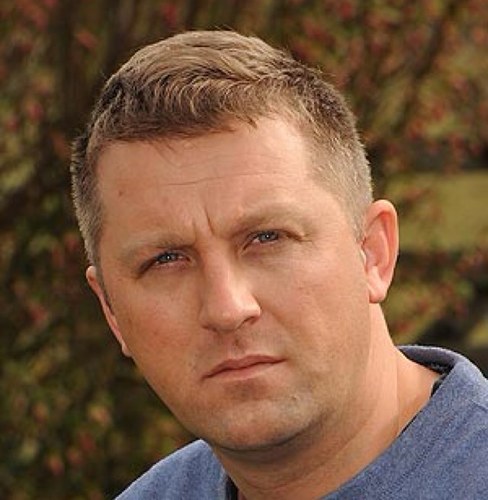
NHS Whistleblowers Demand Justice

The Times Health News 6 May 2014
  • Owen Humphreys/ Reuters

Pressure is mounting on the NHS to reopen the cases of six of its most famous whistleblowers after they called for a judge-led public inquiry.

After a string of critical reports by MPs, the whistleblowers have written to a senior official at the Department of Health to ask for fresh investigations and compensation in what would be a series of landmark reviews.

The six are hopeful that Simon Stevens, the new head of the NHS, will radically change how the health service handles serious complaints from its staff in future. Last week he agreed to meet Raj Mattu, a heart doctor who won a 12-year battle to clear his name after going public with concerns about overcrowding on his wards.

Dr Mattu’s victory last month in an employment tribunal, one of the first of its kind, has lent impetus to others campaigning for restitution after losing their jobs in their battles with the NHS.

The six, led by David Drew, a paediatrician whose 37-year career was ruined after he voiced concerns about bullying and staff shortages, have written to Charlie Massey, a senior official in the health department. “We have all suffered employment, reputational and financial loss,” they wrote. “Some of us have had health problems and we have all endured severe stress. We would like our cases investigated and remedied at the earliest opportunity.”

The whistleblowers also called for a judicial public inquiry into the obstacles they had faced. Dr Drew has won the support of Andrew Mitchell, the MP for Sutton Coldfield and former chief whip, who has written to Dr Massey to call for the cases to be re-opened.

Another signatory, Sharmila Chowdhury, lost her job as a radiology manager at the Ealing hospitals NHS trust after complaining that consultants were taking tens of thousands of pounds in personal payments for ultrasound scans. She said that she would have to sell her house as a result of her battle against the trust.

“I have lost my career, my pension, and [am] about to lose my home,” she said. “I also now have cancer, which numerous consultants believe is due to the stress of whistleblowing.”

Ms Chowdhury, a widow struggling to support her son, said that she wanted all whistleblowers to be paid by the NHS until they retired if they had been forced out of their jobs. Last month she met a special adviser to Jeremy Hunt, the health secretary, to suggest reforms but has yet to hear back.

The other signatories to the letter include Narinder Kapur, a neuropsychologist who went on a hunger strike after being unfairly dismissed by Addenbrooke’s Hospital in Cambridge.

Dr Massey replied to say that although he could not yet make a decision about their “far-reaching” questions, their call for a fresh round of investigations was being considered “very carefully indeed”.

Dr Drew said that it was “no response at all”. He added: “The government and department of health have no answer to the large number of other whistleblowers who have been defeated by employment law and left to rot. The DoH has no interest in getting justice for frontline staff who have done the right thing [or] to learn the lessons of our cases.”

Jeremy Hunt: message to NHS staff on whistlebowing

The Secretary of State for Health on the important changes to support staff so they can raise concerns about patient care and safety.

One year on from Francis, my top priority remains to support you in creating a more patient-centred, compassionate NHS. So this week I have written to all NHS Trusts to reiterate how strongly I feel that staff should be able to raise any concerns about patient care and safety. We have put in place reforms to give you that reassurance, but in light of recent media reports I want it to be absolutely clear that whistleblowers speaking out about poor care should be confident they will be listened to.

To support you in this we have made a number of important changes. We have ensured that all NHS employment contracts include the right to raise concerns about care and amended the NHS Constitution to strengthen the commitment to supporting staff who do so. We are also funding a national helpline – independent from employers and the Department of Health and completely confidential – to provide advice to anyone in health or social care who wants to raise a concern. The number is 08000 724 725. We are also introducing a new duty of candour, so that when things go wrong, organisations have a duty to admit mistakes and tell patients what has happened. The professional regulators will be working together to include a new consistent professional duty of candour in codes of conduct. Together, these changes are intended to support you by building the open culture we need and where you can be confident that you can speak up for the patients in your care.

Patients First – Kim Holt and Roger Kline

Patients First- how we got here & what next? 

When PF first got together, we were intending to legally challenge some Trusts, ( and the CQC)!, with regards to the lack of adherence to good whistleblowing practice. We were already aware at that stage of a number of cases that were worrying us. These included Sharmila’s. Our concern about the CQC was whether they responded appropriately to whistleblowers, ensuring patients were safe. They didn’t at that time.

What happened immediately was that the campaigning side grew an energy of its own, more people contacted us, an informal network developed and before we knew it we were being asked for our opinion on whistleblowing. Our first objective was to raise general awareness of the challenges that whistleblowers face, and to have some cases presented to the Health Select Committee. We have achieved both.

We anticipated that the Francis report into the poor care experienced by too many at Stafford Hospital, especially the elderly would highlight the cultural problems that plague our health service. It did, but disappointingly not strongly enough.

 There are numerous staff surveys  http://www.nhsstaffsurveys.com/Page/1010/Home/Staff-Survey-2013  as well as reports on individual trusts – notably by the CQC and the Keogh review on 14 Trusts  http://www.nhs.uk/nhsengland/bruce-keogh-review/documents/outcomes/keogh-review-final-report.pdf    that demonstrate a real culture of blame and fear. The learning culture as aspired to by Berwick https://www.gov.uk/government/uploads/system/uploads/attachment_data/file/226703/Berwick_Report.pdf is still a distant dream for too many.

Patients First has given advice to many whistleblowers but we know this is just a tiny proportion of the staff who have spoken out and not been listened to or, worse, been victimised for doing so.

 We published The Life Cycle of the whistleblower, based on our own files. http://www.patientsfirst.org.uk/?p=806 and that evidence complemented academic research http://www.pcaw.org.uk/whistleblowing-the-inside-story highlighting the risks to staff who do.

Despite a lot of rhetoric and much more awareness of the problem with our current culture there is as yet no system wide improvement to the support for staff raising concerns .

We understand the problem as being a tendency to ignore issues until either a very loud noise is made or something tragic happens, when there is a mad panic to clean things up and sadly too often a temptation to cover up.

 We have made a number of specific proposals. Some have been adopted – one  proposal for example, is that when the CQC inspects they should talk to some whistleblowers to find out what has happened to them. How that will shift the culture & be linked to inspections remains to be tested.

But other proposals as a constructive proposal we made for An Early Intervention Scheme, appear to have kicked into the long grass by the Department of Health. Do the DH care enough to get this right?

 Ministers and employers remain in denial about the scale or significance of the problem and are prone to downplaying both. But for patients – and staff who whistleblow – this remains a fundamentally important issue.

No NHS Constitution or whistleblowing policy will stop the violation of human rights happening to caring staff such as Sharmila and Professor Jesudason. There is still a lot of work to do which is why we have called on the Sec of State to hold a public inquiry into whistleblowing. We believe that hoping things will all be ok is not good enough for our society.

We as leaders of Patients First have been astounded by the strength of feeling and commitment that campaigners are showing to changing the culture. We are preparing to move on to the next stage & pass on to a new team who can further develop the organisation into one which is sustainable. What we have achieved as a small group of campaigners has shocked ourselves, but it shows the power of the truth and hopefully can give people heart that not everyone wants to hide things. There are some genuine people out there.

We wish we could have stopped the bullying and sacking of whistleblowers, but sadly that campaign still needs to go on.

Kim Holt


The Speaking Out Summit (SOS)

The Speaking Out Summit to be held on Thursday 8 May 2014

Roy Lilley Roy Lilley

The summit will be introduced by Roy Lilley.

Roy Lilley is an independent health policy analyst, writer, broadcaster and commentator on health and social issues. Previously, a Visiting Fellow at the Management School, Imperial College London, he was also formerly at the Centre for Health Services Management at the University of Nottingham.

‘The Speaking Out Summit seeks to stimulate, debate and achieve consensus on a way forward for people and health trusts on the subject of speaking up and whistleblowing.’

 Speakers include Sir Robert Naylor, who is the chief Executive of University College London Hospitals (UCLH) who will discuss his approach to whistleblowing.

Dr Phil Hammond

Doctor GP and comedian Phil Hammond, who was a whistle blower at the Bristol baby hospital, who will be discussing , ‘Why are we where we are?’  Website

There will presentations from  whistleblowers Gary Walker and Dr David Drew.

Gary Walker

Gary was previously Chief executive at United Lincolnshire Hospitals Trust and spoke out over patient safety concerns.

David Drew

David is a former well respected pediatrician who blew the whistle on competence of a colleague. All delegates will be given a free copy of  David’s new book

Other speakers include James Titcombe, who is the national advisor on patient safety, culture and quality at CQC.  James will be discussing the role of the regulator and how it can be advanced.

Dean Royles, Chief Executive, NHS Employers will be discussing  why whistleblowing needs to happen. Royles was appointed as chief executive for NHS Employers in December 2010. Previous roles include director of workforce and education at NHS North West; director of HR and communications at United Lincolnshire Hospitals NHS Trust and deputy director of workforce for the NHS at the Department of Health, where he was responsible for developing a national HR strategy for the NHS.

Prof Christopher Newdick, Professor of Health Law at Reading University,  will talk about the legal imperatives for speaking out.  Professor Newdickcurrently teaches LLB in medical and contract law and is also a barrister.

Other speakers include, Dr Suzanne Shale, – Ethics Consultant, Dr Paul Hodgkin – Founder of Patient Opinion and Dr Jenny King – Edgecumbe Group.

In this full day event there will workshop sessions from experts in whistleblowing law, conflict resolution, organisational/leadership dynamics and enquiry management.

The Summit aims to create and promote best practice guidance for anyone involved in whistleblowing and speaking out, in any capacity, as well providing an intelligent and safe forum for discussion and debate.

Bookings and  further Information

Staff sacking and Suspensions over poor elderly care

Secret filming by BBC Panorama shows some residents being taunted, roughly handled and one being slapped

Related Stories

One staff member has been sacked and seven suspended from one of England’s largest care homes after an undercover probe by BBC Panorama found poor care.

The filming at the Old Deanery in Essex showed some residents being taunted, roughly handled and one was slapped.

The home said it was “shocked and saddened by the allegations”.

Care Quality Commission (CQC) figures seen by the BBC show over a third of homes that received warning notices in 2011 still do not meet basic standards.

Allegations of poor care and mistreatment at the 93-bed home in Braintree, where residents pay roughly £700 per week, were first raised by 11 whistleblowers in August 2012.

Essex County Council put it on special measures for three months until concerns were addressed.

Continue reading

Letter to George Osborne

3 August 2010

Rt Hon George Osborne MP

Chancellor of the Exchequer

LONDON SW1A 2HQ

Dear Mr Osborne,

Re:  Serious wastage of public money at Ealing Hospital NHS Trust

 I am enclosing the article which was published in the Independent 3 weeks ago. Further articles have now been published in the Ealing Gazette and in various other journals.

I have already paid a high price to ensure that wastage of public money is brought to an end.  My concerns have been reported to the key Directors within the Trust, which included: The Medical Director, The Clinical Director, The Finance Director, The HR Director, Assistant Director of Operations and The Chief Executive over the last 2 years. The matter had also been reported to NHS Counter fraud over a year ago. I have all written correspondences to support this.

To date no action or independent investigation has been taken within the Trust. All Directors continue to be in post, despite them being implicated in the fraud. The three consultants are also still in post. Meanwhile, I am facing my future with uncertainty by doing the job that I was employed to do as a budget holder for the department.

In October, Ealing Trust will be amalgamating with Brent and Harrow. So, the matter needs to be investigated as a matter of urgency.

I have done everything I can to bring about awareness of wastage within the Trust and have paid dearly in the process. However, all my attempts will have been futile if this matter is not taken seriously and investigated. Also, it means that in not too distant future, someone else will be facing same situation as myself, which is wholly unacceptable. The individual may not be as lucky as me in having a lawyer who has worked for free and have had barristers who have undertaken work at substantially reduced rates as they were appalled by what had happened to me.

I hope you will look into the serious situation within the Trust and if I may be of any assistance, then I would be more than happy to help.

Yours sincerely

Sharmila Chowdhury


David Drew – Author of Little Stories of Life and Death

th1. Tell us briefly about yourself

I’m 66. I have been married to a lovely woman for 43 years. We have 4 happily married children and (so far) 8 grandchildren. I qualified as a doctor in Bristol and trained there and in Birmingham to be a paediatrician.From 1977 to 1984 I worked in refugee camps in Indo-China and then at a University Teaching Hospital in Nigeria. After coming home for our children’s education I worked as a locum paediatric consultant in the West Midlands. From 1992 to 2010 I was a full-time consultant at the Manor Hospital in Walsall. In 2010 I was dismissed for Gross Misconduct and Insubordination. I have been unable to work as a paediatrician since then. I have unsuccessfully pursued Walsall Healthcare NHS Trust in the Employment Tribunal and the Employment Appeal Tribunal. I now work full time campaigning for the protection of NHS whistleblowers.

2. What inspired you to write a book?-

My eldest son, Simon, a PhD paeleo-ecologist pressurised me into it. I found it too painful, too wearying to go over the old ground and construct an interesting and readable narrative. Simon gave me the start and once I got going, with his insights and energy, I found a story I knew had to be told.

3. Tell us about the book-

It’s autobiographical. It begins with the disciplinary hearing in which the Director of Nursing at Walsall, Sue Hartley (I have used real names throughout), pronounces the death sentence over my medical career. The following chapters are a retrospective of childhood, medical school, postgraduate training and our years working abroad. After some years working as a consultant locum I arrive, in chapter 10, in Walsall. I have 9 enjoyable years doing mainly clinical work before being appointed head of department.

The “Troubles” occupy the years 2008 to 2010. These are the years in which I raise serious concerns about a paediatric consultant’s competency and conduct and subsequently mismanagement and service failure including major problems with child protection. This leads ultimately to my dismissal. I describe the internal disciplinary procedures and my recourse to law. It is an on-going story but in chapter 45 I find a resolution in a different kind of life.

4. Who is it suitable for?

Its for anyone interested in justice. Justice for patients and their relatives. justice for frontline staff who are bullied and punished for raising concerns. I believe every NHS frontline worker will appreciate, enjoy and learn from this story. Politicians, NHS managers, whistleblowers will benefit from reading it. Walsall Healthcare senior management seized upon an aspect of my rather quiet Christian faith to help destroy my career using a technicality in employment law. I believe those of any faith or none will learn about the importance of peaceful coexistence in society and in he workplace from my story. It is written in appreciation of some of the medical and nursing staff at Walsall Manor Hospital who suffered under an oppressive administration from 2008 to 2010.

Patients and parents who are sometimes left wondering what is going on inside the NHS will learn from this account of what can happen in a poorly led hospital. I wrote this book also for the family of Kyle Keen. “Kyle was unlawfully killed following catastrophic failures in basic safeguarding at Walsall Manor Hospital” as the dedication page reads.His family were never told this. I asked a Royal College of Paediatrics review panel to investigate this but they ignored me. To this day Kyle’s family have not learned what these failures were, how they were allowed to happen or why they have never been told.

5. What is your favourite part in the book?-

I cannot choose. There is so much here about life and death, truth and lies, patient safety and harm, philanthropy and self-interest. I cannot choose. My theme ultimately is about truth, forgiveness and reconciliation. I have survived as a ruined whistleblower because I need to forgive the people who did this to me and the journey towards that place (I have not yet fully arrived) has taught me things about myself I did not know and provided me with resources I knew nothing about. In the words of Joseph to his brothers who had sold him into Egyptian slavery, “You intended to harm me, but God intended it for good”. (Genesis 50:20) I am convinced good will come from my experience and from this book.

GetImageSelect to purchase The Little Stories of Life and death

Tel: 01162 792 299

e-book will be available in a week

“A book the NHS has been waiting for.”

Dr Phil Hammond, Private Eye

NHS Heros

There are numerous NHS whistleblowers who have had their lives destroyed in pursuit of protecting patients and the public.  Far too many to mention. I have included some of the whistleblowers who have been in the media. Select to read their stories.

Tracy Boylin          Dr David Drew             Dr Kim Holt          Raj Mattu

Edwin Jesudason             John Watkinson              Jennie Fecitt      

Julie Bailey           Sandra Haynes Kirkbright            Gary Walker

Ramon Niekrash          Helene Donnelly      Professor Narinder Kapur       

Margaret Haywood             Dr Peter Wilmshurst          Steve Bolsin

Shiban Ahmed         Loo Blackburn           Elsie Gayle

Surgeons suffer after claims of poor case

The Sunday Times-April 20, 2014-Martyn Halle
MINISTERS have been accused of reneging on a promise to protect whistleblowers in the NHS.
Two surgeons who complained about hospital standards have been suspended for a total of seven years after subsequent complaints about them. Their employers insist their suspensions are unrelated to their whistleblowing. The cases have emerged only days after Dr Raj Mattu, a cardiologist, won an employment tribunal case for unfair dismissal following a 12-year battle with University Hospital Coventry.
He was suspended in 2002 and dismissed in 2010 after revealing how two patients had died in dangerously overcrowded bays.
Dr Peter Tomlin, of the Doctor’s Support Group, said: “It is a typical management ploy to label someone who blows the whistle as a bully. We have constantly been promised better protection for whistleblowers and an end to long-term suspensions. But neither has happened.”

Continue reading

Inquiry for NHS treatment of Whistleblowers

Leading doctor calls for inquiry into NHS treatment of whistle-blowers
DRaj-Mattur Raj Mattu Heart surgeon who raised alarm about poor care was found to have been wrongly dismissed
The treatment of NHS whistle-blowers must be subject to a public inquiry, a leading doctor and patient safety pioneer has said, after a heart surgeon who raised the alarm about poor care was found to have been wrongly dismissed by his hospital.

His intervention comes after a tribunal ruled on Wednesday that Dr Raj Mattu, a heart surgeon, was unfairly sacked by University Hospital of Coventry and Warwickshire NHS Trust in 2010, nine years after exposing the cases of two patients who died in crowded bays at the Walgrave Hospital in Coventry.

The tribunal ruled that Dr Mattu had been “subjected to many detriments by the Trust” because of his whistleblowing. The Trust ran up legal fees of £6m pursuing claims against him, and his solicitors said he had been “vilified, bullied and harassed out of a job he loved.”


Professor Jarman, director of influential hospital data analyst the Dr Foster Unit, said the case proved that “something must be done” about the treatment of whistle-blowers in the NHS, for the good of patient safety.

“It’s never really been properly solved. In the States you can get paid for whistleblowing. In the airline industry if you don’t report a problem within a certain period of time you get into trouble, and if you do, you’re considered to be doing a good thing,” he said. “We’ve reached the point where we’ve got to have something done…one would prefer a public inquiry where witnesses can be subpoenaed and must give evidence on oath.”

He added that all hospitals should appoint a board member responsible for whistle-blowing.

Mr Hunt has spoken out about the treatment of whistle-blowers in the NHS and recently wrote to all NHS trusts to remind them of their responsibility to allow staff to be honest and open about concerns over patient care.

A Department of Health spokesperson said Dr Mattu’s case highlighted “the vital importance of openness”