Whistleblowers being ‘blacklisted by NHS’ as staff records state they were ‘dismissed’ even after being cleared at tribunal

The Telegraph  Camilla Turner
Jennie Fecitt
Jennie Fecitt was dismissed from her post as a senior nurse at a walk-in centre in 2010, after raising concerns about a nurse who had lied about his qualifications CREDIT:JON SUPER FOR THE TELEGRAPH

When Maha Yassaie began to suspect that a colleague was taking money from drug companies to prescribe a certain product and that a GP had obtained controlled drugs to attempt suicide she naturally raised the alarm.

But after reporting these and other concerns about her colleagues the former chief pharmacist at Berkshire West Primary Care Trust was dismissed from her post.

To her dismay Lady Yassaie was told by an internal inquiry that she was “too honest” to work for the NHS.

It should therefore have been a moment of vindication when she was awarded £375,000 compensation after the Department of Health was forced to admit to her that “the investigation and disciplinary processes… were, in some respects, flawed”.

Over the following four years, however, every one of Lady Yassaie’s attempts to find a new job met with failure, despite her experience and qualifications.

It was only when she obtained her staff record from the Department of Health that she discovered that officials had effectively blacklisted her in the eyes of prospective employers, by wrongly stating that she had been dismissed from her previous job.

Lady Yassaie
Lady Yassaie was told by an internal inquiry that she was ‘too honest’ to work for the NHS CREDIT: JULIAN SIMMONDS FOR THE TELEGRAPH

It was a similar story for Jennie Fecitt, who was dismissed from her post as a senior nurse at a walk-in centre in 2010, after raising concerns about a nurse who had lied about his qualifications.

Ms Fecitt went on to win an unfair dismissal case against NHS Manchester, which found she had been bullied and victimised by her colleagues.

But she later discovered that her employment record continued to state her reason for leaving as “Dismissal – Some Other Substantial Reason”.

The plight of the two women is similar to that of dozens of NHS whistleblowers who have been effectively blacklisted by the NHS because of incorrect employment records.

The Telegraph can reveal that despite being cleared by employment tribunals, or receiving formal apologies for their treatment, whistleblowers’ staff records continue to state that they were “dismissed” from their previous job.

Jennie Fecitt
Jennie Fecitt won an unfair dismissal case against NHS Manchester, but she later discovered that her employment record continued to state her reason for leaving as ‘Dismissal – Some Other Substantial Reason’ CREDIT: JON SUPER FOR THE TELEGRAPH

The Department of Health has now been accused of flouting data protection and employment legislation by refusing to amend incorrect records that are preventing doctors and nurses who exposed care scandals from returning to work.

Lawyers have warned the treatment of Ms Fecitt, Lady Yassaie and other NHS whistleblowers is “tantamount to blacklisting”, as prospective employers are unlikely to hire anyone who has been dismissed from a previous role.

And a Deputy High Court Judge has called for a change in legislation to give whistleblowers specific protection against blacklisting, describing it a “real gap in the law”.

Blacklisting via the electronic staff record is a way of keeping whistleblowers out of the NHSJennie Fecitt

Under data protection legislation, the Department of Health is responsible for ensuring that the electronic staff records it holds – which are available to all prospective NHS employers – are kept up to date.

Legal experts said that refusing to amend staff records is a potential breach of employment regulations, as they contain inaccurate information and could be seen as an act of “post-termination victimisation”.

A senior NHS director has admitted that, in many cases, the  records are not updated, even after a dismissal has been overturned, adding that this is the main reason why whistleblowers find themselves barred from future employment.

A former NHS human resources director told The Telegraph that staff records were being used to blacklist whistleblowers.

She said that anyone whose record states they have been dismissed from a previous role “would find it very hard to get work”.

“As an HR director, you think ‘I need to know what the risk is’. If there are disciplinary issues or dismissal, then it suggests there is a risk for that candidate,” she said. “If there is a second candidate who is good, you would go for another candidate.”

Staff at work in a hospital
Sir Robert Francis warned of a culture of ‘fear, bullying and ostracisation’ within the NHS (file photo) CREDIT: GETTY IMAGES

Ms Fecitt, who went on to become the director of the whistleblowing organisation Patients First, said that many of her 200 members have reported problems with their staff records, and believe these are preventing them from finding work in the NHS.

She said she has seen the staff records being used to disadvantage whistleblowers in a number of ways, such as marking “gardening leave” as “sick leave”, or using a comments section to elaborate on the trust’s version of the reason for dismissal.

“Blacklisting via the electronic staff record is a way of keeping whistleblowers out of the NHS,” she said.

A group of four whistleblowers, all of whom have obtained their staff records through subject access requests, are now in talks with lawyers about taking possible legal action over the issue.

Jeremy Hunt
Jeremy Hunt, the Health Secretary CREDIT: REUTERS

Jahad Rahman, a partner at Rahman Lowe Solicitors and specialist in employment law, said that employers do not have to give references, but if they do, they are legally obliged to give accurate statements.

“If the record is inaccurate, that is potentially a breach of employment law,” he said.

Mr Rahman added that the Department of Health’s refusal to change staff records is “probably deliberate”, saying: “I don’t think it is an administrative error; that would be absurd in my opinion.”

He said that numerous staff records that incorrectly state “dismissal” for whistleblowers “indicates that there is an internal policy, whether written or not, to disadvantage those that complain about wrongdoing within the NHS”.

Doctors and nurses shouldn’t be afraid to express concern about patient safety, and they should not be disadvantaged for doing soJahad Rahman, Rahman Lowe Solicitors

“The NHS don’t like it, they want to silence you once you’ve blown the whistle. Legislation is meant to protect and encourage people to come forward,” Mr Rahman said.

“Doctors and nurses shouldn’t be afraid to express concern about patient safety, and they should not be disadvantaged for doing so. Sometimes the trusts think they are above the law, but they should be held to account.

Neil Churchill, NHS England director for improving patient experience, acknowledged that prospective employers would “have concerns” about hiring someone who had been dismissed from a previous NHS role, adding that it would “act as a bar” to re-employment.

“If someone has won an employment tribunal case then that should be corrected [on their records] without us having to intervene. That should be something that happens automatically,” he said.

Concerns were raised about the electronic staff records by senior NHS officials when they were introduced a decade ago.

Anne Gadsden, the then Information Governance Officer at North Cumbria Acute Hospitals NHS Trust, warned that staff were being forced to agree to the new system despite their reservations.

In her letter, seen by The Telegraph, she wrote: “Our staff have concerns about the fact that there will be a central ‘Data Warehouse’ somewhere in the heart of England, holding all the staff information. Worries about security, access etc.

“The Finance Director of my organisation has said that staff are not allowed to opt out, and if they do, they can no longer be employees of the trust (Yep, he’s happy to threaten).”

Junior doctor says his career destroyed after whistleblowingPlay!01:38

Earlier this year, the NHS published its first standardised national whistleblowing policy, following Sir Robert Francis’s Freedom To Speak Up review.

Sir Robert warned of a culture of “fear, bullying and ostracisation” within the NHS that punished doctors and nurses who exposed failings.

He said whistleblowers were derided as “snitches, troublemakers and backstabbers”.

However, experts have argued that the new policy did not go far enough.

John Bowers QC, who is one of the UK’s foremost experts on employment law, said that a lack of specific protection against blacklisting of whistleblowers is a “real gap in the law”.

I was a highly experienced, highly paid manager, I had a fantastic career in the NHS. Now they are simply destroying my futureLady Yassaie

“It is a problem that there is no law that stops blacklisting of whistleblowing claimants,” said Mr Bowers, who is principal of Brasenose College at Oxford University and sits as a Deputy High Court Judge.

“It is particularly serious in the NHS for two reasons. Firstly, because there are more whistleblowers in the NHS than anywhere else, due to the nature of what people deal with. Secondly, although there are lots of different employers, it is effectively one large super employer.

“And if you are blacklisted by one, you are probably not going to get another job. For many things it is effectively a monopoly organisation.”

The Information Commissioner’s Office (ICO) suggested that the Department of Health was falling foul of data protection legislation.

“If someone was dismissed then that would be included, but if it is established that they were dismissed unfairly, a note should then be added to the record,” a spokesman said.  “An individual is entitled to this under the Data Protection Act.”

Maha Yassaie
Lady Yassaie said all her attempts to have her employment record updated have been met with obfuscations and buck-passing CREDIT: JULIAN SIMMONDS FOR THE TELEGRAPH

Lady Yassaie, whose husband is Sir Hossein Yassaie, a technology entrepreneur who was knighted for services to technology, said all her attempts to have her employment record updated have been met with obfuscations and buck-passing, with the Department of Health telling her she would need to take legal action to have it changed.

She said: “I was a highly experienced, highly paid manager, I had a fantastic career in the NHS. Now they are simply destroying my future. I feel so let down, so devastated.

“I am still blacklisted even though I had an apology and cleared my name. God knows how many more people are in my position.”

Ms Fecitt has met with similar obstruction when she tried to get her own record corrected.

It’s like wading through treacle to get records changed to reflect the truthJennie Fecitt

“I’ve seen on a back screen of my form in a comments section it says I am a ‘vexatious whistleblower’ – but the Department of Health deny it exists and will not disclose it,” she said. “Despite repeated requests to change incorrect entries and providing evidence to support why those changes must be made, the Department of Health have so far refused to intervene.

“It’s like wading through treacle to get records changed to reflect the truth.”

The Department of Health insisted that all its staff records are accurate, and that it was acting in line with data protection laws.

It said every NHS organisation has a Freedom To Speak up Guardian and that ministers are in the process of strengthening legislation that prevents discrimination against whistle-blowers.

“We want to make the NHS the safest healthcare system in the world and will support staff to speak up when things go wrong, without fear of reprisal,” a spokesman said. “That’s why, as well as working with individuals to ensure that their electronic staff records are accurate and up to date.”

The spokesman said Lady Yassaie’s case “has been investigated and the department believes the matter has now been concluded appropriately”. He added that Ms Fecitt’s case “was the subject of an employment tribunal and subsequent appeals, which concluded in 2011.

Blacklisting on Mr Hunt’s watch

By Dr Minh Alexander, NHS whistleblower and former consultant psychiatrist 21 August 2016

The dictionary explains blacklisting as a form of punishment and exclusion, and action taken to ostracize, avoid, embargo and steer clear of certain groups of workers.

The practice of shunning whistleblowers runs across all sectors, and there is ample evidence that it continues in the NHS. 1

Steve Bolsin the anaesthetist and Bristol Heart scandal whistleblower had to leave the UK twenty years ago to get work, after being ostracized. Subsequent NHS whistleblowers continue to follow in his foot steps. Realistically, it is very hard to defend oneself from a concerted whispering campaign. Where whistleblowers have reached a serious impasse with NHS employers, such is the systemic collusion that I

usually advise them to relocate overseas if they can, rather than risk more serious harm to their careers, health and family life.

We know from excellent work that whistleblowers have done in accessing their personal records that NHS employers have been creating misleading records on how whistleblowers’ employment ended. 2 Some records noted only that staff had been ‘dismissed’, even if they were subsequently vindicated and their dismissal was found to be unfair either by an Employment Tribunal or some other means. The Department of Health shows no appetite to correct this.

Whether or not Mr Hunt and the Department of Health see sense eventually and ensure that NHS staff records are not misleading by omission, it still profits a whistleblower little to say to a prospective employer “I was sacked after whistleblowing and successfully took my employer to court”. Neither does a note on your records saying that you were ‘right’ stop the telephone calls and off the record conversations between employers. As soon as employers learn that a worker’s employment ended after whistleblowing, negative assumptions and doubts are likely to arise. The whole process of getting to such a stage is therefore extremely damaging and is of itself a governance failure. Related to this, and following enquiries, NHS England has yet to advise if any employers have actually signed up to its NHS whistleblower re-employment scheme.

The current system fails by funnelling whistleblowers down the path of an employment dispute when in fact there should be an unerring focus on resolving the whistleblower’s patient safety disclosures. Preventing cover-ups would be one of the most powerful ways to protect whistleblowers.

If Mr Hunt really wants to make positive changes, he should be ensuring that whistleblowers’ concerns are properly investigated and that action is taken against NHS employers who effectively force whistleblowers into the courts. He should also be proactively ensuring that exiled whistleblowers are found employment. However, he is doing none of these things. He has allowed widespread gagging to continue, and has allowed inordinate delay in the whistleblower re-employment scheme proposed by the Freedom to Speak Up Review. This is likely to provide no more than a bit of coaching as opposed to solid job offers – whenever NHS Improvement gets round to it – given there is so far zero budget allocated to this scheme.3

No, Mr Hunt has instead been looking the other way when NHS employers and regulators have recycled poor managers with gusto, including those found by courts to have harmed whistleblowers. That tells you most of what you need to know about the current state of NHS whistleblowing.

It will fall to parliament and Mrs May to hold Jeremy Hunt and the Department of Health to account, if they are minded to.

The truth is that as long as whistleblower reprisal is tolerated, there can be no guarantee of safe services.

References

1 Blacklisting of whistleblowers, Sharmila Chowdhury April 2014 https://sharmilachowdhury.com/blacklisting-of-whistleblowers/

2 Whistleblowers being blacklisted by the NHS as staff records state they were ‘dismissed’ even after being cleared at tribunal, Camilla Turner Telegraph 21 August 2016 http://www.telegraph.co.uk/news/2016/08/20/whistleblowers-being-blacklisted-by-nhs-as-staff-records-state-t/

3 Letter to House of Commons Health Committee about delays in NHS whistleblower re-employment 8 August 2016 https://twitter.com/alexander_minh/status/762623529149952000

UK law fails to protect whistleblowers

David Drew August 2016

* UK law designed to protect whistleblowers from retaliation in the workplace is inadequate.

* PIDA does not meet most international standards

* New report recommends wide ranging legal changes in the public interest.

* Francis Freedom to Speak Up protections look weak in comparison

According to a new report published by international NGO Blueprint for Free Speech and the Thomson Reuters Foundation the UK law designed to protect whistleblowers from retaliation in the workplace is inadequate and does not meet most international standards.

The report, PROTECTING WHISTLEBLOWERS IN THE UK: A New Blueprint, follows a 3 year study of the experiences of UK whistleblowers. Although applicable to all whistleblowers it singles out health (the scandal-ridden NHS) and social care whistleblowers as a special case:

In no other industry in the UK is the case for stronger whistleblower protections clearer than the healthcare field.

Lessons learnt from NHS whistleblower protection failings should be applied to all sectors.

Blueprint outlines key failings and suggests robust solutions to ensure that whistleblowers in the UK are protected and disclosures made in the public interest are supported.

What’s wrong with PIDA?

PIDA is retrospective. It offers compensation after the fact. Too little (if at all) and too late.

Employment Tribunals are not the informal low cost solutions they were set up to be when it comes to whistleblower cases. Expensive taxpayer funded lawyers rule the roost.

There is no administrative (regulatory) alternative to the ET system where whistleblowers can seek protection before retaliation begins.

Technical legal principles have been imported into PIDA from other areas of law. These diminish protection and the capacity for remedy.

PIDA has no direct civil or criminal penalties to prevent or discourage bullying harassment or victimisation.

PIDA now rates poorly against international standards. Of 27 recognised standards 13 are completely missing from UK law. In a scoring system PIDA achieved a mark of only 38%, well below many other countries. This is particularly concerning when PIDA is held up by Sir Robert Francis, in his Freedom to Speak Up report for example, as a recognised best practice standard.

Proposals for protection

The Blueprint report advocates urgent legislative change. The areas that need particular attention are:

Pre-emptive protection from all forms of retaliation – before jobs are lost or careers ruined.

Modern burdens of proof that provide fair odds for whistleblowers to defend their rights

Substantial penalties for those who retaliate against whistleblowers, and for those who ignore orders to cease retaliation.

Full compensation to cover all costs and loss to whistleblowers

Mandatory independent investigations of bona fide reports of misconduct and corrective action.

A requirement for employers to make a range of disclosure channels available to workers, including anonymous reporting

Training for managers in the public and private sectors.

An obligation on prescribed bodies to investigate allegations and provide a response with reasons for any action or inaction. (Regulators such as CQC and NHS Improvement continue to claim that they have neither the power nor the duty to investigate disclosures even of avoidable patient deaths.)

Winners into losers

Blueprint conducted in-depth reviews of 50 cases filed with Employment Tribunals and conducted 12 detailed formal interviews with whistleblowers. Vignettes of Sarah, Anne Brigitte Claudia and others attest the length of time in each case to get a verdict (average 20 months). And the paltry sums awarded in compensation. They only hint at the personal suffering, the stress and anxiety, the damage to health and family. These women (they often are women) fought long and hard. And not just that, the fight was fundamentally unfair. These are mainly low paid workers who saw something wrong and reported it. They won at a price most are not willing to pay. When we get effective whistleblower legislation it will be in part their struggle that has secured it.

The Freedom to Speak Up Report

It is 18 months since Sir Robert Francis’s F2SU report was published. He acknowledged the widespread horrific victimisation of NHS whistleblowers “because they tried to do the right thing for patients”.

Francis had the same material (and more) at his disposal as Blueprint. He came to pretty much the same conclusions on legal protection:

PIDA legislation is limited in its effectiveness. At best it provides remedies after detriment, including loss of employment. Even these are hard to achieve. Too often by the time a remedy is obtained it is too late to be meaningful.

However, he ducked the robust solutions we find in Blueprint. Before the start of his review Francis told a group of us who had been instrumental in his commissioning that he would not be making any recommendations that Jeremy Hunt was going to reject:

Although the existing legislation is weak, I have not recommended a wholesale review of the 1996 Act for two reasons. First, I do not think legislative change can be implemented quickly enough to make a difference to those working in the NHS today. What is needed is a change in the culture and mind-set of the NHS so that concerns are welcomed and handled correctly.

Francis offered no real solutions to whistleblower victimisation. No change in law other than a couple of twiddles. No prevention or deterrence of retaliation. No level playing field. A National Guardian with no statutory or investigatory powers. Compare that to Blueprint’s robust proposal for an independent agency to ensure early intervention and protection. Francis’s answer to the need for managerial accountability was the now discredited Fit and Proper Person Test which has not held a single victimising manager to account.

Only if the good intentions of any law are matched by a change in culture can a safe alternative to silence be created, he opined. But, as Jeremy Hunt told Parliament, that kind of culture change will take a generation. No, says Blueprint, introduce robust laws to protect whistleblowers now. Most public health advances requiring change in individual behaviour

and culture has necessitated legislation. As with smoke-free legislation etc. culture change would follow on its heels.


CQC Deaths Review: All Fur Coat…

By Dr Minh Alexander NHS whistleblower and former consultant psychiatrist, 13 August 2016

After the abject failures by CQC, DH and other oversight bodies were revealed by the Mazars [1] report on failure to investigate hundreds of unexpected patient deaths by Southern Health, Jeremy Hunt predictably asked CQC to review the way the NHS handles deaths. [2]

What better way of keeping it in the family, whilst fobbing off the public with some superficially reassuring headlines.

Never mind that CQC has long been implicated as an essential part of what Professor Brian Jarman called the NHS Denial Machine. [3]

CQC itself is only reviewing what trusts do. Purportedly, there is other work by the DH that “may” result in changes to regulatory process. There is passing reference to this in CQC’s review blurb, but I am not aware that any details of this work have been published. [4]

After I posted criticism of CQC and the limited remit of the deaths review in the twitter hashtag #CQCDeathsReview, I was approached via twitter by a CQC official who assured me that the enforcement of good practice would be reviewed as well. This person invited my contribution and offered me a meeting with the deaths review team. When I asked for more information, a telephone call was offered. When I asked for written information and the actual terms of reference of any review of regulatory performance, the communication petered out. This is unfortunate as the deadline for submission of evidence is this Sunday, 14 August.

No doubt it was a well-meaning approach, by someone who had not yet discovered that the CQC has developed a habit of writing frosty letters to me via its Director of Legal Services.

However, there is a startling contrast between the frenetic publication of CQC’s review of trusts’ performance in handling deaths, compared to the opacity and silence over the purported (and more important) review of oversight processes. The message is one of double standards: “No stakeholder scrutiny please, we’re too important”.

This unwillingness by the DH, and its arm lengths bodies such as CQC, to properly account for their failures to protect patients is typical of a longstanding pattern of behaviour. Major reports by which criticised the DH’s role in creating a culture of fear and compliance, instead of a genuine focus on quality and patient safety, were suppressed by the DH in 2008 and only released in 2010 by FOI. [5] [6] [7]

It is most unlikely that the whole truth will be allowed to emerge about the NHS’ continued mishandling and subterfuges about patient deaths.

A review of CQC inspection reports on English mental health trusts raises serious questions of systematic evasiveness by CQC about patient deaths. [8]

Only one of the new look CQC inspection reports published so far on mental health trusts gave the numbers of deaths of patients under the Mental Health Act. The rest of the reports carefully side-stepped this critical data, even in instances where CQC admitted that some trusts were noted to be at elevated risk of deaths and or suicides under the Mental Health Act. At Mersey Care, a CQC report of October 2015 claimed that although the trust had an elevated risk in terms of the number of suicides under the Mental Health Act, the figures were not given because the numbers of deaths were low and could lead to identification. [9] Yet there are plenty of occasions when CQC reports have referred to very small numbers of other types of incidents, for example: a serious injury sustained by a detained Southern Health patient after climbing onto a roof that was too easily accessed. Perhaps the real issue is government reluctance to reveal the scale of Article 2 Right to Life legal claims to which it is potentially exposed, with liability being most obvious in the deaths of patients detained by the State.

The Mazars report did not spare CQC’s blushes on Mental Health Act deaths. Mazars’ investigation found that Southern Health reported 27 deaths of patients under the Mental Health Act to CQC. However, CQC managed to mislay 9 of these, and told Mazars that there had only been 18 deaths of Southern Health patients under the Mental Health Act.

There is generally arbitrary variation of the way in which deaths data was presented from one CQC report to another. The time periods sampled varied for no given reason. CQC showed displayed Goldfish grade organisational memory in that the time periods sampled were short (mostly around a year or so, distributed variably in time prior to the inspection visits), and there was very little evidence of benchmarking against past deaths. Consequently, there was almost no longitudinal perspective on the degree to which organisations were repeating the same failings. CQC sometimes gave a breakdown of the types of deaths, but sometimes not. Suicide is sometimes not mentioned at all, which is rather surreal when a regulator is reporting on mental health service safety.

The July 2015 CQC inspection report on Kent and Medway, from an inspection chaired by no less than Paul Lelliot CQC’s Deputy Chief Inspector and CQC lead for mental health, did not mention deaths at all. [10] This is rather extraordinary as Kent and Medway have received at least 13 coroner’s warning Reports to Prevent Future Deaths, including 4 reports in 2014.

Similarly, the numbers of deaths were not reported at all by the CQC inspection report on Nottinghamshire Healthcare, of July 2014. [11] Instead, there was only a

brief claim that the number of Nottinghamshire Healthcare’s deaths was in the expected range. Paul Lelliot also chaired this inspection.

At the very troubled and “Inadequate” Norfolk and Suffolk, which has seen very harsh staffing cuts in recent years, CQC’s latest inspection report of February 2015 [12] also contrived not to give the numbers of any deaths whatsoever, despite the fact that the local media has been filled with frequent reports of campaigners’ concerns about increased numbers of deaths and trust inquests. In this context, a question arises of whether is this failure by CQC to report the number of Norfolk and Suffolk deaths was a politicised decision.

There were other CQC reports that did not give the numbers of deaths, and some that gave conflicting numbers of deaths, with no attempt by CQC to reconcile the conflicts.

Importantly, CQC only described reported deaths. There was no evidence that CQC checked on whether reporting was accurate and reliable. In some trusts, CQC stated that no deaths had been reported at all, but gave no indication that inspectors had dug deeper to verify the number of deaths. I have told CQC many times that not all deaths and serious incidents are reported. Mazars also gave ample evidence of that not all deaths are reported: there were a total of 10,306 deaths at Southern Health between 2011 to 2015, but only 195 were reported as serious incidents requiring investigation (SIRIs). Some of the trusts with zero reported deaths were rated “Good” by CQC. CQC did not describe any attempts to cross check directly with coroners. There is evidence that CQC relied on some trusts to tell them how many coroners’ warning reports had been received: “The trust told us about four subsequent coroners’ rulings (regulation 28 rulings)”. In this particular instance, this information was incorrect and there had been two additional coroners’ warning reports.

Bizarrely, the November 2015 CQC inspection report on Lancashire Care NHS Foundation restricted itself to looking at Coroners’ warning reports from only 6 months in 2013:

“Every six months, the Ministry of Justice publishes a summary of recommendations that had been made by coroners with the intention of learning lessons from the cause of death to help prevent deaths. There were no concerns raised regarding the trust in the most recent report (April 2013 – September 2013).” [13]

In fact, Lancashire Care had 5 coroners’ warning Reports to Prevent Future Deaths from December 2013 up to the time of CQC’s report. A very serious question arises about why CQC chose to ignore this evidence and to exclude it from its inspection report.

CQC performed the same worrying manoeuvre in its February 2015 inspection report of the extremely troubled Norfolk and Suffolk. The CQC report claimed that

“In the latest report covering the period from October 2012 to March 2013 there were no concerns regarding the trust raised by the coroner.”

Firstly, this was wrong as there was a coroner’s warning report issued on

28 March 2013 on the death of a patient detained under the Mental Health Act. Moreover, there were another 6 coroners’ warning reports after that, up to the time of CQC’s inspection report. In total, Norfolk and Suffolk have had at least 22 coroner’s warning reports, which is one of the highest if not the highest numbers of coroners’ warning reports nationally.

The same dodgy dance steps were followed at Avon and Wiltshire Partnership, when the CQC July 2015 inspection reported claimed:

“In the latest report covering the period from October 2012 to March 2013 one concern regarding the trust was raised relating to the death of a patient at Fromeside” [14]

In fact, from September 2013 to the time of CQC’s inspection report, there were at least 8 further coroners’ warning reports. Avon and Wiltshire Partnership has had at least 17 coroners’ warning reports in total, and some have described the most serious failures of care. These the highly publicised case of a 2014 suicide-infanticide in which the trust was criticised by the coroner in October 2015 for not making adequate contingency plans for a very high risk pregnancy, in a patient with known psychotic illness. [15] [16]

At Greater Manchester West, CQC’s inspection report of June 2016 [17] mentioned only one coroner’s warning report in January 2016, when in fact between September 2013 and December 2015, there were 8 other warning reports issued.

At Devon Partnership, CQC’s inspection report of January 2016 [18] did not mention coroners’ warning reports at all, despite the fact that the trust has had at least 19 warning reports, with 4 issued between July 2014 and October 2015.

CQC’s January 2016 inspection report of SLAM [19] was equally silent on coroners’ warning reports, when there had been a total of at least 19 warning reports, with 8 issued between August 2013 and July 2015.

At troubled Sussex Partnership, CQC’s inspection report of May 2015 [20] also did not mention coroners’ warning reports at all, despite the fact that there had been a total of 11 reports up to the time of CQC’s inspection report, with 8 reports issued between August 2013 and April 2015. This inspection was chaired by Paul Lelliot.

There were other examples of CQC selective omission of coroner’s warning reports from inspection reports.

The only CQC report that gave detailed data on deaths and their handling was the post Mazars inspection report on Southern Health. The superficial Pre-Mazars

inspection report on Southern Health of February 2015 mentioned ‘death(s)’ only six times. [21] The post-Mazars inspection report of April 2016 mentioned ‘death(s)’ 94 times. [22] Ironically, CQC states in this latest report that the trust should “give a more transparent breakdown of deaths” in its annual report. It is a pity that CQC does not devote the same thoroughness to trusts where there has been less publicity about deaths, and does not follow its own advice about transparency regarding the pattern of deaths.

The overall superficiality, passivity, frank inaccuracy and lack of standardisation by CQC means that the deaths data presented by CQC reports is not robust, sometimes seriously misleading, and that it is difficult to track the performance of individual trusts or to compare trusts. Politically however, the moveable measurement goal posts keep CQC’s options open, and make it easier to stretch a rating to fit when required. Jeremy Hunt’s vision of a “single version of the truth” by an authoritative and trusted regulator is yet more tarnished tinsel.

They really should all toddle off to M&S for some items of intimate apparel.

[1] Mazars December 2015 report on Independent review of deaths of people with a Learning Disability or Mental Health problem in contact with Southern Health NHS Foundation Trust April 2011 to March 2015

https://www.england.nhs.uk/south/wp-content/uploads/sites/6/2015/12/mazars-rep.pdf

[2] Written statement by Jeremy Hunt Secretary of State 17 December 2015 on Southern Health

https://www.parliament.uk/business/publications/written-questions-answers-statements/written-statement/Commons/2015-12-17/HCWS421/

[3] Labour’s ‘denial machine’ over hospital death rates. Telegraph 14 July 2013

http://www.telegraph.co.uk/news/health/heal-our-hospitals/10178552/Labours-denial-machine-over-hospital-death-rates.html

[4] CQC scoping paper for deaths review

http://www.cqc.org.uk/sites/default/files/20160624%20Investigating_deaths_across_mental_health_acute_and_community_setting_Scoping_Paper.pdf

[5] When managers rule, patients may suffer and they’re the ones that matter. Prof Brian Jarman BMJ Editorial 19 December 2012 BMJ 2012;345:e8239

http://www.ajustnhs.com/wp-content/uploads/2012/06/Brian-Jarman-BMJ-Dec-2012.pdf

[6] Institute of Health Improvement 2008 report, Achieving the Vision of Excellence in Quality: Recommendations for the English NHS System of Quality Improvement

https://www.dropbox.com/home?preview=IHI+report+achieving+the+vision+of+excellence+in+quality+(2).pdf

[7] Joint Commission International 2008 report, Quality Oversight in England – Findings, Observations and Recommendations for a New Model

https://www.dropbox.com/s/dpnhg605fhrsq52/JCI%20report%20Quality%20oversight%20in%20England.pdf?dl=0

[8] The main data collated on data about deaths in CQC mental health trust inspection reports can be found uploaded here:

https://www.dropbox.com/home?preview=CQC+data+on+deaths+in+inspection+reports+.xlsx

[9] http://www.cqc.org.uk/sites/default/files/new_reports/AAAD5292.pdf

[10] https://www.cqc.org.uk/sites/default/files/new_reports/AAAC9675.pdf

[11] http://www.cqc.org.uk/sites/default/files/new_reports/AAAA1862.pdf

[12] http://www.cqc.org.uk/sites/default/files/new_reports/AAAA3470.pdf

[13] http://www.cqc.org.uk/sites/default/files/new_reports/AAAD1977.pdf

[14] http://www.cqc.org.uk/sites/default/files/new_reports/AAAC0116.pdf

[15] Bristol mother Charlotte Bevan and missing baby CCTV issued. BBC 3 December 2014

http://www.bbc.co.uk/news/uk-england-bristol-30316699

[16] Coroner’s Report to Prevent Future Death in the case of Charlotte Bevan, 27 October 2015

https://www.judiciary.gov.uk/publications/charlotte-bevan/

[17] http://www.cqc.org.uk/sites/default/files/new_reports/AAAF1696.pdf

[18] http://www.cqc.org.uk/sites/default/files/new_reports/AAAD7774.pdf

[19] http://www.cqc.org.uk/sites/default/files/new_reports/AAAE6494.pdf

[20] https://www.cqc.org.uk/sites/default/files/new_reports/AAAC1746.pdf

[21] http://www.cqc.org.uk/sites/default/files/new_reports/AAAB9266.pdf

[22] http://www.cqc.org.uk/sites/default/files/new_reports/AAAF4191.pdf

NHS whistleblower whose 40-year career came to an end when she accused a hospital chief executive of bullying is awarded payout of more than £250,000

By ANTHONY JOSEPH FOR MAILONLINE 1 August 2016
  • Pauline Lewin accused Phil Morley of bullying after she was suspended 
  • Mrs Lewin’s complaint was ruled out due to insufficient evidence 
  • Her actions were the catalyst to unseat Mr Morley from his position
  • She was too traumatised to return to work until a settlement was reached
  • Now she has received £257,000 in damages which includes holiday pay 

Pauline Lewin accused the former boss of Hull and East Yorkshire Hospitals NHS Trust, Phil Morley, of bullying

An NHS whistleblower, whose 40-year career came to an end when she accused a hospital chief executive of bullying, has been awarded a payout of more than £250,000.

Pauline Lewin accused the former boss of Hull and East Yorkshire Hospitals NHS Trust, Phil Morley, of bullying after she was suspended for using the wrong guidelines on a redundancy settlement.

Mrs Lewin, who was a director of estates and facilities at the time, lodged an official complaint  but it was ruled that there was insufficient evidence.

However sources say her actions were the catalyst to unseat Mr Morley as his departure from the trust came in April 2014 – just weeks before the CQC uncovered a ‘culture of bullying’ at his hospitals.

Mrs Lewin revealed she was too traumatised to return to work until a settlement was reached – and she retired in July 2015.

Now she has received £257,000 in damages which include holiday pay, salary, a contractual payment over the severance of her contract and a non-contractual payment of £120,000.

Speaking about the payout, Trust chairman Mike Ramsden said: ‘We felt, overall, that the right thing to do was to draw a line under some of the difficult problems of the past.

‘Sometimes, payments taking into account enhancements and entitlements and that can be a lot of money over a period of time. It’s not all one cheque, it’s ongoing and we are mindful of our responsibility over the use of taxpayers’ money.

‘None of us want to see an offer made at all – we want to recruit staff who will do a great job and stay with us but, occasionally, this happens.’

Mrs Lewin was on the Department of Health’s Estates Policy Advisory Committee and was the Northern and Yorkshire representative on the National Council for HEFMA – the professional body for estates and facilities management within the NHS.

Phil Morley, former Chief Executive of Hull and East Yorkshire Hospitals NHS Trust

However she was suspended by Mr Morley in July 2013 after she was accused of breaching new guidelines over a redundancy offer to a member of staff – although evidence showed the guidelines were only issued after her suspension.

While Mrs Lewin was too traumatised to go back to work she was supported by Hull MP and former Health Secretary Alan Johnson and health union Unison.

A former key ally of Mr Morley, chief of workforce and organisational development Jayne Adamson, also received a pay-off of more than £115K following her redundancy.

Jayne was in charge of the 8,000-plus staff at Hull Royal Infirmary and Castle Hill Hospital.

Sources say her actions were the catalyst to unseat Mr Morley as his departure from the trust came in April 2014 - just weeks before the CQC uncovered a 'culture of bullying' at his hospitals

Sources say her actions were the catalyst to unseat Mr Morley as his departure from the trust came in April 2014 – just weeks before the CQC uncovered a ‘culture of bullying’ at his hospitals

A series of investigations began early in 2014 just before Mr Morley’s departure – and weeks before a Care Quality Commission (CQC) report uncovered a ‘culture of bullying’ at both hospitals.

A KPMG report revealed Jayne had been awarded £8K ‘relocation expenses’ by the trust when she took up her post in Hull in 2011 – eight months after Mr Morley took over as chief executive.

But she never moved house – and was later forced to pay the back the money.

Mrs Adamson was made redundant at the end of 2014 following the arrival of new senior staff members.

The trust’s annual report shows Mrs Adamson received a salary of £34,944, £10,337 in lieu of annual leave and £70,000 in compulsory redundancy.

The trust paid out £1.2m in exit packages after staff quit their jobs – and Mrs Adamson was one of 18 compulsory redundancies.

The annual report states: ‘Following a board restructure, the post of chief of infrastructure and development no longer exists.’


Boss of failing NHS trust claims she never saw email alerts over patient safety

Mail on line  31 JUL 2016
BY MARTYN HALLE

North Middlesex Hospital, which has almost 300 unexplained deaths, was subject to a damning Care Quality Commission report triggered by a story in the Sunday People

North Middlesex Hospital
The People has fresh questions for North Middlesex Hospital

The boss of a failing NHS trust with almost 300 unexplained deaths has claimed she knew nothing of a series of emails warning about the safety of patients.

Libby McManus, the ­interim chief executive of North Middlesex Hospital, insisted she was unaware of the existence of the messages.

The emails were sent to Ms McManus’ predecessor Julie Lowe – who ignored them – the Care Quality Commission and Health Secretary Jeremy Hunt.

Ms McManus, who took over the top job three weeks ago, denied knowing anything about them when the Edmonton-based trust met this week. She also refused to say why the hospital failed to act on a damning CQC report .

The CQC probe was ­triggered by a Sunday People story which told how A&E was so packed one night that a tannoy announcement told patients to go home and come back in the morning “unless you are dying”.

Miss McManus refused to confirm whether Ms Lowe had formally left the trust or the whereabouts of Nursing Director Paul Reeves who also saw the warning emails.

Ambulances outside the A&E department of the North Middlesex Hospital in EdmontonThe hospital is at the centre of a storm
The hospital’s official line on Ms Lowe is that she is on leave. But the trust’s £201,000 medical director, Dr Stanley Okolu, has departed, following the A&E scandal in February.

But she did agree to investigate and meet a People journalist to discuss the situation.

Experts have likened the situation at the North London hospital to the Mid Staffs scandal where as many as 1,200 patients died over five year period.

When the CQC visited in May it found A&E being run by junior doctors and nurses and discovered a patient had died on a trolley after not being checked for four hours.

It also found evidence of Stafford type abuse and neglect on the wards including care of the elderly wards singled out in 2014 by the CQC and again in warning emails sent to the trust 18 months ago.

The People intends to provide evidence of the warning emails sent to Ms Lowe at the meeting with Ms McManus.

We will also raise the case of tragic toddler Toddler Armagan Denli died of meningitis at the hospital in April 2015.

Main entrance to North Middlesex Hospital in EdmontonA family is planning legal action against the hospital
His family – who plan legal action – say they have battled to get the truth about his care for more than a year.

We can now reveal that when the youngster was taken to hospital by ambulance he waited for two hours before seeing a doctor

His heavily pregnant mother was forced to sit with her sick son on her lap for two hours in a cubicle without a trolley bed.

We can also reveal that the doctor who came to see the three year-old was a local GP working in paediatric A&E.

The GP diagnosed chickenpox and Armagan was sent home even though his mother claims he already had the tell-tale purple blotches of meningitis on his body.

Fatma, 26, said: “We have papers showing that GP claims she spoke to a paediatrician about my son, but that paediatrician has denied having such a conversation.”

We can also reveal that when Armagan was rushed back to hospital, critically ill, three hours after being sent home, staff were unable to find a paediatric mask to deliver oxygen; a machine that was meant to be monitoring his vital signs had not been switched on. He died three hours later.

Ms McManus said: “We will look at any evidence you have about Armagan.”

Further read:

Scandal hit hospital faces fresh probe into 300 deaths

Hospital boss secretly quits as patient lay dead in A&E for 4 hours

 CQC report on North Middlesex


Mersey Care: 443 staff compromise agreements


Freedom of Information was requested by Fiona Bell  @Unity_portal to Mersey Care NHS Foundation Trust regarding compromise agreements. The response was a staggering 443. This is the number of staff who have been paid not to take matters forward. Many would  been whistleblowers  raising of concerns – some serious which had resulted in dismissal.


What is a settlement agreement?

Settlement agreements (previously known as compromise agreements) are legally binding agreements, which are normally used to settle disputes on the termination of employment.

Once you sign a settlement or compromise agreement, you will not be able to pursue any potential claims that you may have against your employer. Settlement agreements often contain a full and final settlement clause under which you agree to accept a cash lump sum payment in return for giving up any claims arising from your employment or its termination.

           More information on   Compromise agreements

Email: Freedomofinformation@merseycare.nhs.uk

27 July 2016


FREEDOM OF INFORMATION REQUEST AND RESPONSE

Further to your Freedom of Information request in respect of compromise agreements, please find a reply below.

Please can you advise me in regards to the last 5 years?

How many compromise agreements has the trust entered into with staff or former staff?

YEAR COMPROMISE AGREEMENTS WITH STAFF/FORMER STAFF
2012

                                                     69

2013

                                                   58

2014                                                  119
2015                                                  135
2016                                                  62
TOTAL                                    443 (including 441 MARS)


How many of these compromise agreements require staff members not to discuss the existence of the compromise agreement itself?

The total amount of 443 staff members (including 441 MARS) are required not to discuss the existence of the compromise agreement itself.

How many of these compromise agreements contain non-disparagement clauses that require staff members not to criticise the employees of the trust?

As above, the 443 staff members (including 441 MARS).


If you are unhappy with the way your request for information has been handled, you can request a review by writing to:

Linda Yell,

Information Governance Manager

Mersey Care NHS Foundation Trust


This represents vast sums of monies which has been paid for by the taxpayer which should have been used for patient care in the NHS. Instead this has been used to ‘shut up’ staff and ultimately destroy their careers. The cost will not only be the sum paid to individual staff but will include vast sums  spent on legal fees. The cost is  of course far higher if loss of valuable staff member from the workforce is considered.


T

T


Southern Health NHS Trust ‘paid millions’ to Katrina Percy’s associates

Southern Health NHS Foundation Trust chief executive Katrina PercyChief executive Katrina Percy has come under pressure to resign

A troubled NHS trust has paid millions of pounds to companies owned by previous associates of its embattled chief executive, BBC News has learned.

One firm received more than £5m despite winning a contract valued at less than £300,000, while another was paid more than £500,000 without bidding at all.

Both are owned by former acquaintances of Southern Health NHS Trust’s chief executive Katrina Percy.

The trust said it took its financial responsibilities “very seriously”.

‘Failure of leadership’

The BBC has also learned Southern Health has access to the services of former Labour spin doctor Alastair Campbell, after it hired Portland Communications to help with its ongoing problems.

Mental health trust Southern Health has been under intense scrutiny since an NHS England-commissioned report in December found it failed to investigate the unexpected deaths of hundreds of patients.

A failure of leadership and governance at the trust was blamed for the problems, a conclusion a subsequent CQC report in April agreed with.

In light of the criticisms, Katrina Percy, the only chief executive the trust has ever had, has faced widespread calls to resign but has refused to do so.

Chris MartinImage copyrightTALENT WORKS
Image captionChris Martin’s website contained a commendation from Katrina Percy

Timeline

2006 – Management consultant Chris Martin and Katrina Percy start working together during her capacity as chief operating officer at Surrey and Sussex Hospitals

2009 – Ms Percy becomes chief executive of Hampshire Community Health Care and Mr Martin follows her, providing coaching and leadership support

2010 – Mr Martin starts a firm of organisational psychologists called Talent Works Ltd, whose website says they are “experts in culture and behaviour change”

2010 – In December, Southern Health advertises for management development support. The tender has a value of £288,000, and the contract is to last three years, with an option for a one year extension

2011 – Ms Percy joins Southern Health as chief executive and the work is awarded to Talent Works Ltd

2014 – The initial three year contract ends and the firm is paid £5.365m – an over-spend approaching 2,000%. The trust chooses to exercise its option for a one-year extension


Now she is facing fresh questions about two former associates, Chris Martin and Paul Gray, whose companies were paid by Southern Health.

Roy Lilley, former chairman of an NHS trust and now a health policy expert, said the overspend on Mr Martin’s company was “extraordinary”.

He said: “It really doesn’t look good, and it casts a deep shadow over the people involved and the way in which the trust has been run by the board.”

A former governor at Southern Health, John Green, who has a background in running quality management programmes, said he queried the work that Talent Works was doing at the trust.

“I was fobbed off,” Mr Green said.

“I didn’t get any information for well over a year. I believe the spending of public money in the NHS is nothing as accountable to the public as it should be.”

Southern Health logo
The trust confirmed Ms Percy had worked with the men before

Paul Gray worked with Ms Percy as director of strategy at Hampshire Community Health Care and his firms made money from the trust without having to bid for a contract.

In July 2009, he set up consultancy firm Consilium Strategy Consulting Ltd and in 2014 he formed a second company, Consilium Partners Ltd. Together they have been paid at least £602,000 by Southern Health since 2011.

In a statement, Southern Health said it had “tested the market to ensure value for money in 2011. There has been no increase in rates since this benchmarking exercise took place”.

‘Not unusual’

Regarding Talent Works, the trust said: “We fully accept that the original contract for Talent Works was for a sum far less than the eventual spend, however it was made clear in the tender documentation that there would be scope for additional work to be provided.

“The trust’s audit committee were aware of the contract overspend but were satisfied that the market rates had been tested and that for a number of reasons, it was in the best interests of the trust for their work to continue.”

It added that it was “not unusual” both men had worked with Ms Percy “given the specialist services they provide to the NHS”.

CQC’s Fit & Proper Parade

By Dr Minh Alexander, NHS whistleblower and former consultant psychiatrist, 29 July 2016

In the six years of its much-criticised life, CQC has been part of the NHS denial machine. Its decisions have been exposed as overtly politicised on some occasions [1], and suspected as such on others. Its ratings are questioned for their methodology, and because people think they can be arbitrary, and either unfairly severe or unduly lenient. CQC has sometimes failed to detect – or report – gross safety failings such as those at Southern Health NHS Foundation Trust. [2]

In November 2014 the CQC assumed a legal duty under Regulation 5 Fit and Proper Persons (FPPR) to assure that trusts appointed Fit and Proper directors and that existing directors continued to be Fit and Proper Persons. Under FPPR, directors who have been guilty of – or privy to – serious misconduct and mismanagement, may be removed. [3]

In December 2014 other NHS whistleblowers and I took part in a teleconference with Mike Richards CQC Chief Inspector – who was going to chair CQC’s FPPR panel – and his entourage to find out how CQC intended to run FPPR. This was not encouraging as the Chief Inspector made comments such as CQC action would depend on the “level” of whistleblower reprisal. Before a single shot had been fired, he asserted that it would not pass in the “Court of Public Opinion” if too many managers were removed under FPPR.

The Chief Inspector subsequently demonstrated impressive reluctance to remove seriously erring NHS managers. To my knowledge and others’, not a single director has been removed under FPPR. CQC has in a handful of cases triggered investigations – but allowed trusts to commission and direct these investigations. At Southport and Ormskirk where at BME doctors complained of unfairness and mistreatment, and 30 consultants

had written to complain of a bullying culture, CQC rubber-stamped such an FPPR investigation as sound. [4] This was followed only three months later by suspension of the CEO and 3 other managers. CQC also rejected an FPPR referral on Southern Health NHS Foundation Trust, only for this to be seriously questioned by the revelations of the Mazars report that hundreds of unexpected trust deaths had not been investigated. [5] [6] The outcome of a re-referral is awaited, whilst more revelations came today from the BBC about millions paid by the trust to the Chief Executive’s former associates. [7]

An FOI request in May 2015 confirmed that CQC had received referrals on 65 NHS managers, including 14 individuals reported to have suppressed whistleblowers, but it did not take action to remove any of these 65 managers. [8] [9] [10]

An update FOI request was made in May this year, but CQC has refused to provide this data on grounds of cost, even though it had already announced plans to review its use of FPPR. When asked, CQC failed to say what data it would be prepared to provide within the cost limits.

Also interesting is the fact that trusts may appeal against CQC’s decisions on FPPR, but in response to an enquiry, CQC’s Chief Executive David Behan stated that referrers may not. [11] However, I am told that in at least one case, CQC has undertaken a review in response to a referrer’s objections. So much then for equitable and consistent decision -making.

CQC’s performance on FPPR has not gone unnoticed. Health Committee has noted the concerns reported to it for the next accountability hearing with CQC. After the recycling of Paula Vasco-Knight at St. George’s, with Monitor’s involvement by allowing her into their interim pool, CQC was caught very, very short when she was suspended over financial allegations. Soon after that CQC admitted that there were legitimate concerns over its handling of FPPR, and that questions had been asked about why CQC was only tick boxing trusts’ FPPR process, when it should also have been looking at the soundness of FPPR decisions. CQC announced that it would review itself with regard to FPPR. [12] This will most likely take the path of past CQC internal reviews. For example, that relating to CQC’s poor response to Homerton maternity risks and whistleblowers’ warnings, which implausibly found no serious error. [13]

The recent parliamentary debate on the Liverpool Community Health NHS Trust scandal exposed the active complicity of regulators in recycling some poor NHS managers, even to the extent of misleading an MP about what they had done. [14]

It is worth taking the microscope to CQC’s lamentable role in the Vasco-Knight business. Paula Vasco-Knight was Chief Executive of a trust, South Devon Healthcare NHS Foundation Trust, which was severely criticised for harming two whistleblowers who raised concerns about nepotism by Paula Vasco-Knight. She resigned from that trust in 2014 after a damning Employment Tribunal judgment against the trust [15] [16] [17] but within months she had been recycled by the NHS. Controversially, she worked on an interim basis for another trust at a cost to the public purse £248K. [18] By September 2015, she was hired as interim Chief Operating Officer by St. George’s University Hospitals NHS Foundation Trust. The trust informed me that in appointing her, “references were taken from Monitor, which had provided support for the Monitor FPPT process”. Monitor informed me: “The business referees put forward, from whom references had been sought and obtained, all held senior roles in the NHS trusts that Paula Vasco-Knight had recently worked for, including East Lancashire Hospitals NHS Trust”.

In October 2015 I made an FPPR referral on Paula Vasco-Knight to CQC, and received a curt acknowledgement which effectively said “Don’t call us, we’ll call you”. [19] But months passed and there was no call. I made an enquiry at the end of February 2016 about progress, which was acknowledged by CQC, but no still substantive response followed. In the meantime, on 25 April, St. Georges disclosed a letter from Mike Richards to the trust dated 16 February 2016, closing down the FPPR process on Paula Vasco-Knight. [20] As you can imagine, I was very concerned that CQC appeared to have avoided giving me a straight answer about what it had done, during which time St. George’s announced on 22 April that Ms Vasco-Knight had been promoted to interim Chief Executive. Clare Sardari, one of the South Devon whistleblowers wrote an open

letter on 26 April to St. George’s governors, protesting the appointment of Paula Vasco-Knight to Chief Executive. [21]

The house of cards soon tumbled when on 3 May St. George’s announced that it had suspended her “…the acting chief executive of St George’s was suspended from her role on Friday because of serious allegations being made against her relating to a previous employment. Suspension is required in such circumstances but it is a neutral act….The allegations are financial in nature and relate to her work at a previous employer”. [22] On 20 May the Health Service Journal reported that CQC had indicated that it was looking into “whether St George’s had carried out its duty under the fit and proper person regulations” (CQC email 19 May). [23]

I was therefore somewhat perplexed when St. Georges advised on 27 July that it had in fact terminated Paula Vasco-Knight’s agency contract on the day it suspended her – or it seems in plain English, sacked her. [24] Why then did St Georges continue to refer only to suspending her? On 5 May the trust reportedly stated: “As a result of serious allegations being made against her, Dr Paula Vasco-Knight has been suspended from her role as acting chief executive at St Georges University Hospitals NHS Foundation Trust”. [25] Why did CQC say it was looking into her appointment, in terms of compliance with FPPR, when it has in the past insisted that it can only apply FPPR to current directors? (I had specifically asked CQC in 2015 if it would run a disclosure and barring scheme for ex NHS directors who might return to the NHS, but CQC indicated that it had no intention or remit to do so).

So, did CQC claim on 19 May that it was conducting a review of FPPR in relation Paula Vasco-Knight’s appointment on 20 May, over 2 weeks after her contract with St George’s had been terminated, simply to spin an impression that CQC was doing “something”?

And why does CQC say one thing about the limit of its jurisdiction on FPPR, but then do the opposite?

The whiff of arbitrariness has not been dispelled, and is a most unfortunate quality in a regulator.

I hope Health Committee looks very closely at all this, and insists on more robust governance than the usual CQC “lessons NOT learned” internal review. Patients’ lives depend on competent, honest NHS management and regulation.

[1] Labour’s cover up on failing hospitals: Ministers tried to silence watchdog on eve of general election. Sophie Borland, Daily Mail, 3 October 2013

[2] https://twitter.com/alexander_minh/status/753197235333132288

[3] CQC guidance for providers on Regulation 5: Fit and Proper Person and Regulation 20: Duty of Candour, November 2014

Click to access 20141120_doc_fppf_final_nhs_provider_guidance_v1-0.pdf

[4] CQC inspection report on Southport and Ormskirk NHS Trust, 13 May 2015

[5] Independent review of deaths of people with a Learning Disability or

Mental Health problem in contact with Southern Health NHS Foundation

Trust April 2011 to March 2015, by Mazars December 2015

[6] https://twitter.com/sarasiobhan/status/612177823705513984

[7] Southern Health NHS Trust ‘paid millions’ to Katrina Percy’s associates, by Michael Buchanan, BBC 29 July 2016

[8] CQC response 9 June 2015 to FOI about FPPR referrals

http://twitdoc.com/view.asp?id=289176&sid=674O&ext=PDF&lcl=CQC-Response-FPPR-FOI-CQC-IAT-1516-0112.pdf&usr=alexander_minh

[9] Further CQC response 29 June 2015 to FOI about FPPR referrals

http://twitdoc.com/view.asp?id=289177&sid=674P&ext=PDF&lcl=CQC-Further-response-to-FOI-FPPR-CQC-IAT-1516-0112.pdf&usr=alexander_minh

[10] More than 60 managers have faced Fit and Proper complaints, Shaun Lintern Health Service Journal 29 June 2015

[11] Letter from David Behan 19 August 2015

http://twitdoc.com/view.asp?id=289178&sid=674Q&ext=PDF&lcl=CQC-Behan-no-appeal-against-FPPR-19-08-2015.pdf&usr=alexander_minh

[11] CQC to review whether fit and proper person rule “need to change”. Will Hazel, Health Service Journal, 24 May 2016

[12] CQC internal review report on CQC’s handling of patient safety risks in Homerton maternity services, 15 March 2016

http://twitdoc.com/view.asp?id=289194&sid=6756&ext=PDF&lcl=CQC-Homerton-review-CM031605-Item-5A-RGC-Report-to-March-Board-FINAL-Appendix-1.pdf&usr=alexander_minh

[14] Hansard record of parliamentary debate on the Liverpool Community Health NHS Trust scandal, a Capsticks report and NHS whistleblowing 13 July 2016

https://hansard.parliament.uk/commons/2016-07-13/debates/16071339000002/CapsticksReportAndNHSWhistleblowing

[15] Nurse turned Chief Executive resigns in wake of employment tribunal. Sarah Calkin, Nursing Times, 30 May 2014

[16] Ex Torbay hospital worker awarded £230,000 compensation over ‘nepotism’ row, Herald Express 19 July 2015

http://www.torquayheraldexpress.co.uk/ex-torbay-hospital-worker-awarded-230-000/story-27443632-detail/story.html

[17] Employment Tribunal Judgment Penny Gates and Clare Sardari v South Devon Healthcare NHS Foundation Trust and Torbay and Southern Devon Health and Care NHS Trust

https://www.dropbox.com/s/6ou0rl5i45xbd60/Vasco-Knight%20Tribunal%20judgment%20003-1.pdf?dl=0

[18] FOI disclosure 10 June 2016 by East Lancashire Hospitals NHS Trust

[19] Email from CQC 27 October 2015

http://twitdoc.com/view.asp?id=289187&sid=674Z&ext=PDF&lcl=CQC-email-on-Vasco-Knight-FPPR-27-10-2015.pdf&usr=alexander_minh

[20] FPPR closure letter on Paula Vasco-Knight, from Mike Richards CQC Chief Inspector to St George’s

http://twitdoc.com/view.asp?id=267431&sid=5QCN&ext=PDF&lcl=Vasco-Knight-FPPR-closure-Letter-from-CQC-re-PVK-16-02-16.pdf&usr=alexander_minh

[21] Open letter 26 April 2016 by Clare Sardari South Devon whistleblower to St. George’s

[22] Teaching trust loses second chief executive in two weeks. Shaun Lintern Health Service Journal 3 May 2016

[23] CQC looking into Vasco-Knight appointment. Will Hazel, Health Service Journal 20 May 2016

[24] FOI disclosure by St George’s 27 July 2016

http://twitdoc.com/view.asp?id=289190&sid=6752&ext=DOC&lcl=FOI-PVK-1617-200.doc&usr=alexander_minh

[25] Former Torbay Hospital Chief under financial investigation. HE Tina Crowson, Herald

NHS chief accused of telling colleagues to ‘keep your mouths shut’ after a surgeon made an incision on the wrong hand because he ‘did not know his right from his left’

Mail on Line  25 July 2016  VICTORIA FINAN FOR MAILONLINE
  • Rachel Sansbury is accused of trying to get whistleblowers to keep quiet
  • The NHS chief asked staff not to ‘open that can of worms’, NMC heard
  • Sansbury allegedly feared her department was going to lose gold standard 

Rachel Sansbury allegedly told staff who raised concerns about incidents going unreported not to ‘open that can of worms’ at Lancashire Teaching Hospital NHS Foundation Trust

Rachel Sansbury allegedly told staff who raised concerns about incidents going unreported not to ‘open that can of worms’ at Lancashire Teaching Hospital NHS Foundation Trust

An NHS chief silenced whistleblowers and told a colleague to keep quiet after a surgeon made an incision on the wrong hand because he ‘did not know his right from his left’.

Rachel Sansbury allegedly told staff who raised concerns about incidents going unreported not to ‘open that can of worms’ at Lancashire Teaching Hospital NHS Foundation Trust.

Sansbury warned colleagues they should ‘keep their mouths shut about any issues’ as she feared the department would lose its ‘gold standard’, the Nursing and Midwifery Council heard today.

Michael Collis, for the NMC, said: ‘This case relates to a period of time when the registrant was working as the head of nursing for the surgical division at Lancashire Teaching Hospital NHS Foundation Trust.

‘The registrant started in that role at some point in 2009. As part of her role, she had responsibility for clinical governance processes and ensuring compliance with trust and national guidelines.

‘These six charges relate to comments allegedly made to three separate individuals working in the clinical governance team for whom the registrant was the line manager.

‘In essence, relate to comments allegedly made that these three colleagues should not raise complaints or issues and that they change conclusions to prevent damage being caused to the clinical governance team or the surgical division as a whole.’

Mr Collis said two of the charges related to a meeting in October 2012.

‘Gail Gardiner [Colleague A] and Sarah Fay [Colleague B] were present in this meeting.

‘The purpose of this meeting was to determine whether or not Ms Fay wanted to proceed with bullying allegations made against another colleague.

‘During that meeting, however, the registrant berated Ms Gardiner and Ms Fay for the impact that raising concerns was having on the governance team.

‘She pointed out it was being noticed within the department and that they had worked hard to get a gold standard and it was being destroyed.

‘The registrant told these two individuals not to raise concerns outside the clinical governance team and that they should keep their mouths shut about any issues.

‘Charge 3 relates to allegations made by Ms Fay that on occasions she was instructed by the registrant to change the conclusions of investigations in order to make them sound more favourable.

Sansbury, who is present and represented at the hearing, denies all charges

Sansbury, who is present and represented at the hearing, denies all charges

‘Ms Fay resisted this request and submitted the investigations as she had worded them.

‘Charge 4 relates to an incident again involving Ms Fay and the registrant.. Ms Fay informed the registrant that she was receiving reports regarding staff failing to report incidents or under-reporting them.

‘When presented with that information, the registrant responded with “don’t open that can of worms as you don’t know what will come out,” or words to that effect.’

The hearing was told Anita Lowe [Colleague C] also worked with the clinical governance team.

‘It came to the attention of the registrant and the clinical governance team that a surgeon had made an incision on the wrong finger of a patient.

‘Ms Lowe accompanied the registrant to the theatres to address this emerging situation.

‘The surgeon, the registrant and general manager went into a private room and had conversations.

‘When the registrant came out, she informed Ms Lowe that the surgeon did not know his right from his left and had been diagnosed with dyspraxia.

‘The registrant told Ms Lowe not to tell anyone about this and stated “if you tell anyone he would be stopped from working and waiting lists would increase” or words to that effect.

‘As charge 6 makes clear, it is the NMC’s case that all these incidents were dishonest in the fact that they were efforts by the registrant to encourage her colleagues to conceal or misrepresent information that may have been damaging to the clinical governance team or the surgical team as a whole.’

Sansbury is charged with telling a colleague not to raise concerns outside the clinical governance team, telling colleagues to keep their mouths shut about any issues so as not to lose the department’s gold standard, asking a colleague to change the conclusions of investigations, telling a colleague ‘don’t open that can of worms’ in relation to failure to report incidents and telling a colleague not to tell anyone that a surgeon was diagnosed as dyspraxic.

Sansbury, who is present and represented at the hearing, denies all charges.

The hearing continues.


Former nurse blasts Morecambe Bay health trust’s whistleblowing policy


Lancaster Guardian    Nick Lakin   22 July 2016

Russell DunkeldRussell Dunkeld

A nurse turned whistleblower at the Royal Lancaster Infirmary has called the health trust’s campaign to encourage staff to speak up a “sham”.

Russell Dunkeld, who resigned in 2009 after his concerns that a colleague was hastening the deaths of patients were not investigated, said the trust is “continuing to sanction whistleblowers”.

A Freedom of Information (FOI) request has also revealed that the health trust has spent £92,519 on lawyers in cases where staff have raised public interest concerns.
Mr Dunkeld said that University Hospitals of Morecambe Bay NHS Trust (UHMBT) chief executive Jackie Daniel offered him a job last year talking to staff about whistleblowing as part of the trust’s Freedom to SpeakUp Campaign, launched in July 2015.

But after discovering new information about previous concerns in relation to patient safety and revealing this to the trust, he said his appointment was frozen and he has 
had no proper correspondence since.

Another NHS whistleblower, Dr Minh Alexander, said legal expenditure by NHS bodies in whistleblowing cases was “usually a sign of governance failure”. She said that there may have been “less learning by Morecambe Bay than has been claimed”, since Dr Bill Kirkup’s investigation into baby deaths at Furness General Hospital last year.

Mr Dunkeld said the responses to his inquiries have been evasive and unsatisfactory.

He said: “I pointed out that it would be difficult to convince an onlooker that the action to shelve my post had not been taken as a result of my raising patient safety concerns, and that this would be seen as uniquely ironic in view of the fact that the post was to be part of the Freedom to SpeakUp Campaign!”
Mr Dunkeld said that he has not received a response from the chief executive since March, even when he asked for clarification on whether he was still to be appointed.

He added: “I think it now perfectly obvious that the Morecambe version of Freedom to SpeakUp is a sham, an attempt by the Trust to appear to have conformed to 
new directives whilst continuing to sanction whistleblowers.”

The trust said that different members of staff had tried to contact Mr Dunkeld over the past three months.

Dr Minh Alexander, an NHS whistleblower who was forced out after she exposed suicides at a mental health trust in Cambridgeshire, and who obtained figures on UHMBT’s legal spending, said: “Legal expenditure by NHS bodies in whistleblowing cases is usually a sign of governance failure, in which employers turn staff safety concerns into employment disputes to distract and wear whistleblowers down.
“It’s of great concern that there may have been less learning by Morecambe Bay than has been claimed.

“I hope the governors and regulators look very closely at how the trust is treating its whistleblowers, and ensure that staff and patients are protected.”

The trust spent £264,988 on services from specialist law firm Capsticks LLP in 2015/16, compared to £100,290 in 2014/15 and £1,321.92 in 2013/14.

£159,686 of the 2015/16 was on employment law, and 40 per cent of this was spent in relation to two members of staff who had raised public interest disclosures.

Capsticks LLP have handled a total of four cases in relation to trust compromise agreements for UHMBT.
David Wilkinson, director of workforce and organisational development at UHMBT said staff should not feel anxious about raising concerns, and it is the Freedom to Speak Up Guardian’s role to ensure staff concerns are listened to and dealt with.

He said: “Mr Dunkeld has been in contact with the Trust regarding his experience at UHMBT and the impact this has had, and continues to have, on him.

“His insight into the process would prove useful in ensuring the Trust improves as an organisation as learning through the experience of our employees is the best way of us achieving this.

“Different people within the Trust have tried to engage with Mr Dunkeld over the past three months, and it is disappointing that he has yet to take up these offers as we believe that his insight would help us in developing our approach to Freedom to Speak Up further.

“As with any new scheme, the Freedom to Speak Up Campaign will take time to become fully established and embedded.

“We are also conscious that as this is a new role for the wider NHS, it is a role that continues to develop as it progresses.

“Since the Guardian’s appointment in August 2015, the focus has been on encouraging staff to speak up regarding issues which concern them.

“We are now looking at how we can develop the role here at UHMBT, and continue to be keen to engage with Mr Dunkeld to gain his input and views on how best to embed the Freedom to Speak Up campaign into everything we do at the Trust.

“We actively encourage our staff to raise any matters that concern them, without the fear of any reprimand.

“Our teams across the Trust have worked hard to develop a culture which encourages everyone to raise any concerns and issues, including reporting all incidents and near misses.

“We also have a strong network of support available for staff who do wish to raise concerns, including nearly 200 Respect Champions and Personal, Fair and Diverse Champions whose role is to support and encourage staff who do have concerns.”

In relation to the specific questions surrounding a recent Freedom of Information request regarding the amount spent on legal services, Mr Wilkinson added: “On occasion over the past five years, the Trust has settled matters in dispute with staff via a compromise agreement.

“This process has incurred legal services costs, as detailed in the Freedom of Information request.

“The spend has increased in the past two years as the Trust has sought to consolidate its legal advice through one firm, and because 
of litigation taken against the Trust which necessitated 
legal advice and support 
to resolve.”

In July 215, University Hospitals of Morecambe Bay NHS Foundation Trust (UHMBT) has become one of the first NHS Trusts in the country to name a Freedom to Speak Up Guardian.

Sir Robert Francis’ report into the culture of raising concerns within the NHS, which was published in February 2015, highlighted the need to have a dedicated individual to ensure staff felt confident in raising a concern.

Heather Bruce, Senior Radiographer at Furness General Hospital was successfully appointed into the role, which will be integral to shaping the Trust’s culture to be one where all staff feel able to challenge any wrongdoing and raise any issues or concerns – knowing that they will be addressed confidentially, swiftly, and in line with good practice.

GMC’s proposed fitness to Practice – Dr Peter Wilmshurst

Rapid response by Dr Peter Wlimshurst BMJ 18 July 2016 

Quis custodiet ipsos custodes
I have considerable doubts whether the GMC’s proposed changes to fitness to practise procedures as outlined by Anna Rowland will benefit either patients or doctors.[1]
I am surprised by the GMC’s claim that the proposals have received positive feedback from patients. The GMC Patient Leaders Roundtable scheduled for 21 June 2016, at which some
of these issues were tabled for discussion, was cancelled by the GMC at one day’s notice “due to unforeseen circumstances” and has not been rescheduled.

I have considerable concerns about the GMC’s plans to pass responsibility for some procedures to employers for two reasons.

1. There are many examples of employers concealing or failing to take prompt action in response to poor clinical care and dishonesty by doctors either to protect the reputation of their institutions or to prevent patients becoming aware of events that might cause the trust to pay compensation. In some cases it took years before miscreant doctors (e.g. A K Banerjee and C Handler) were removed from the medical register.[2,3] In the latter case, the Medical Director of the trust involved in the cover up was a GMC member.[3] It is clear that in many cases the interests of institutions are placed before patient welfare.

2. Institutions have misused disciplinary procedures, including GMC procedures, to silence those who raise concerns. Some trusts employed private detectives to spy on whistleblowers. Others secretly searched through the computers, the desks and even the waste bins of whistleblowers to find something incriminating to use against them. A secret audit of a consultant’s practise by an external clinician has been used. When all those turn up blank, trusts have suspended whistleblowers on fictitious charges.[4] From working with Patients First I know that such spurious suspensions allow trusts to claim that doctors have become deskilled, so that they can no longer be employed or revalidated.

In some cases trusts have made complaints to the GMC about whistleblowing doctors and after a year or more the GMC has dropped the case when the trust failed to provide any evidence. In other cases, trusts have offered to withdraw allegations made to the GMC provided that the whistleblower agreed to withdraw concerns that they had made about patient safety.

There are valid concerned about doctors who died during GMC investigations. Some of those deaths were the result of allegations made by trusts as a result of the types of institutional misconduct described above.

References:

1. Rowland A. GMC review of procedures is complete. BMJ 2016;354:i3654. [See also rapid responsehttp://www.bmj.com/content/353/bmj.i1925/rr ]

2. Wilmshurst P. Poor governance in the award of honours anddegrees in British medicine: an extreme example of a systemic problem. BMJ 2016;352:h6952.

3. Wilmshurst P. No doctor should be untouchable. BMJ 2013;346:f2338.

4. Dyer C. Whistleblower who was excluded from work for five years wins apology from employer. BMJ 2008;336:63.

Competing interests: I was reported to the GMC and investigated for disparagement after I reported the concerns of a national committee that I chaired about misconduct in research.

Some of our concerns were later found proved (i.e. that the research did not have ethics approval and patients did not give informed consent), but the GMC said that they were unable to investigate our allegations that some data had been falsified because the institution refused to allow the GMC sight of the data. The GMC did not use its legal powers to compel disclosure (though the GMC has threatened whistleblowers with High Court injunctions forcing them to disclose documents). I am a member of the steering committee of Patients First, which has collected details of the experiences of whistleblowers. I have supported a number of doctors whose employers made spurious complaints to the GMC.

Firm appointed for New Cross Hospital whistleblower probe

Express and Star 21 July 2016

Deloitte has been appointed to investigate the management of Royal Wolverhampton Hospitals Trust following the New Cross whistleblower’s report.

Wolverhampton's New Cross HospitalWolverhampton’s New Cross Hospital

The audit firm’s probe was recommended as part of the damning report into which the way chief executive David Loughton treated staff who made allegations about death rates and fraud was laid bare.

An NHS Improvement spokeswoman said: “We can confirm that Deloitte have signed the contract to carry out the governance review at Royal Wolverhampton Hospitals Trust.”

Dates have not yet been confirmed.

The report found Mr Loughton to be ‘dismissive’ of the allegations by Staffordshire whistleblower Sandra Haynes-Kirkbright ahead of a key visit by a health watchdog.

She alleged that she had been hired to ‘fix’ mortality rates, and that she was suspended for refusing to co-operate.

She claimed the trust had fraudulently made money by charging for treatments it had not performed.

The 52-year-old from Stafford also raised concerns that death rates were being made to look better than they were because they were wrongly registered.

Mr Loughton has said he will not resign, and that there is no truth in Mrs Haynes-Kirkbright’s allegations.

After the report was published, Dr David Drew, a whistleblower sacked from Walsall Manor Hospital, said the Chief Executive ‘has to be finished’.

Whistleblowers Professor David Ferry and Dr Raj Mattu were similarly critical of Mr Loughton.

Last month we revealed that the Trust forked out £177,000 on a botched investigation into Mrs Haynes-Kirkbright’s claims.

Figures revealed under freedom of information laws showed Verita was paid £134,879 for producing the report, with £42,688 spent on legal fees.

Mrs Haynes-Kirkbright has been suspended on full pay from her £55,000-a-year role as a coder since 2012, and still has a disciplinary hanging over her.

Jeremy Hunt warned new NHS whistleblowing tsar Dr Henrietta Hughes is not independent enough

Mirror 18 JUL 2016
BY ANDREW GREGORY , SIMON KEEGAN

Scottish National Party MP Philippa Whitford warned that “what comes back from whistleblowers I meet is they are concerned that the person who has been appointed is an NHS manager.”
Jeremy Hunt

Jeremy Hunt has been warned patients face a “risk of harm” because his new NHS whistleblowing tsar is not “independent” enough.

Dr Henrietta Hughes was given the top job to prevent another Mid Staffs scandal – where up to 1,400 patients died – earlier this month.

The Health Secretary has been told patients may suffer if she cannot persuade medics to raise the alarm with her over safety issues.

But Mr Hunt, who pledged to protect whistleblowers, has been told medics “feel a concern that she comes from the NHS corporate culture that has failed them for many years”.

That means they may be less likely to feel safe raising concerns about NHS safety issues with her office – thereby putting patients at risk.
Dr Hughes, set to take up her new role in October, is Medical Director for NHS England North Central and East London, which oversees 12 NHS trusts in the capital.

Speaking in the House of Commons last week, Scottish National Party MP Philippa Whitford warned that “what comes back from whistleblowers I meet is they are concerned that the person who has been appointed is an NHS manager.”

She added: “We have to have someone who is utterly outside the system.”

London GP Dr Henrietta HughesLondon GP Dr Henrietta Hughes
The first person appointed to the role of National Guardian, Dame Eileen Sills, quit before she began in March, nine weeks after the Daily Mirror revealed she would be part-time.

We told earlier this month how health watchdog the Care Quality Commission had sparked yet more anger by appointing another part-timer, Dr Hughes, as her replacement.

Dr Hughes will do a four-day week, and will keep two NHS jobs as a GP and GP appraiser. She will step down as Medical Director for NHS England North Central and East London.

But critics fear the fact that Dr Hughes has held a senior role at NHS England could deter medics from raising the alarm about patient safety.

The Daily Mirror can also reveal today (MON) that the panel of health chiefs who appointed Dr Hughes included representatives from NHS England.

Dr Whitford, a surgeon who is the SNP ’s Westminster health spokesperson,

added: “The feedback that I have had from whistleblowers is that they see the new replacement National Guardian as someone who is in an NHS manager role, and they feel that that is not sufficiently independent for the National Guardian for whistleblowers.”

In a letter to Mr Hunt, one of Britain’s leading NHS whistleblowers said she shared Dr Whitford’s concerns about Dr Hughes.

Dr Minh Alexander said “whistleblowers naturally feel a concern that she comes from the NHS corporate culture that has failed them for many years”.

The former consultant psychiatrist, who was forced to quit after she exposed abuse at a mental health trust in Cambridgeshire, added: “Whilst I do not suggest any such impropriety by Dr Hughes, perception and trust are all in creating a safe environment for staff to speak up.

“Effective NHS whistleblowing governance is a key component in preventing further Bristols, Mid Staffs and Liverpools, but we are a very long way off from safe culture and systems.

“As long as staff remain too frightened to speak out, patients will be at risk of harm.”

Dr Hughes could not be reached for comment at the weekend.

But in a statement issued when she was appointed earlier this month, she said: “I am very excited to be appointed as the National Guardian and recognise that supporting and protecting staff across the NHS who wish to speak up is a huge and tremendously important responsibility.

“It requires a great deal of courage, honesty, and selflessness to ‘blow the whistle’. People should never feel that they are at risk of punishment when advocating better and safer care for patients.”

In a statement hailing her appointment, also issued earlier this month, Mr Hunt said: “The appointment of Dr Henrietta Hughes as National Guardian is an important step in our ambition to create a more open and honest culture in the NHS.

“Dr Hughes will support staff so they can raise concerns without fear of discrimination and ensure the NHS is one of the safest healthcare systems in the world.”

The job of National Guardian was a key demand originally made in February 2015 by Sir Robert Francis. He had previously led the inquiry into the Mid Staffs scandal.

Mr Hunt eventually confirmed five months later, in July 2015, that he would act on the recommendation, but then palmed off the creation of the post to the Care Quality Commission.

The CQC has since faced criticism for twice appointing a part-timer to the role.

Mr Hunt, who sparked surprise when he kept his job last week following a reshuffle by new PM Theresa May, faces criticism for putting the CQC in charge of the job in the first place.

In her letter to Mr Hunt last week, Dr Alexander said: “I am afraid that whistleblowers do not find that the CQC is truly independent, and in fact usually view CQC as part of the problem.

“Therefore, the majority of whistleblowers do not feel that the Department of Health’s choice of CQC as a host for the National Guardian is appropriate.”

Whistleblower confidence in the National Guardian

To Rt Hon Ben Gummer 15 July 2016

Dear Mr Gummer,


Whistleblower confidence in the National Guardian


I am an NHS whistleblower and former consultant psychiatrist. I write to echo the issues raised by Dr Philippa Whitford, in Wednesday’s debate on Liverpool Community Health NHS Trust and NHS whistleblowing, about confidence in CQC’s most recent National Guardian appointment. https://hansard.parliament.uk/commons/2016-07-13/debates/16071339000002/CapsticksReportAndNHSWhistleblowing


Although you commented in response that Dr Henrietta Hughes, the new National Guardian, is a practising GP her substantive post is currently Medical Director of NHS London (NC&E), and she is Responsible Officer for 3000 GPs.  CQC advises that she will not be retaining these responsibilities when she takes up her post as National Guardian, but I am sure that you can imagine why whistleblowers naturally feel a concern that she comes from the NHS corporate culture that has failed them for many years. A Medical Director and Responsible Officer is also not a natural choice for National Guardian given all the evidence over the years – including that revealed by Sir Anthony Hooper’s report on GMC’s handling of whistleblowing – of such senior doctors’ pivotal role in harming whistleblowers. Whilst I do not suggest any such impropriety by Dr Hughes, perception and trust are all in creating a safe environment for staff to speak up.


Furthermore, the CQC did not see fit to include expertise in whistleblowing in the person specification for the National Guardian (despite concerns). This was demonstrated to be a significant issue when Eileen Sills the previous National Guardian gave inaccurate advice that the National Guardian had no Prescribed Person functions under the Public Interest Disclosure Act, which subsequently had to be corrected by CQC.https://www.opendemocracy.net/ournhs/minh-alexander/no-one-believes-jeremy-hunt-on-patient-safety-and-whistleblowers-not-even-his-#.VuLP8Vb5NRs.twitter


No information has been provided about whether Dr Hughes has any whisteblowing expertise.


You commented that as the National Guardian is set aside from the DH you hoped this would give whistleblowers confidence in the office’s independence. I am afraid that whistleblowers do not find that the CQC is truly independent, and in fact usually view CQC as part of the problem. Therefore, the majority of whistleblowers do not feel that the DH’s choice of CQC as a host for the National Guardian is appropriate.


Lastly, it is very unclear what the National Guardian’s role and powers will be. Clauses in the position specification which significantly restricted the National Guardian’s role were removed after Eileen Sill’s departure. Despite being asked, neither Sir Robert Francis on behalf of CQC nor Dr Hughes have yet shed light on what this means. I hope you can understand that this does not encourage confidence. People who may lose careers and livelihoods as a result of making disclosures need at least to know what the National Guardian’s office will do or not do. Many whistleblowers have already suffered disastrous detriment after making external disclosures to central NHS bodies. It is therefore disappointing that there is lack of clarity, at this late stage, about whether the National Guardian actually has any real remit to protect future whistleblowers if they seek help from her.


The Liverpool whistleblowers were extremely fortunate to have Rosie Cooper as a committed protector and champion, and staff were reportedly not harmed during the Liverpool investigation, but this is a rare outcome. Even when experienced MPs have intervened robustly in other cases, this has not always prevented sackings and other reprisal.


I would be grateful if the DH would share its plans for evaluating and tracking the effectiveness of the National Guardian model and also advise whether it will ensure that there is no further delay in clarifying the extent of the National Guardian’s role and powers.


Effective NHS whistleblowing governance is a key component in preventing further Bristols, MidStaffs and Liverpools, but we are a very long way off from safe culture and systems. As long as staff remain too frightened to speak out, patients will be at risk of harm.


Yours sincerely,


Dr Minh Alexander


cc Rosie Cooper

     Dr Philippa Whitford

     Justin Madders

     Sarah Wollaston

     Meg Hillier

     Bernard Jenkin

     Diane Abbott

     Alistair Burt

     Jeremy Hunt

     Chris Wormald

     Katherine Murphy 

Scandal-hit hospital faces fresh probe into whether it is to blame for nearly 300 patient deaths

Mirror
10 JUL 2016
BY MARTIN HALLE
New figures show that 287 deaths were recorded as ‘unexpected’ at the North Middlesex Hospital over a two-year period from 2014-15

Main entrance to North Middlesex Hospital in Edmonton
North Middlesex Hospital in Edmonton North Middlesex Hospital, where recent deaths are higher than the national average

A scandal-hit NHS trust faces a new probe into whether it is to blame for the deaths of nearly 300 patients, the Sunday People can reveal.

New figures show that 287 deaths were ­recorded as “unexpected” at the North Middlesex Hospital over a two-year period from 2014-2015.

Many of those were vulnerable elderly people who needed support to ensure they drank and ate properly.

The deaths are contained in official Department of Health figures and show the hospital’s death rate is higher than the national average.

It was the collection of such data by Imperial College London that helped expose the high death rates at Stafford Hospital. It had as many as 1,200 additional deaths between 2005 and 2009.

Ambulances outside the A&E department of the North Middlesex Hospital in EdmontonAmbulances outside the A&E department of the North Middlesex Hospital in Edmonton


Last week, Care Quality Commission inspectors found more failings in the North London hospital’s A&E department after two visits in a month.

In February the Sunday People ­exposed the dreadful care in the hospital’s A&E after a Tannoy announcement told 100 ­people waiting to see a ­doctor to go home and come back in the morning unless they were dying.

In their latest visit, CQC ­inspectors learned that a ­patient had lain dead in A&E for four hours after staff failed to monitor him.
They also found a lack of ­consultants and nurses seeing patients who ­arrived by ambulance. And an ­untrained receptionist was deciding which patients saw A&E doctors.

On elderly wards, inspectors found evidence that patients were probably being deprived of food and fluids.

John JamesProfessor Sir Brian JarmanProfessor Brian Jarman helped expose the high death rates at Stafford Hospital
Records showing how much a patient drank or ate were not kept, and routine medical checks were not performed.

Patients were also getting the wrong drugs. Inspectors also found evidence of abuse of patients by staff. Many of those who died at Stafford were elderly people starved of fluids and food.

The CQC singled out failures to give fluids and food on North Middlesex’s Charles Coward ward when it failed its care of the elderly unit in 2014.

Professor Brian Jarman, who helped expose the high death rates at Stafford Hospital, said: “What is going on at North Middlesex is very worrying.”

SUNDAY PEOPLE
Last January, an NHS whistleblower visited Charles Coward ward and wrote to Trust chief Julie Lowe, Health Secretary Jeremy Hunt and CQC chairman David Prior. She raised concerns about patient safety but they were apparently ignored.

Professor Sir Brian JarmanProf Jarman, of Imperial College London, said the death figures were reminiscent of Stafford and urged the CQC to mount an urgent ­inspection of the hospital.

He said: “They need to quickly find out what is going wrong to prevent more deaths. It is two years since the last inspection and the hospital doesn’t seem to be improving.”

Shadow Health Secretary Diane Abbott said: “These figures are a scandal. Since the closure of nearby Chase Farm hospital’s A&E unit, North Middlesex has failed to cope.”

Sunday People page 5 - February 21st 2016Sunday People page 5 – February 21st 2016
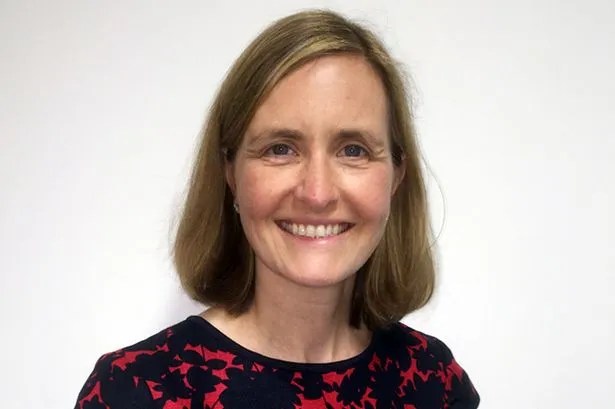
 

Last year three ­patients died as a result of A&E blunders at the North Middlesex. Concern over the safety of A&E patients has led to ambulance crews being told not to use it at night.

North Middlesex Hospital was failed by CQC inspectors in 2014. Just days before, local MP David Burrowes nearly died from a burst appendix after he was left on a trolley in A&E for 12 hours.

A spokesman for the North Middlesex said: “We are working with the CQC to make sure we improve.”

But hospital boss Lowe is on leave. Another NHS manager has taken over.

The Department of Health said: “Recent incidences of poor care at North Middlesex are unacceptable. The situation must change and quickly.”

NHS in new part-time health service whistleblowing tsar row as second person appointed

Mirror  8 JUL 2016
BY ANDREW GREGORY

The first person given the new role created by Jeremy Hunt dramatically quit earlier this year

Dr Henrietta Hughes
Dr Henrietta Hughes is the new part-time health tsar

Health chiefs have sparked fury and disbelief by appointing another part-time NHS whistleblowing tsar to do the country’s top £105,000-a-year job.

The first person given the new role created by Jeremy Hunt dramatically quit earlier this year – before she had even begun – after admitting she couldn’t do the job and her other NHS role.

But now senior officials have stunned whistleblowers by replacing her with yet another person who will only work part-time.

The key post was green lit by the Health Secretary a year ago to prevent another Mid Staffs scandal – where up to 1,400 patients died – by helping brave medics blow the whistle on poor patient care.

But the woman originally appointed to the role, Dame Eileen Sills, dramatically resigned in March – nine weeks after the Daily Mirror exposed how she was only going to do the job part-time.

dame eileen sillsDame Eileen Sills quit earlier this year


This week health chiefs have finally appointed her replacement.

But the Daily Mirror can disclose that the new NHS whistleblowing tsar, Dr Henrietta Hughes, will only work four days a week, will not start until October, and will keep her two NHS jobs as both a GP and GP appraiser.

The move has triggered shock and anger among whistleblowers.
Pharmacist Maha Yassaie, who was sacked after blowing the whistle over patient safety concerns, said she was “very disappointed” with the “very ineffective” appointment.

She added: “Another part-time one? That means no time to do the job properly like the previous National Guardian.”


Dame Eileen SillsDame Eileen Sills was also employed on a part-time basis
Mrs Yassaie, sacked as the chief pharmacist for Berkshire Primary Care Trust after making allegations about prescribing practices at the now defunct trust, said it appeared health officials had “not learned from the previous appointment”, adding: “This is just a tick box exercise.”

Dr Kim Holt, a former consultant paediatrician in Tottenham, North London, whose warning that understaffing and poor record-keeping posed a serious risk to patient safety was ignored, said she had “major reservations” about the “part-time” appointment.

And Dr David Drew, a former clinical director of Walsall Manor hospital, who was sacked after voicing concerns about a huge cost-cutting exercise, described the part-time appointment as “a sop to the large number of NHS staff who reported victimisation after they raised concerns of poor care, patient harm, wrongdoing etc”.

He also warned that the Office of the National Guardian was pointless anyway because it had limited powers to intervene in whistleblowing cases.

He added: “This is a bulldog with no teeth with respect to the new incumbent. I have not met a whistleblower who thinks this role has any chance of protecting staff or changing culture.”

Jeremy HuntJeremy Hunt has appointed a second part-time tsar
The creation of the National Guardian post was a key demand of Sir Robert Francis who led the Mid Staffs inquiry. He warned patients were at risk of harm because vital information about mistakes and concerns was not routinely being raised by staff.

Mr Hunt eventually confirmed last July he would act on the recommendation but then palmed off the post to health regulator the Care Quality Commission.

A Government source insisted the decision to appoint both Dame Eileen and Dr Hughes on a part-time basis had been taken by the CQC and claimed the Health Secretary could not have intervened to make it full time.

Mr Hunt described the appointment of Dr Hughes as National Guardian was “an important step in our ambition to create a more open and honest culture in the NHS”.

He added: “Dr Hughes will support staff so they can raise concerns without fear of discrimination and ensure the NHS is one of the safest healthcare systems in the world.”

Dr Hughes said: “I am very excited to be appointed as the National Guardian and recognise that supporting and protecting staff across the NHS who wish to speak up is a huge and tremendously important responsibility.”