Channel 4 News
The Mail on Line
Politicians and NHS bosses are fond of proclaiming that patient safety is their highest concern.
But so often that is just empty rhetoric. For too many hospital chiefs and senior Health Service bureaucrats, self-preservation comes before the needs of patients.
That reality has been graphically illustrated this week by the disturbing case of Joseph Meirion Thomas, a top cancer surgeon at the internationally renowned Royal Marsden Hospital in London.

Politicians and NHS bosses are fond of proclaiming that patient safety is their highest concern. But so often that is just empty rhetoric, says Gary Walker
In the eyes of his managers, Mr Thomas committed a serious offence by daring to write a number of newspaper articles about certain problems in the NHS, including the exploitation of the service by health tourists and the inadequacy of GP services.
He provocatively argued that many women GPs work part-time in order to juggle childcare, leaving surgeries understaffed, and worried that many GPs, both men and women, were opting out of night and weekend cover.
Called a ‘disgrace to his profession’ and ‘an evil man’ by some critics, he was accused of undermining ‘working relationships’ within his hospital.
The Royal Marsden was even warned by Professor Azeem Majeed, who runs the Department of Primary Care and Public Health at Imperial College London, about the potential loss of patient referrals as a result of Mr Thomas’s actions.
He was first put on ‘gardening leave’, then told he could return to his job only if he agreed never to write about the NHS again without the express approval of his management.

Effectively, he has been given a strict gagging order, even though the Health Secretary Jeremy Hunt recently promised that such orders would be banned.
This sorry episode makes a complete mockery of all the Coalition Government’s eager talk about the protection of NHS whistleblowers.
Far from adopting a new atmosphere of openness, too many senior NHS executives still want to indulge in silence and cover-up.
That was certainly my experience as chief executive of the United Lincolnshire Hospitals.
When I told the Department of Health how the politicised obsession with arbitrary targets and waiting times was badly undermining effective patient care, my warnings went unheeded, and I was increasingly harassed by that department.
It was a process that culminated in my dismissal in 2010 and a subsequent legal battle for fair treatment.
Sadly, this is part of a pattern within the NHS.
In May this year, a High Court judge ruled that experienced cardiologist Dr Raj Mattu had been unfairly sacked from his job at Coventry’s Walgrave Hospital after he warned that patients were dying there because of severe over-crowding on the wards.
Instead of heeding his concerns, the Coventry Walgrave Trust management embarked on a systematic persecution of Dr Mattu, not only hounding him out of his job but even spending a staggering £10 million of taxpayers’ money in trying to gag and persecute him.

Similarly, Peter O’Keefe, a surgeon at the University Hospital of Wales, has been suspended on full pay since 2012, after he warned that a patient had suffered brain damage because of inadequate care.
One of my colleagues remarked that I was ‘taken out and shot’ for exposing the disastrous consequences of the relentless focus on targets. And indeed that is what it feels like when you dare to reveal NHS failings.
Punishment, not reward, is the usual outcome for whistleblowers.
Even Helene Donnelly, a nurse in the Accident and Emergency Department of Stafford Hospital — who was one of the first to reveal the scandalous mismanagement at Mid Staffordshire NHS Foundation Trust — felt compelled to move hospitals because she felt persecuted where she was.
What is so bitterly ironic is that the NHS, whose managers constantly wail about lack of financial resources, seems to have plenty of money to mount legal actions and impose gagging orders, often dressed up as ‘confidentiality clauses’, on whistleblowing staff.
We see again and again that the impulse to cover up carries more weight than the desire to reform failing hospitals, clinics and working practices.
Jeremy Hunt argues that a major change in attitudes is under way. He insists the NHS is becoming more open and more willing to pay attention to the concerns of staff.
Last year he promised to end the ‘era of gagging NHS staff’.
He has also set up a whistleblowers’ hotline. But I have to say, as a whistleblower myself, I see little significant difference between this brave new world of transparency and the old intimidation and oppression.
My sense of cynicism has only been reinforced by the absurd saga of Joseph Meirion Thomas.
Mr Hunt, though he may have the best of intentions, still has a major battle to fight before there is proper protection for those trying to safeguard patients.
I fear that, even after all these promises, a case like mine could still arise.
I had been the chief executive of the United Lincolnshire Trust for four years when, in 2009, I began to see that remorseless pressure from New Labour’s Department of Health to meet non-urgent targets was having a catastrophic impact on frontline patient care.
Our facilities were over-run, we were receiving up to 15 per cent more cases than we could handle, and our staff were struggling to cope.
As a result, I decided to write a blunt letter to the Department telling them that we could not meet their targets, and that patients’ lives were being put at risk. The Department replied that staff had no choice but to concentrate on the targets.


Jeremy Hunt is obviously full of good intentions — but he has to act on them, says Gary Walker
I thought this was ludicrous, and completely against the founding principles of the NHS, and I wrote of my deepening concerns to the then Labour Health Secretary Andy Burnham and the Chief Executive of the NHS, Sir David Nicholson.
In my letter to the latter, I asked to be given protection as a whistleblower.
But far from being provided with any protection, I found the fire of the NHS top brass turned in my direction.
Subjected to remorseless bullying, I was eventually dismissed on a bizarre, trumped-up charge of having sworn at a meeting, which witnesses said never happened.
I was forced to fight a two-year battle against this dismissal, spending £100,000 in legal fees and putting my home and the livelihood of my family at risk.
Then, on the eve of a hearing at an Employment Tribunal, the Department of Health suddenly made me an offer of £325,000, plus the payment of all my fees and expenses, to settle the case.
With my costs mounting, I was in no position to reject this.
There was, of course, a sting in the tail: a gagging order or ‘confidentiality clause’ which stipulated that I could not speak to the media about my case.
In 2013, however, the growing scandal over the abuse of NHS whistleblowers compelled me to speak out — even if this put my settlement at risk.
When I first spoke to this paper in February 2013 about NHS gagging orders, the Department of Health threatened to sue me.
What still saddens me is the thought that I lost a job I loved simply for daring to challenge the failing NHS bureaucracy.
The destructive, self-serving mindset has to end.
Any organisation that genuinely wants to improve must constantly scrutinise itself and listen to internal critics, rather than indulge in hollow propaganda and organised bullying.
Jeremy Hunt is obviously full of good intentions — but he has to act on them.
He should speak out on the Thomas case if we are to believe he supports the right of healthcare workers’ to speak freely without fear. Right now the NHS doesn’t support free speech.
That’s bad for staff — but it can be fatal for patients.
Brave men like Joseph Meirion Thomas can perform a vital, even life-saving, public service. They deserve to be cherished, not punished and gagged.

And the others who dared to tell the truth
JULIE BAILEY: Though she didn’t work for the NHS, her campaign for justice made a huge impact after her mother Bella died in dreadful circumstances at the Mid Staffordshire NHS Trust, where up to 1,200 patients died needlessly between 2005 and 2009.
Mrs Bailey was awarded a CBE after her role in exposing the failings at the hospital, but she was driven from her home by furious local opponents — some of whom worked at the hospital — and forced to move away.

Her mother’s grave was even desecrated.
Mrs Bailey set up the campaign group Cure The NHS on behalf of patients, wrote a book about her fight to uncover the truth and has since been named as the second most powerful woman in Britain by the Independent and in the BBC Woman’s Hour power list 2014.
DR KEVIN BEATT: Renowned heart surgeon sacked after he complained of being ordered to cover up the death of a 63-year-old patient, and of staffing shortages, ‘appalling’ equipment and workplace bullying.
He recently won his case against Croydon University Hospital, in South-East London.
In a damning ruling, employment judge Gill Sage said health chiefs had waged a campaign to destroy his career and had ‘embellished’ facts and given ‘inconsistent’, ‘unreliable’ and ‘factually incorrect’ evidence.
He is still in limbo, and revealed yesterday the hospital was using taxpayers’ money to appeal against the judgment.


Dr Kevin Beatt (pictured left) and David Ore (right) both blew the whistle on NHS failings
JOHN MARCHANT: Blew the whistle on vulnerable patients being restrained against their will.
The former head of security at Dudley Group of Hospitals NHS Foundation Trust, West Midlands, revealed how security staff were being ordered to restrain patients when all they wanted was to walk around a ward or chat with fellow patients. The Dudley Group denied his claims, but admitted staff had raised concerns. Mr Marchant was made redundant after ten years in the job.
DAVID ORE: A colleague of Mr Marchant, Mr Ore was an NHS manager sacked from Dudley Group hospitals after telling bosses that children and vulnerable adults were being abused. He said they were routinely restrained and shut away in cubicles for up to 12 hours with no food or drink.
It is understood he has reached a settlement, but will not be getting his job back.
SANDRA HAYNES-KIRKBRIGHT: An employee helping to compile hospital death rates when she claimed bosses at Royal Wolverhampton Hospital were fiddling figures. She was suspended and received a letter saying she could be sacked. After the Mail drew attention to her case, Jeremy Hunt said he would ensure all action against her was frozen. She said yesterday that the investigation was still going on.
SHIBAN AHMED: Paediatric surgeon suspended by Alder Hey in Liverpool since 2009 and wrongly accused of being ‘suicidal’ after warning that five patients had died needlessly. He had attempted to blow the whistle on the ‘barbaric and amateurish’ circumcisions of boys aged six to ten at the hands of poorly trained GPs.
He flagged up the issue to the patient safety regulator, but ended up facing disciplinary action. He is being referred to the General Medical Council, which has the power to strike him from the medical register.
Stourbridge News 29 December 2014 First published 05:00 Monday 29 December 2014 i
A FORMER Dudley hospital security manager who claimed he lost his job after making whistle-blowing allegations has settled his case out of court.
David Ore, an ex-police officer from Wolverhampton Street, Dudley, made claims for unfair dismissal and detriment against the Dudley Hospitals Group NHS Foundation Trust.
He told Birmingham Employment Tribunal he lost his job after making whistle-blowing allegations which were triggered after an elderly male patient was found dead at a bus stop following his discharge in the early hours from Russells Hall Hospital.
Mr Ore, former security manager for the Dudley Group, said the Trust had “put the blame on security staff” and the incident sparked whistle-blowing allegations that he went on to make about the restraining of patients.
The Trust opposed Mr Ore’s claims and suspended him at one stage. He was eventually reinstated but was later made redundant.
Paula Clark, Trust chief executive, confirmed the case has now been settled out of court at the request of Mr Ore but would not disclose the costs involved.
She said: “The agreement was taken to avoid any further costs to the tax payer.”
Ms Clark said Mr Ore’s security post was one of two affected by an “organisational restructure” and had nothing to do with his “claims to be a whistleblower”.
She added that claims security staff were being asked to illegally restrain patients had been “robustly investigated” by bodies including the Care Quality Commission and the police and said: “These independent public findings found no evidence of wrong doing in the Trust.”
She said the Trust encourages “staff to raise genuine concerns at the earliest opportunity” using its whistle-blowing policy which she said sets out a clear procedure for raising issues and ensures staff can speak up without fear of reprisals.
Mr Ore, however, said he would not advise any NHS employee to blow the whistle unless the law changes or NHS managers are made personally liable.
He added: “It has cost me personally over £40,000 to pursue my claim and brought my family and I unbelievable stress and turmoil – all for considerably less than this in compensation.
“I will never work in the NHS again I’m sure and I am still unemployed after eight months in spite of applying for many NHS jobs.”
New fundamental standards for all care providers will come into force in April 2015. However, two regulations for NHS bodies that form part of these came into force on 27 November 2014.
Regulation 5: Fit and proper persons: directors and Regulation 20: Duty of candour come into force for NHS bodies in November 2014. ‘NHS bodies’ means NHS trusts, NHS foundation trusts and special health authorities.
The fit and proper persons requirement outlines what providers should do to make clear that directors are responsible for the overall quality and safety of care. The duty of candour explains what they should do to make sure they are open and honest with people when something goes wrong with their care and treatment.
The fundamental standards, which will be implemented in April 2015, will replace the existing essential standards of quality and safety. They will include guidance for all sectors on the fit and proper persons requirement for directors and the duty of candour.
Guidance for NHS bodies on the fit and proper persons requirement for directors and duty of candour

Russell Dunkeld says drips to give drugs had been interfered with (PAUL COOPER)
A WHISTLEBLOWING nurse has revealed how managers at a scandal-hit NHS trust ignored allegations that a colleague was hastening the deaths of patients.
Russell Dunkeld told his bosses at Royal Lancaster Infirmary, part of University Hospitals of Morecambe Bay NHS Foundation Trust (UHMBT), how a nurse on his ward had boasted of speeding patients on their way by interfering with drug and saline drips.
The 60-year-old resigned, suffering stress, when his concerns were not investigated. Managers later gagged him from speaking out as part of a compensation deal.
Under the trust’s whistleblowing policy, Dunkeld should have had a response within 21 days. But it was three years before his claims were acknowledged. Even then there was no proper investigation.
Last month, however, an NHS campaigner arranged for him to give evidence to a government-ordered inquiry into the unrelated deaths of 16 babies and two mothers in the maternity unit at Furness General Hospital in Barrow, part of the same NHS trust. Dr Bill Kirkup, who is chairing the inquiry, expressed grave concern that the trust had ignored Dunkeld’s allegations.
Dunkeld had worked on a ward at the Royal Lancaster Infirmary with a mix of seriously ill patients, some of them terminal cases.
“I discovered that fluid drips and drips to give drugs to patients had been interfered with,” he said.
“Either they had been shut off or there wasn’t an adequate flow. If patients don’t get adequate fluids, they die. This nurse’s view was that they were going to die anyway, so all she was doing was helping them on their way.”
When he challenged her over one patient, he was shocked by her response. “Well, he is terminally ill,” the nurse allegedly replied. “What are you doing when you give these patients fluids? You are just killing them slowly, aren’t you?”
The confrontation was overheard by another nurse, who agreed with the first, Dunkeld said: “She told me, ‘Well, she’s right, isn’t she?’ ”
Dunkeld, who worked at the hospital for 20 years, said: “The tampering with drips had been going on for some time. These weren’t just one-offs. In the normal course of events one might expect to find one or two a year turned off by mistake. I was finding up to three in a single shift.
“How many patients suffered and died due to interfering with the drips, I don’t know. They weren’t all terminally ill.”
The drip-tampering nurse had already been disciplined for neglecting a patient and was accused of hitting another. When she resigned, Dunkeld was told that nothing would be done about his complaint.
“I can’t believe they let her leave without reporting her to the Nursing and Midwifery Council,” he said.
“She could be working somewhere as a nurse now and doing something similar.”
In 2009 Dunkeld resigned because of stress. He received compensation of £16,000 after managers admitted failing to investigate his complaints. Still no inquiry was launched into the drip-tampering. Most of his money went on legal fees. He is no longer in nursing and instead works as a part-time barman in a pub.
“I love nursing,” Dunkeld said. “I have been forced out because I raised serious public safety concerns that weren’t investigated.”
Today UHMBT is in special measures after a Care Quality Commission inspection earlier this year raised concerns about the standards of care, particularly at the Royal Lancaster and Furness General.
In a statement, the Trust said it had improved the way it handled whistleblowing: “The Trust did carry out investigations into many of these concerns, in 2008 and again in 2009, but it has been recognised throughout the NHS that the way in which staff concerns have been addressed and investigated in previous years was sometimes not good enough. As a result our Trust, like many across the country, has worked hard to tighten its whistleblowing policies…
“Unfortunately, the lack of detailed evidence available to us… means we are unable, so many years later, to substantiate the issues he [Dunkeld] raised.”
The Department of Health said: “We take these concerns extremely seriously… We are absolutely clear that NHS staff who have the courage to speak out in the interests of patient safety must be listened to.”

Consultant cardiologist Dr Kevin Beatt (pictured) was sacked after he blew the whistle on hospital conditions following a patient’s death
A renowned heart specialist who raised the alarm over a hospital’s failings was unfairly dismissed in a calculated attempt to damage his reputation, a tribunal has ruled.
Consultant cardiologist Dr Kevin Beatt has won a two-year legal battle with Croydon Health Services NHS Trust, which sacked him in September 2012 after he raised the alarm about staffing shortages, ‘appalling’ equipment and workplace bullying.
He voiced his concerns following the death of heart patient Gerald Storey, 63, at Croydon University Hospital in June 2011.
It was a routine angioplasty, an inquest heard in 2013, but a senior nurse had been suspended hours earlier – without Dr Beatt’s knowledge – and her absence contributed to the patient’s death.
Dr Beatt, a renowned specialist who led the hospital’s well-regarded department for interventional heart procedures from 2007, should have been afforded protected whistleblower status but instead lost his job in a case he claimed provided a damning demonstration of the trust’s attempts to cover up failings.
The trust argued it dismissed him ‘for making unsubstantiated and unproven allegations of an unsafe service’, but the employment tribunal ruled there was ‘no consistent evidence’ of gross misconduct and chief executive John Goulston, whose evidence it criticised as inconsistent, had ‘failed to carry out a fair process’.
Between 2008 and his dismissal, Dr Beatt raised a catalogue of concerns about inadequate equipment, bullying and harassment of junior employees, removal of key staff, a lack of competent nurses and the failure to properly investigate serious incidents.

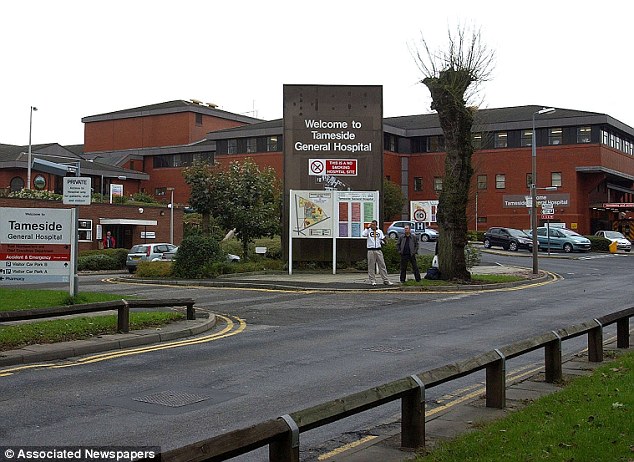
Sacked: Mrs Haydr was unfairly dismissed by Tameside General Hospital, Greater Manchester, in 2013, following accusations from colleagues
A nurse who raised concerns over the standard of patient care at a hospital was forced out of work after colleagues launched a smear campaign against her, a tribunal has found.
Jean Haydr, 48, was set to be promoted to senior nurse at Tameside General Hospital, Greater Manchester when she was sacked in 2013 following false allegations by other nurses.
‘Jealous’ colleagues wrongly accused Mrs Haydr, who was described as a ‘committed and competent’ nurse, of turning up to work smelling of alcohol and of ‘violating patients’ dignity’.
Mrs Haydr, from Dorylsden, Greater Manchester, claimed that she was dismissed for raising concerns over the standard of patient care at the hospital, where she had worked for 12 years.
Now an employment tribunal has found that the mother-of-three had a ‘difficult relationship’ with her colleagues, who had ‘professional jealousies’ about her promotion.
One colleague who claimed that Mrs Haydr had mocked a patient by putting a sticky note on their back that had ‘loser’ written on it later admitted that she never saw the word on the note.
While an allegation that Mrs Haydr had taunted a patient by drawing fish and chips on a plate instead of giving him food was dismissed as ‘light-hearted banter’ with a patient with whom she enjoyed a ‘good relationship’.
The tribunal also found that accusations that Mrs Haydr arrived late for work while smelling of alcohol and that she made threats of physical violence were unfounded.
However, it did find that Mrs Haydr breached social media policy by ‘discussing trust business’ on Facebook – but ruled that she should not have been dismissed without notice or payment in lieu.
The hearing concluded that Mrs Haydr was unfairly dismissed because of accusations from colleagues who ‘did not like’ her.
Mrs Haydr said that she was relieved her ordeal was over.
‘Committed’: Mrs Haydr had worked at Tameside General Hospital for 12 years and was set to be promoted to senior nurse when she was sacked. The tribunal found that other nurses had ‘professional jealousies’
But she said the ongoing tribunal had left her out of work, ‘blacklisted’ by the NHS and struggling to look after her three children. It is understood she wants to return to nursing.
A spokesman for Tameside Hospital said the trust was ‘disappointed’ with the outcome.

Doctors in Scotland will give evidence to English inquiry into care home abuse, led by Sir Robert Francis
SCOTTISH ministers have been urged to set up an independent review of the treatment of NHS whistleblowers amid claims by opposition politicians and patient groups that staff who speak out continue to face “disturbing” levels of bullying, harassment and victimisation.
Doctors from Scotland have given evidence to a review held in England, chaired by Sir Robert Francis QC, who recently led the inquiry into the health scandal at NHS Mid Staffordshire. The review aims to improve patient safety south of the border by improving protection for NHS whistleblowers and creating a culture of greater transparency.
However, criticism has been levelled at the Scottish government for failing to hold a similar review amid a number of high-profile cases in Scotland which have highlighted the backlash faced by staff who decide to raise concerns about patient safety.
A spokesman for the Scottish government said that it had established an anonymous telephone line
First published Tuesday 14 October 2014 in News © by Press Association and news reporter
A gynaecologist unfit to work defrauded the NHS out of tens of thousands of pounds, a jury has heard.
Anthony Madu is on trial at Cardiff Crown Court. He denies six counts of fraud.
The 45-year-old specialist registrar was suspended two months into his post with Cardiff and Vale University Health Board before going on sick leave.
However, a jury heard yesterday (October 13) that Madu went on to do lucrative locum work with three NHS trusts in England while still earning more than £29,000 from his employers in Wales.
Prosecution counsel Christian Jowett said Madu had been irresponsible as well as dishonest.
Mr Jowett said: “He was legally obliged to tell Cardiff and Vale University Health Board of his work in England and he did not do so.
“He was also legally obliged to tell two locum agencies who had employed him…that he was on extended leave and been granted sickness leave.
“But he continued to work and receive payment from both Cardiff and Vale University Health Board and his work in England.
“This was a very costly business for the NHS and very lucrative for Dr Madu…that’s why he did it.”
The court heard Madu was given the specialist registrar obstetrics gynaecology post at the University Hospital of Wales, Cardiff, in August 2009.
But Mr Jowett said the defendant was placed on “extended leave” in October before being “escorted off the premises”.
He added: “In short they suspended him.
“The following January he began a period of sickness leave.
“However, during this extended leave and sickness he continued to work as a locum doctor at hospitals in England.”
The jury was told Madu got locum work at Sandwell General Hospital in Birmingham as well as Scarborough General Hospital, north Yorkshire in late 2009 via employment firm JCJ.
Between April and August the following year, the defendant then had a four month stint at The Royal Oldham Hospital in Greater Manchester through locum agency Medacs.
But the court was told in January, March and April 2010 Madu had handed in sick forms – which had been signed by his GP – to his bosses in Cardiff.
After being diagnosed with “work related stress”, he was offered counselling as well as prescription drugs.
Mr Jowett said Madu’s decision to keep on working while medically unfit was “irresponsible”.
The court was also told that the CVs Madu had given to the employment agencies did not mention his time in Cardiff – something which the prosecution says points to his dishonesty.
And Mr Jowett added that between October 2009 and June 2010, the defendant had been paid a total of £29,150.66 by Cardiff and Vale University Health Board.
However, Mr Jowett said covering Madu’s absence had brought the total cost to the Welsh NHS at around £49,000.
He added the process of working out Madu’s locum pay was “more complex” – and a total figure was not disclosed to the court.
Mr Jowett added Madu later tried to defend his actions by saying “he thought he was allowed to do locum work”.
However, The Crown says Cardiff and Vale University Health Board would not have sanctioned Madu to do locum work had it known about it.
It is also the prosecution’s case JCJ and Medacs would not have employed Madu if they had known he had been suspended or had been granted sickness leave.
The trial continues.

Committee Room 15
Complaints and Raising Concerns Witnesses
http://www.parliamentlive.tv/Main/Player.aspx?meetingId=15732


The Health Secretary said the meeting was an important opportunity to hear testimonies and witnesses’ determination to bring about a crucial task: fundamentally changing the NHS culture so workers feel safe enough to raise concerns.

Please sign the petition DAVID CAMERON. WE WANT JUSTICE FOR SHARMILA CHOWDHURY NHS WHISTLEBLOWER https://you.38degrees.org.uk/petitions/david-cameron-we-want-justice-for-sharmila-chowdhury-nhs-whistleblower
The following letter has been sent to Jeremy Hunt today:
30 May 2014
Rt Hon Mr Jeremy HuntHealth Secretary
Dear Mr Hunt
Re: My case as an NHS Whistleblower
I have just received the email (attached) from your Special Advisor, Ed Jones.
To say the letter from Dr Dan Poulter is outrageous is an understatement. I would have thought that you would have felt somewhat relieved that I was not in receipt of this letter written in February. Instead you decide it appropriate to send it to me via email today. Clearly in support.
It is scandalous that as the Secretary of State you do not take responsibility for the protection of NHS whistlebowers who are persecuted in hospitals and other settings, for which you are in charge. Instead you choose to hide by labelling ‘whistleblowing’ cases as ‘employment’ issues and do nothing to help.
In previous correspondences, you will note that I had won Interim Relief Hearing, which means that I am proven to be a whistleblower by the court. Winning this case meant that I was unfairly dismissed as a direct result of whistleblowing. Despite this, you still choose to do nothing on the grounds you cannot intervene in an “employment issue”.
I have lost my career, income and health. As you are aware I am now suffering from breast and lung cancer, which numerous consultants believe is directly due to stress suffered as a result of whistleblowing. Due to lack of income, I am also about to lose my home. This has come about because of Department of Health’s refusal to intervene. Instead they watched me suffer over a period of 4 years and turn a blind eye. I am afraid that the Department of Health (and you as Secretary of State along with your predecessor), is ultimately responsible for my current situation. Yet, you fail to behave responsibly.
It is also scandalous that I had reported fraud at my Trust, which is a criminal offence. Very large sums of tax payer’s money which should have gone on patient care have been wasted. Despite this, Department of Health, The Treasury, NHS London and No 10 failed to investigate. The perpetrators and Trust managers have not been held to account. Instead they have continued working within NHS and have been leading a normal life. In fact some of them have even been promoted. I however, who raised public interest concerns, with full documentation, have been punished. I have to question your moral judgement.
I received a phone call from your office yesterday, following my email to you copying in MP’s and journalists. I was advised that by sending the email I had compromised my situation. I have no idea what this means since nothing else I have done so far has elicited such a speedy response. I do not respond to bullying which is what I think was intended by the caller and I never have. The sheer fact that I whistleblew under immense pressure should have told you that. Despite being subjected to four gruelling years, unlike many whistleblowers, I have not suffered any mental illness or breakdown. Although I now have cancer.
To reiterate, I would like:
Spokesman for Department of Health
“All too often staff who speak out about problems have felt alone and ignored. The Francis report showed the appalling consequences for patients when this happens and the Health Secretary is committed to a culture change in the NHS so that whistle blowers are supported and listened to.”
You have neither listened nor supported me. You have not stood by your words Mr Hunt. You certainly have not done anything to change the current culture in the NHS.
I am asking again that you acknowledge the reality of what has happened to myself and many others, solely for raising concerns about patient care and the public interest. Your current response might reasonably lead me to conclude that you are more annoyed about my persistence in seeking to right a wrong than you are about the original wrong doing or my treatment since.
It is clear that you either do not have an understanding of the of the consequences whistleblowing in the NHS or are in denial about them. The NHS is awash with declarations, policies, speeches and assurances but when whistleblowers are victimised the usual DH response appears to be to look the other way and talk about, “not being able to intervene because they are employment matters.”
By allowing continuing persecution of whistleblowers within the NHS you personally place patients at risk. Staff are too scared to speak up, because they consistently see what happens to others who do. This outrageous cultural behaviour within the NHS needs to end. As a leader you will need to set an example. Even at this late stage I hope you do.
Yours sincerely
Sharmila Chowdhury
Dr William (Bill) Lynn, Deputy Chief Executive of Ealing Hospital claimed to The Evening Standard on 7 May 2014 that JUlie Lowe, the then chief executive commissioned an independent review with the NHS counter fraud team, which “found there was no case to answer” in regards to my raised concerns. I felt as a result, there was no choice but to bring to you the details of the ‘ independent investigation’. However, see below:
For best results, this should be read using Adobe Reader, 2 pages to a view

Pressure is mounting on the NHS to reopen the cases of six of its most famous whistleblowers after they called for a judge-led public inquiry.
After a string of critical reports by MPs, the whistleblowers have written to a senior official at the Department of Health to ask for fresh investigations and compensation in what would be a series of landmark reviews.
The six are hopeful that Simon Stevens, the new head of the NHS, will radically change how the health service handles serious complaints from its staff in future. Last week he agreed to meet Raj Mattu, a heart doctor who won a 12-year battle to clear his name after going public with concerns about overcrowding on his wards.
Dr Mattu’s victory last month in an employment tribunal, one of the first of its kind, has lent impetus to others campaigning for restitution after losing their jobs in their battles with the NHS.
The six, led by David Drew, a paediatrician whose 37-year career was ruined after he voiced concerns about bullying and staff shortages, have written to Charlie Massey, a senior official in the health department. “We have all suffered employment, reputational and financial loss,” they wrote. “Some of us have had health problems and we have all endured severe stress. We would like our cases investigated and remedied at the earliest opportunity.”
The whistleblowers also called for a judicial public inquiry into the obstacles they had faced. Dr Drew has won the support of Andrew Mitchell, the MP for Sutton Coldfield and former chief whip, who has written to Dr Massey to call for the cases to be re-opened.
Another signatory, Sharmila Chowdhury, lost her job as a radiology manager at the Ealing hospitals NHS trust after complaining that consultants were taking tens of thousands of pounds in personal payments for ultrasound scans. She said that she would have to sell her house as a result of her battle against the trust.
“I have lost my career, my pension, and [am] about to lose my home,” she said. “I also now have cancer, which numerous consultants believe is due to the stress of whistleblowing.”
Ms Chowdhury, a widow struggling to support her son, said that she wanted all whistleblowers to be paid by the NHS until they retired if they had been forced out of their jobs. Last month she met a special adviser to Jeremy Hunt, the health secretary, to suggest reforms but has yet to hear back.
The other signatories to the letter include Narinder Kapur, a neuropsychologist who went on a hunger strike after being unfairly dismissed by Addenbrooke’s Hospital in Cambridge.
Dr Massey replied to say that although he could not yet make a decision about their “far-reaching” questions, their call for a fresh round of investigations was being considered “very carefully indeed”.
Dr Drew said that it was “no response at all”. He added: “The government and department of health have no answer to the large number of other whistleblowers who have been defeated by employment law and left to rot. The DoH has no interest in getting justice for frontline staff who have done the right thing [or] to learn the lessons of our cases.”

One year on from Francis, my top priority remains to support you in creating a more patient-centred, compassionate NHS. So this week I have written to all NHS Trusts to reiterate how strongly I feel that staff should be able to raise any concerns about patient care and safety. We have put in place reforms to give you that reassurance, but in light of recent media reports I want it to be absolutely clear that whistleblowers speaking out about poor care should be confident they will be listened to.
To support you in this we have made a number of important changes. We have ensured that all NHS employment contracts include the right to raise concerns about care and amended the NHS Constitution to strengthen the commitment to supporting staff who do so. We are also funding a national helpline – independent from employers and the Department of Health and completely confidential – to provide advice to anyone in health or social care who wants to raise a concern. The number is 08000 724 725. We are also introducing a new duty of candour, so that when things go wrong, organisations have a duty to admit mistakes and tell patients what has happened. The professional regulators will be working together to include a new consistent professional duty of candour in codes of conduct. Together, these changes are intended to support you by building the open culture we need and where you can be confident that you can speak up for the patients in your care.
 SHARMILA CHOWDHURY
The Sunday Times Martyn Halle 14 December 2014